


Chicken Noodle Soup
Chicken noodle soup is an American soup of homemade chicken broth with shredded chicken, carrots, celery and egg noodles. A whole chicken simmers for 1.5–2 hours to make the broth, and the noodles are cooked separately so they don't go soggy.
Ingredients
- 1 wholechicken (about 1.8 kg / 4 lb)
- 1.5 onions
- 3 carrots
- 2 stalkscelery
- 4 sprigsfresh thyme or parsley
- 2 bay leaves
- 1 tbsppeppercorns
- 2 tspsalt
- 1 tsppoultry seasoning
- 10 cupwater
- 1.5 cupcarrots
- 1 cupcelery
- 2 cupegg noodles, dry
- to tastesalt and freshly ground black pepper
1 cup = 240 ml
Method
- Quarter 1 onion and halve the carrots and celery stalks. Place the remaining half onion in the cavity of the chicken. Put the chicken in a large pot with the cut vegetables, fresh herbs, bay leaves, peppercorns, salt and poultry seasoning. Fill with water.

- Cover and bring to a boil over high heat. Skim off the foam that rises during the first 10 minutes, then reduce the heat and simmer over low heat, partially covered, for 1.5–2 hours. The chicken is done when the meat comes away from the bone easily, the thickest part of the thigh reads at least 74°C (165°F) and the juices run clear.
- Remove the chicken, separate the meat and discard the bones. Strain the broth through cheesecloth.
- Bring 8 cups of strained broth to a boil. Add the sliced carrots and chopped celery. Boil for 5 minutes. Meanwhile, cook the egg noodles separately in salted water according to package instructions. Drain and set aside.
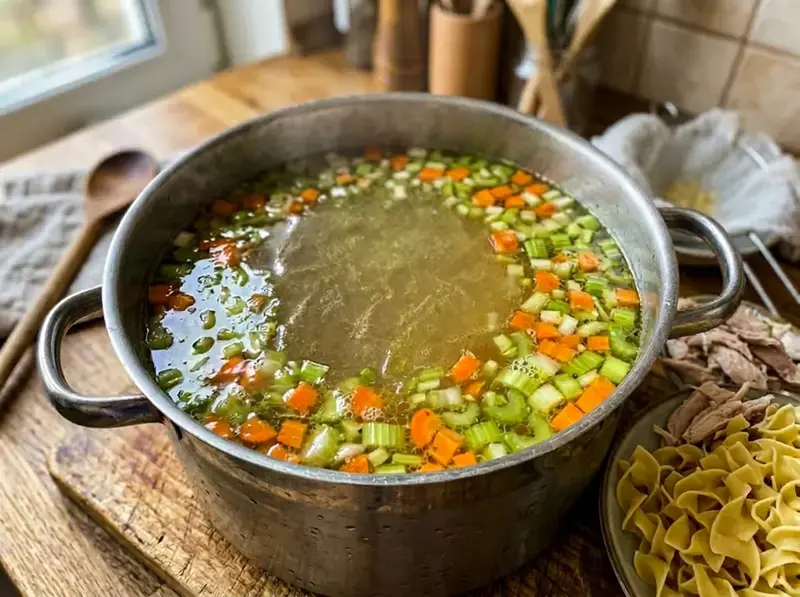
- Add the chicken to the broth and cook for about 2 minutes until heated through. Season with salt and pepper. Place noodles in the bottom of each plate, pour the soup over the top and serve.
Cooked it? Rate the recipe
FAQ
A clear broth requires three rules: start the chicken in cold water (not boiling), bring to a boil slowly, and skim the foam thoroughly for the first 10 minutes. Then reduce heat to the lowest setting — the broth should barely tremble, not boil. Add the onion, carrots and celery in large pieces (quartered or halved), not finely chopped. If the broth is already cloudy, strain it through cheesecloth, add a beaten egg white and bring to a boil — the white will bind the cloudiness and rise to the surface with it.
Noodles keep cooking in hot broth even after the heat is off. The fix: cook noodles separately to al dente, drain, and add directly to each bowl at serving time — not to the pot. If making the soup ahead, store broth and noodles separately and combine only before serving. Homemade egg noodles hold their shape better than store-bought. Rice noodles and glass noodles hold up a little better, but they still soften in hot broth, so store them separately too.
Chicken thighs (bone-in, skin-on) give a far richer, more flavorful broth than breast. Breast meat is lean and dries out quickly with long cooking, giving a pale, thin broth. The best option for classic soup: a whole chicken or a mix of thighs and backs. If you want to use breast, cook it no longer than 20–25 minutes, then remove and slice it, and enrich the broth with chicken bones or wings. Keep the skin and bones in while cooking — they release all the collagen and fat — but remove before serving.
The secret to that old-fashioned depth is long slow cooking (at least 1.5–2 hours at the lowest simmer) and the right vegetables. Essentials: a whole onion (you can char it in a dry pan first for golden color), carrots, celery with its leaves, and parsley root. Bay leaf, allspice, and a few black peppercorns. No boiling — only a slow gentle simmer. Fresh dill and parsley go in at the very end. One more trick: add chicken feet or backs — they are rich in collagen and make the broth silky.
Freeze only the broth with chicken and vegetables — without the noodles. Noodles turn soft and lose their texture when frozen. Broth keeps 3–4 days in the fridge and 2–3 months in the freezer. To reheat, bring the broth to a boil and add freshly cooked noodles. If the soup already contains noodles, bring it just to a boil and serve right away. The noodles will soften, but leftovers need to reach 74°C (165°F). Portioned 500 ml containers are convenient for quick thawing under hot water.
Keep browsing
More dishes from the American archive — picked by overlap with what you're cooking now.


Recipes by email
One letter a week: a recipe picked for your taste, plus whatever is new on the site. You can stop the letters in one click.
Welcome gift: Sergei's cookbook (e-book).
By signing up for the newsletter you agree to the privacy policy.
Tell us what you like to cook (30 seconds) →
Join the conversation
Comments
No comments yet — be the first!