
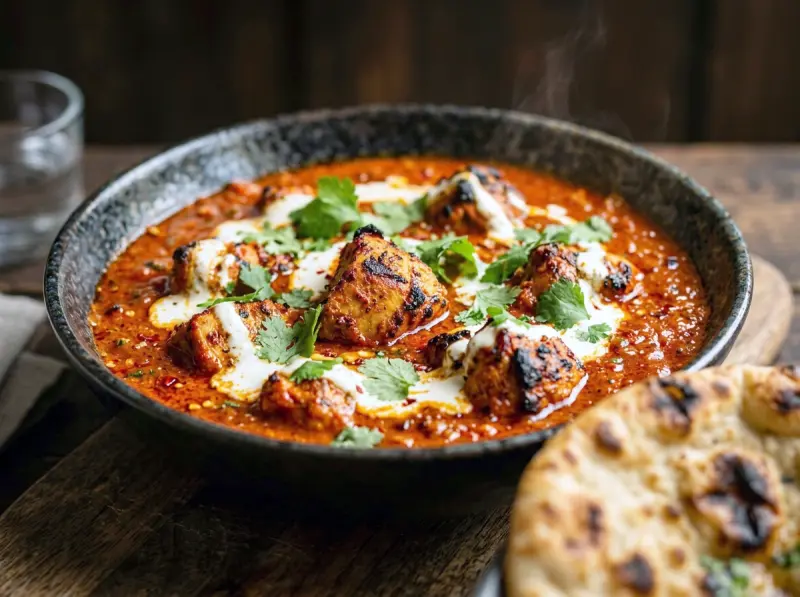
Chicken Tikka Masala
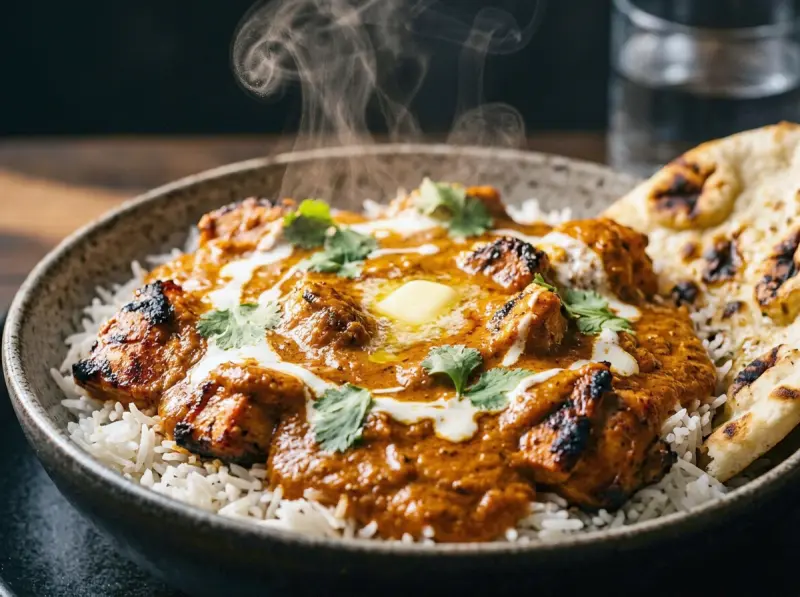
Yogurt-marinated chicken thighs seared until charred, then simmered in a spiced tomato-and-onion sauce with cream. The two-stage process is the point: first the tikka — small pieces of chicken cooked hard over direct heat — then the masala, the spiced sauce they finish in. The char on the chicken is not incidental. It sits in contrast to the cream, and without it you have a decent tomato curry rather than tikka masala. The sauce needs properly browned onion, bloomed spices, and enough cooking time for the tomatoes to lose their sharpness. The chicken marinates for at least an hour, ideally overnight.
Ingredients
- 700 gboneless chicken thighs, cut into 4 cm cubes
- 120 gplain yogurt
- 1 tbspKashmiri chilli powder
- 1 tspground cumin
- 1 tspground coriander
- 0.5 tspturmeric
- 1 tbspginger-garlic paste
- 1 tbsplemon juice
- 2 tbspneutral oil or ghee (1 tbsp for searing the chicken, 1 tbsp for the onions)
- 2 large onions
- 1 tbspginger-garlic paste
- 2 tbsptomato paste
- 400 gcanned crushed tomatoes
- 1.5 tspgaram masala
- 1 tspKashmiri chilli powder
- 1 tspground coriander
- 80 mldouble cream
- 1 tspkasuri methi
- 1 tspsugar
- 1 tspsalt for the marinade, plus more to taste
Method
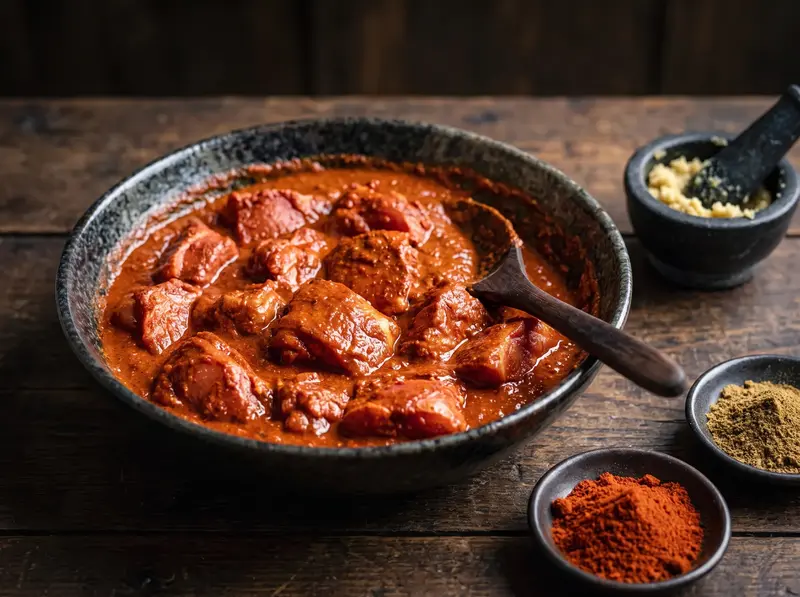
- Marinate the chicken. Combine yogurt, Kashmiri chilli powder, cumin, coriander, turmeric, ginger-garlic paste, lemon juice, and 1 teaspoon of salt in a large bowl. Add the chicken and massage the marinade into each piece with your hands. Cover and refrigerate for at least 1 hour — overnight gives the best result. The yogurt-acid combination tenderises the meat and lets the spices penetrate rather than just coat the surface.
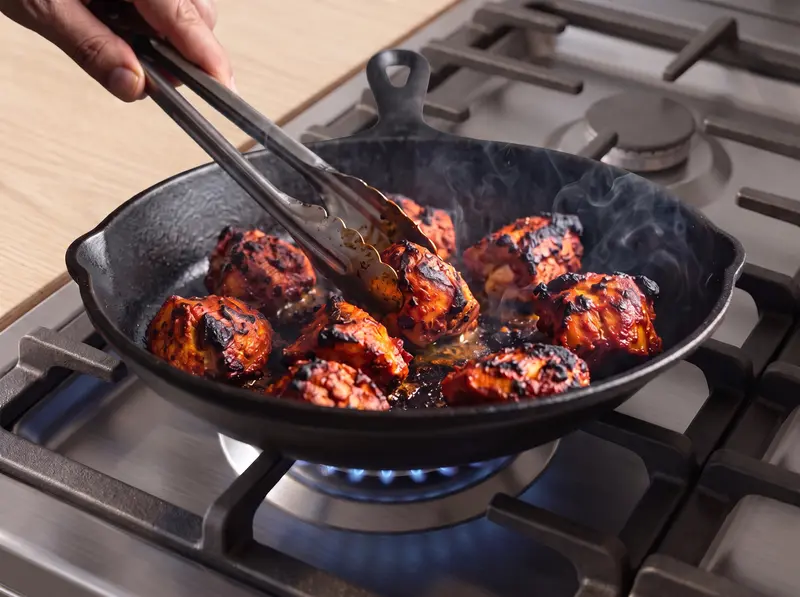
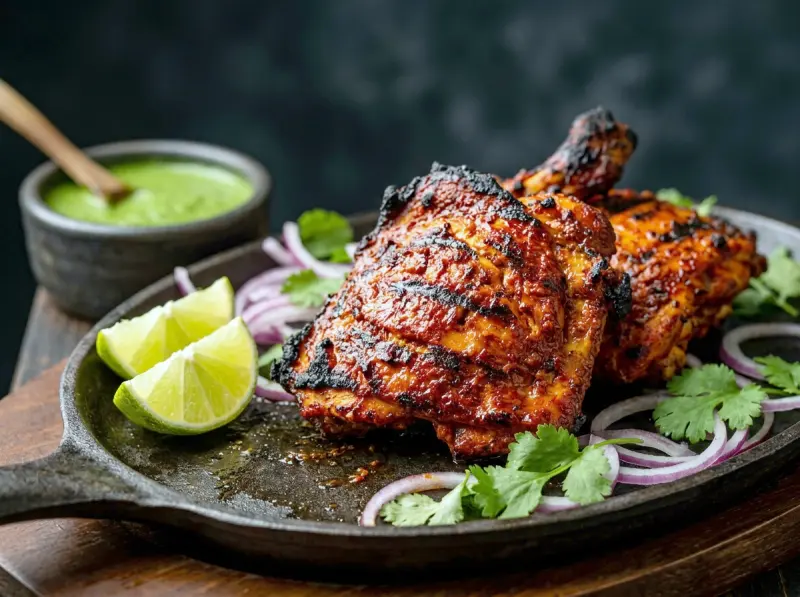
- Cook the tikka. Heat a wide heavy pan or cast-iron skillet over high heat until very hot. Add a tablespoon of oil or ghee. Shake excess marinade off each piece and lay half the chicken in a single layer with space between the pieces. If they touch, they steam in their own juice and never char. Sear without moving for 3 to 4 minutes until real char forms on the base. Turn and repeat. The chicken should look almost burnt in places; it is still raw in the middle and finishes cooking in the sauce. Remove to a clean plate, let the pan get very hot again and sear the second half the same way. Throw away the marinade left in the bowl. This char is the whole point of tikka — it gives the finished dish its smoky edge against the creamy sauce.
- Brown the onions. In a large saucepan, heat the remaining tablespoon of oil or ghee over medium heat. Add the diced onions with a pinch of salt. Cook, stirring every few minutes, for 15 to 20 minutes until deep golden-brown. This is the flavor base — pale onions make a pale, one-note sauce. Add the ginger-garlic paste and cook 2 more minutes.
- Build the sauce. Add the tomato paste and stir into the onions, cooking for 2 to 3 minutes until it darkens. Add the garam masala, Kashmiri chilli powder, and ground coriander. Stir for 60 seconds until the spices smell toasted. Pour in the crushed tomatoes and sugar. Bring to a simmer and cook uncovered for 15 minutes, stirring occasionally, until the sauce reduces and oil begins to separate at the surface.
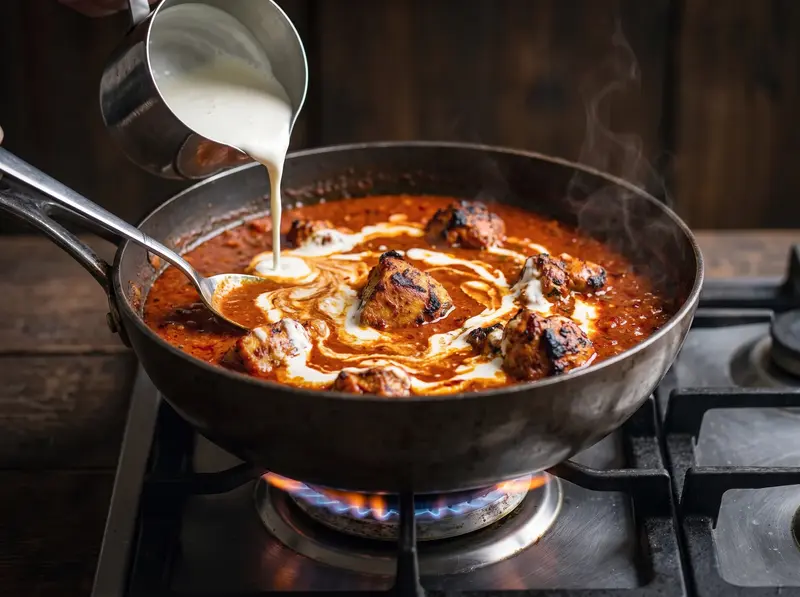
- Finish and serve. Add the charred chicken pieces with any resting juices. Simmer for 8 minutes, until the chicken is cooked through: the largest piece reads 74 °C in the centre, is white to the middle when cut open, and its juices run clear. Stir in the cream on low heat. Crush the kasuri methi between your palms and scatter it in — this is the ingredient that makes the finished dish smell like a restaurant kitchen. Taste and adjust salt. Serve over basmati rice or with naan, topped with a little fresh coriander.
FAQ
Tikka means 'piece' or 'chunk' in Urdu and Hindi. In cooking, it refers to small cubes of meat skewered and cooked in a tandoor over intense heat. The name tells you this is a two-stage dish: first the tikka — the chicken is marinated and cooked hard over direct high heat until charred — then the masala, the spiced sauce the chicken finishes in. The two-stage process is what gives the dish its character: smoky char from the first cook, creaminess from the sauce. A curry made by simply adding raw chicken to sauce is not tikka masala.
The origin is genuinely contested. British Pakistani chef Ali Ahmed Aslam of Glasgow is often credited with it: the story goes that he added a tomato-cream sauce to dry chicken tikka at a customer's request. Other accounts suggest similar dishes existed in Punjab before the British version. In 2001, British Foreign Secretary Robin Cook described it as a national dish of Britain. Most food historians now treat it as a British-Indian fusion — rooted in tandoori techniques brought by immigrant chefs, adapted for European palates. In India, tikka masala is well-known and enjoyed but generally considered a diaspora adaptation.
Wateriness almost always comes from onions that weren't properly browned and tomatoes not cooked long enough. The onions need 15 to 20 minutes over medium heat until genuinely golden-brown. The tomato paste must cook in the oil until it darkens and smells fried. The crushed tomatoes need at least 15 minutes uncovered until oil separates at the surface — that's when the sourness has cooked out. For thickness: blend the onion-tomato base before adding the chicken. Cashew paste (cashews blended with water) also thickens and mellows the sauce without adding richness. Kasuri methi added at the end cuts any remaining sharpness.
You can, but chicken breast dries out when seared hard enough to get char marks — and the char matters. If using breast: do not fully cook it during the searing stage, let it finish in the sauce. Reduce simmering time in the sauce to 4 to 5 minutes from 8. Marinate for at least 1 hour — the yogurt acid protects against drying out. The best approach is a 50/50 mix: breast for tenderness, thighs to provide insurance against overcooking. If using breast only, take it off the heat as soon as the centre reads 74 °C, the meat is white to the middle and the juices run clear.
Yes, there is a difference. Jarred sauces are consistent and convenient but lack several things: the flavor of onions browned slowly, the smokiness from properly charred chicken, the freshness of real ginger and garlic. The sauce tends to taste uniform and muted compared to one built from scratch. A practical middle path: use a good curry paste (not a finished sauce) as a base, add your own freshly browned onion, ginger, garlic, and self-cooked charred chicken. That approach is faster than fully from scratch and significantly better than pouring jarred sauce over cooked chicken.
Rate this
Recipes by email
One letter a week: a recipe picked for your taste, plus whatever is new on the site. Unsubscribe in one click.
Welcome gift: Sergei's cookbook (e-book).
By subscribing you agree to the privacy policy.
Tell us what you like to cook (30 seconds) →Keep browsing
More dishes from the Indian archive — picked by overlap with what you're cooking now.

Join the conversation
Comments (2)
So much better than takeaway! I halved the chilli because my kids dont like too much heat and added a bit more yogurt at the end. Husband said it tasted exactly like our local indian place but cheaper.
There is an ongoing debate about whether tikka masala is Indian or British. I have eaten versions in both countries and this recipe sits right in the middle — proper tandoori-style marinade with yogurt and Kashmiri chilli, but the sauce has that creamy British touch. The single most important step is charring the marinated chicken under a very hot broiler, not just baking it. Those blackened edges are where all the flavour lives. Scrape the pan drippings into the sauce.