
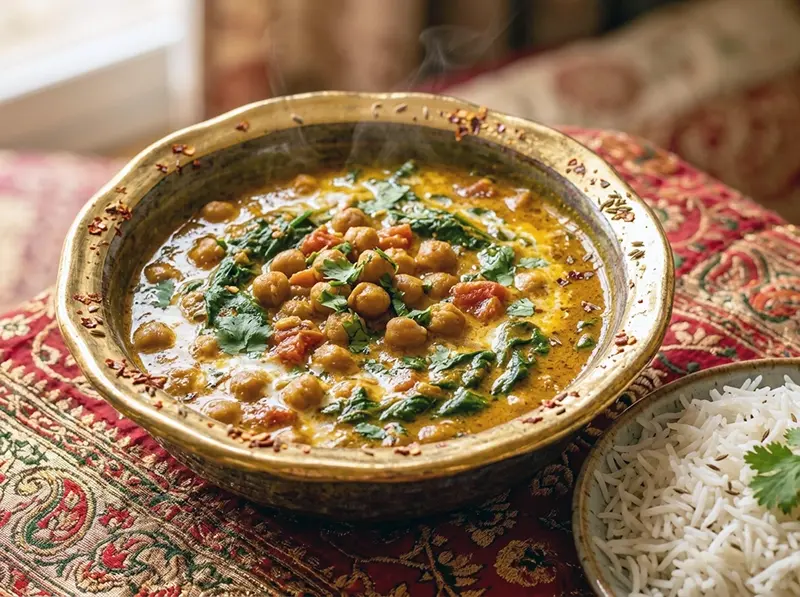
Chickpea and Spinach Curry
Two cans of chickpeas, a bag of spinach, tomatoes, coconut milk, and a handful of spices. One pan, 35 minutes. The kind of meal that costs almost nothing, reheats perfectly, and somehow gets better the next day. The spice list looks long but everything on it is standard pantry — once you have them, this recipe costs next to nothing per portion.
Ingredients
- 800 gcanned chickpeas
- 200 gfresh spinach
- 1 pieceonion
- 4 piecegarlic cloves
- 1 tbspfresh ginger
- 400 gcanned chopped tomatoes
- 2 tbsptomato paste
- 200 mlcoconut milk
- 150 mlvegetable broth
- 2 tbspvegetable oil
- 1 tspground cumin
- 1 tspground coriander
- 1 tspturmeric
- 1 tspgaram masala
- 0.5 tspcayenne pepper
- 1 tspsalt
Method
- Dice the onion, mince the garlic, and grate the ginger. Drain and rinse the chickpeas under cold water.
- Heat the oil in a large pan over medium heat. Cook the onion for 5 to 6 minutes until soft and starting to color at the edges. Add the garlic and ginger, stir for 1 minute.
- Add the cumin, coriander, turmeric, and cayenne. Stir constantly for 2 minutes — the spices need to fry in the oil, not just sit in liquid. This is where the flavor comes from.
- Add the tomato paste and stir for another 2 minutes until it darkens slightly. Then add the chopped tomatoes, chickpeas, broth, and coconut milk. Stir well.
- Bring to a boil, then reduce heat and simmer uncovered for 15 minutes, stirring occasionally. The sauce should reduce and thicken. If it still looks thin, mash a few chickpeas against the side of the pan with a spoon — the starch thickens the sauce without any flour.
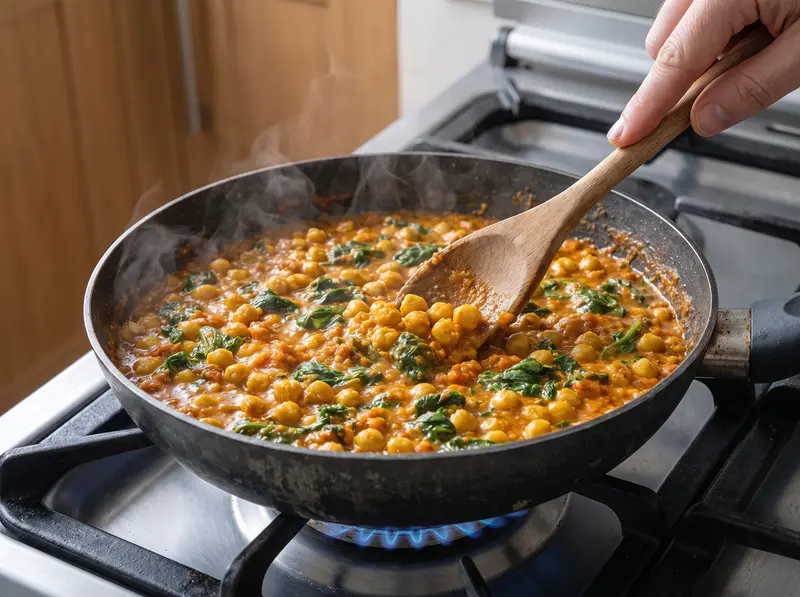
- Add the spinach in handfuls, stirring between each addition until wilted. Stir in the garam masala. Taste and adjust salt. Serve over basmati rice or with flatbread.
FAQ
Watery curry is almost always about skipped steps. The spices need to fry in oil with the onion — 2 to 3 minutes on heat activates the aromatics much better than dropping them into liquid. The tomato paste needs to darken in the pan before any liquid goes in — 2 to 3 minutes alone removes the raw metallic taste and adds depth. And the final simmer should be uncovered, 10 to 15 minutes, so the extra moisture cooks off. If it still looks thin: mash a few chickpeas directly in the sauce with a spoon. The starch thickens without any flour.
For curry, no. Home-cooked chickpeas are slightly firmer and more neutral in flavor, but they absorb the spices and sauce the same way during cooking, and the difference in the finished dish is minimal. The only thing that matters with canned: rinse them well under cold water. That removes the canning liquid and excess sodium. If you want a nuttier flavor and better texture, cook from scratch. For a regular weeknight curry, canned is completely equivalent.
Ready-made curry powder works. The flavor will be less layered because blends are often heavy on turmeric and light on everything else. A good base for this dish: cumin, ground coriander, turmeric, garam masala, plus cayenne if you want heat. Garlic and ginger are non-negotiable either way. If using a blend, add a separate pinch of garam masala at the very end — it pulls the whole flavor together. The key rule regardless of what you use: fry the spices in oil before you add the tomatoes. Without that step the curry will taste flat no matter how good the spices are.
Coconut milk gives creaminess and takes the edge off the spices. Without it the curry will be sharper and more acidic. The closest substitute is cashew cream: a handful of cashews soaked in boiling water for 20 minutes, then blended with water to a milk-like consistency. Oat or soy cream from the store is an easier option. Just more tomatoes and broth without any creamy component also works — you get a tomato-forward curry, different dish but still good. If you drop the coconut milk, add a pinch of sugar at the end to soften the tomato acidity.
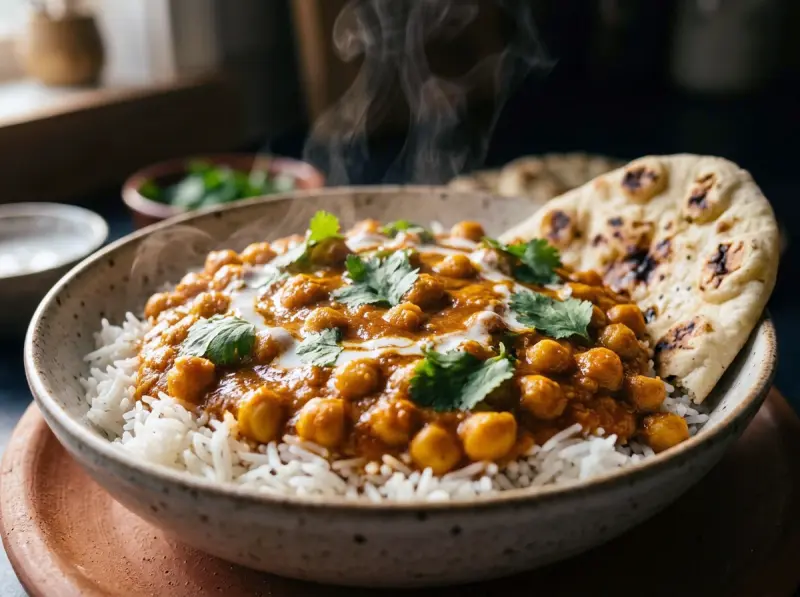
Basmati rice is the classic: it absorbs the sauce and stays fluffy. Regular long-grain rice works too, just different texture. Naan or flatbread is good if you want to scoop the sauce with bread — the simplest way to eat curry. Chapati (plain unleavened wheat flatbread) is a lighter option. Quinoa or cauliflower rice if you want to skip the carbs. A spoonful of plain yogurt on top right before eating cools things down and balances the spice. Small addition that changes how the whole dish feels.
Rate this
Recipes by email
One letter a week: a recipe picked for your taste, plus whatever is new on the site. Unsubscribe in one click.
Welcome gift: Sergei's cookbook (e-book).
By subscribing you agree to the privacy policy.
Tell us what you like to cook (30 seconds) →Keep browsing
More dishes from the Indian archive — picked by overlap with what you're cooking now.
Join the conversation
Comments (1)
Cook the canned chickpeas until it just barely yields to a knife for chickpea and spinach curry. It continues softening from residual heat for 2-3 minutes. Cooking until fully soft in the pan means mush on the plate.