
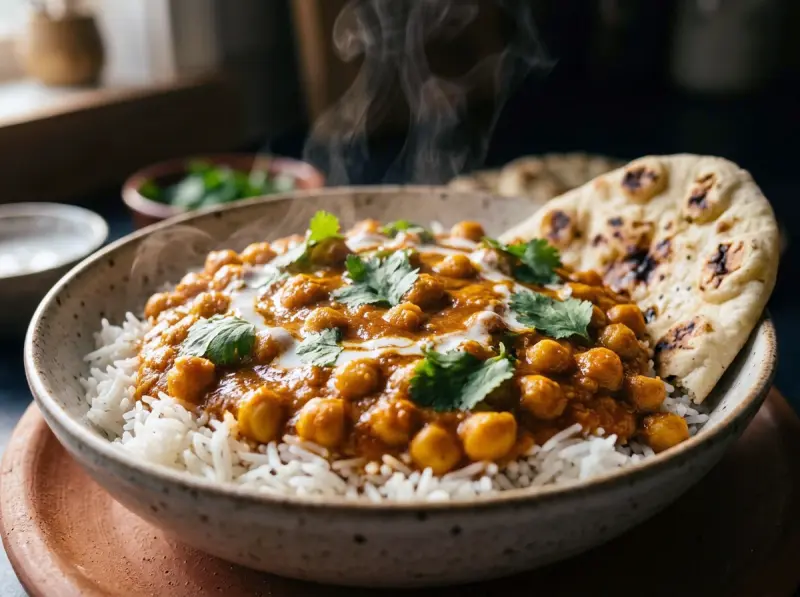
Chickpea Tikka Masala
Chickpeas simmered in a creamy, deeply spiced tomato and coconut sauce. The flavor builds in layers: caramelized onion as the base, garlic and fresh ginger for sharpness, bloomed spices for depth, tomato paste cooked until it darkens, then coconut milk pulled in at the end to soften everything into something rich and velvety. This is the version of tikka masala that makes people think vegan food is actually good. It reheats better than almost anything and tastes noticeably better the day after you make it.
Ingredients
- 800 gcanned chickpeas
- 2 tbspneutral oil or coconut oil
- 1 large onion
- 4 garlic cloves
- 2 tbspfresh ginger, grated or finely minced
- 2 tbsptomato paste
- 400 gcanned crushed or chopped tomatoes
- 400 mlfull-fat coconut milk
- 2 tspgaram masala
- 1.5 tspground cumin
- 1.5 tspground coriander
- 1 tspturmeric
- 1 tspsmoked paprika
- 0.5 tspcayenne pepper
- 1 tspfine salt
- 1 tbspfresh lemon juice
- 1 small bunchcilantro
Method
- Build the flavor base. Heat the oil in a large deep pan over medium heat. Add the diced onion with a pinch of salt and cook for 8 to 10 minutes, stirring regularly, until golden and beginning to caramelize — not just softened. The onion is the flavor foundation; don't rush this step with high heat. Add the garlic and grated ginger and cook for 2 minutes until very fragrant.
- Bloom the spices. Add the garam masala, cumin, coriander, turmeric, paprika, and cayenne to the pan. Stir constantly for 60 to 90 seconds over medium heat — the spices should smell intensely fragrant, almost toasted. This is the most important step in the recipe. Add the tomato paste and stir for another 2 minutes, letting it darken and cook in the pan rather than just warming through. The combined spice-and-tomato paste mixture should look dark and sticky.
- Add tomatoes and simmer. Pour in the canned tomatoes and stir to combine, scraping up anything on the bottom of the pan. Add 100 ml of water. Bring to a simmer, then reduce to medium-low and cook for 12 to 15 minutes until the sauce thickens and the oil begins to separate slightly at the surface — this is a sign the tomatoes have fully cooked down and the flavors have concentrated.
- Add chickpeas and coconut milk. Add the drained chickpeas and stir to coat in the sauce. Cook for 5 minutes to let the chickpeas absorb some of the sauce. Reduce the heat to low. Pour in the coconut milk and stir gently. Do not boil at this stage — keep it at a gentle simmer for 5 to 8 minutes until the sauce is creamy and cohesive. Taste and season with salt.
- Finish and serve. Remove from the heat and stir in the lemon juice — it brightens the whole dish. Let it rest for 5 minutes before serving. Scatter with fresh coriander. Serve over basmati rice with warm naan on the side. The dish improves significantly over the next 24 hours as the spices continue to develop in the sauce.
FAQ
They're different dishes with different flavor profiles. Chana masala is a traditional Indian dish made with chickpeas in a sharp, tangy, aggressively spiced tomato-based sauce that includes souring agents like amchur (dried mango powder) or tamarind. It's bold, acidic, and dry-ish. Tikka masala has a much creamier, milder sauce enriched with dairy cream (or coconut milk in vegan versions) and is sweeter, smoother, and gentler on heat. Chickpeas in tikka masala are functioning as a substitute for the chicken in the original dish; in chana masala, chickpeas are the traditional, authentic protein. If you want something rich and creamy that resembles restaurant Indian food, tikka masala is the direction. For something spicier and more austere, chana masala.
Blooming means cooking dry spices in oil or fat for 60 to 90 seconds before any liquid is added. Heat releases the fat-soluble aromatic compounds in spices into the oil, which then distributes them evenly through the entire dish. Spices added directly to a sauce never achieve this — they taste raw, powdery, and flat no matter how much you use. For tikka masala: sauté the onion until golden, add the garlic and ginger, then add all the ground spices and stir constantly over medium heat for 60 to 90 seconds until the smell is intensely fragrant and almost toasted. This is the moment that defines whether the finished dish tastes deep and layered or thin and spice-coated.
Yes. The best alternatives in order of creaminess: cashew cream (raw cashews soaked and blended with water) — neutral flavor, silky texture, very close to dairy cream; coconut cream (the solid part from a chilled can) — richer than coconut milk; thick unsweetened plant yogurt (soy or oat) — use full-fat and add at the very end off the heat, never boil it or it will split; carton plant-based cream. What doesn't work well: rice milk (too thin), thin nut milk from cartons. Whatever you use, add it on low heat at the end and do not let it boil — this prevents curdling and keeps the sauce cohesive.
It's one of the best dishes for meal prep. All Indian curries improve significantly over 24 to 48 hours as the spices continue to develop in the sauce. Store in a sealed container for 4 to 5 days in the fridge. Freeze in individual portions for up to 3 months — chickpeas freeze and reheat well without losing texture. When reheating, add 2 to 3 tablespoons of water or plant milk and warm over low heat, stirring; the sauce returns to its original consistency. Cook rice fresh with each serving rather than storing it with the curry — it keeps better that way.
Tikka masala is naturally mild to medium — the coconut milk tempers the heat and the garam masala provides warm spice rather than burning heat. This recipe is suitable for most palates including children. To increase heat: add ¼ to ½ teaspoon of cayenne or red chilli powder with the other spices, or add finely sliced fresh green chilli with the onion. To reduce heat: omit the cayenne entirely and reduce the garam masala by a third. A good table solution: serve a bowl of coconut yogurt or cashew cream alongside — it works like a cooling sauce, allowing each person to dial back the heat individually without needing a separate mild version.
Rate this
Recipes by email
One letter a week: a recipe picked for your taste, plus whatever is new on the site. Unsubscribe in one click.
Welcome gift: Sergei's cookbook (e-book).
By subscribing you agree to the privacy policy.
Tell us what you like to cook (30 seconds) →Keep browsing
More dishes from the Indian archive — picked by overlap with what you're cooking now.

Join the conversation
Comments (1)
I developed this specifically as a plant-based version of chicken tikka masala that would satisfy people who love the original. The trick is roasting the chickpeas first until they get slightly crispy on the outside — this gives them texture that holds up in the sauce instead of turning mushy. And blooming the garam masala in oil before adding the tomatoes makes the spice flavour three times more intense. Do not skip that step.