
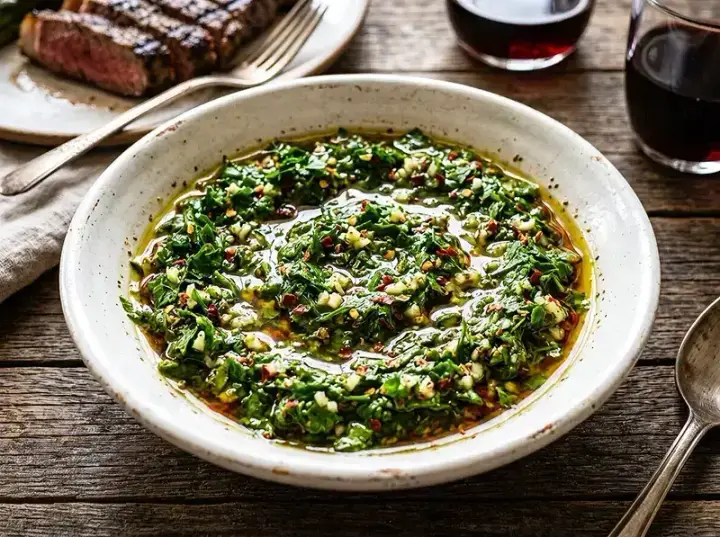
Chimichurri
Bright, herby Argentine chimichurri sauce — flat-leaf parsley, garlic, oregano, red wine vinegar, and olive oil, chopped by hand and rested until the flavors bloom. The best thing you can put on grilled meat.
Ingredients
- 1 large bunchflat-leaf parsley
- 4 clovesgarlic
- 1 tspdried oregano
- 3 tbspred wine vinegar
- 120 mlolive oil
- 0.5 tspred pepper flakes
- to tastesalt
Method
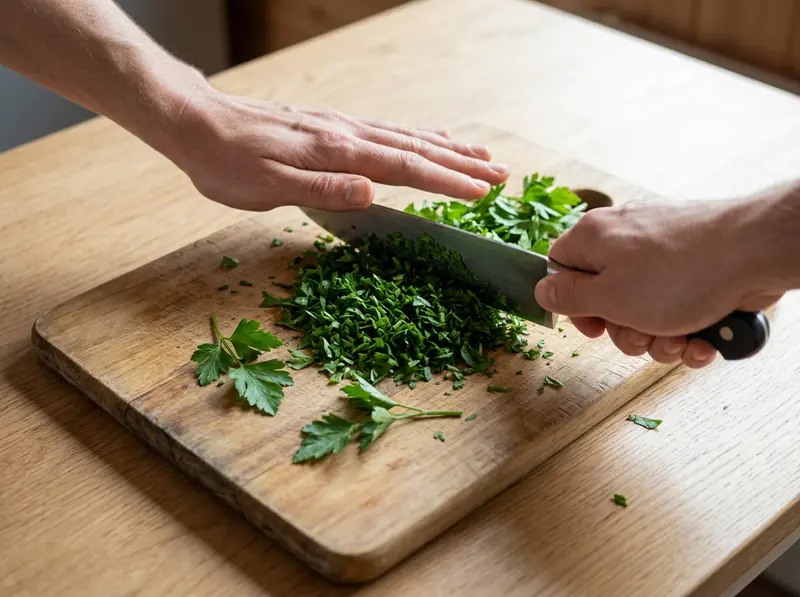
- Wash the parsley, shake off excess water, and chop very finely with a sharp knife. Use only flat-leaf (Italian) parsley — curly parsley has a bitter, grassy taste that does not work here.
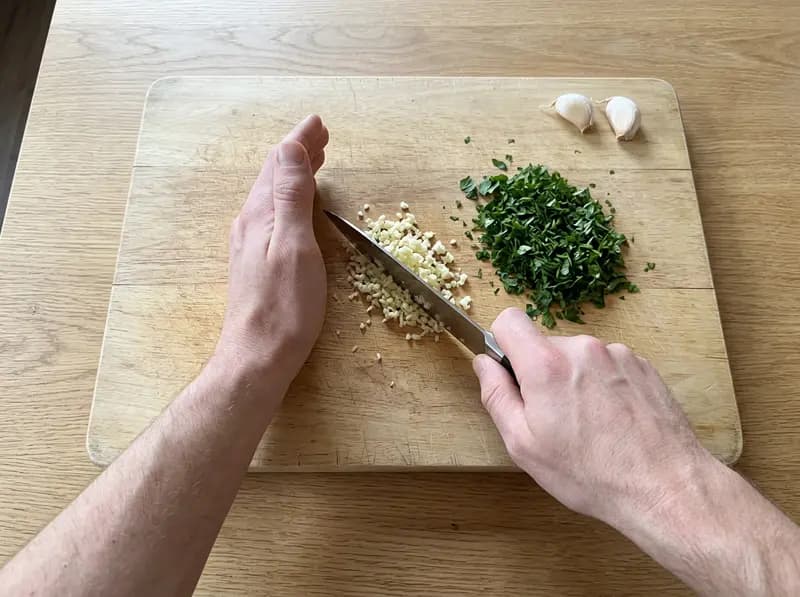
- Mince the garlic as finely as you can. Add it to a bowl with the chopped parsley.
- Add the dried oregano, red pepper flakes, and a generous pinch of salt. Stir to combine.
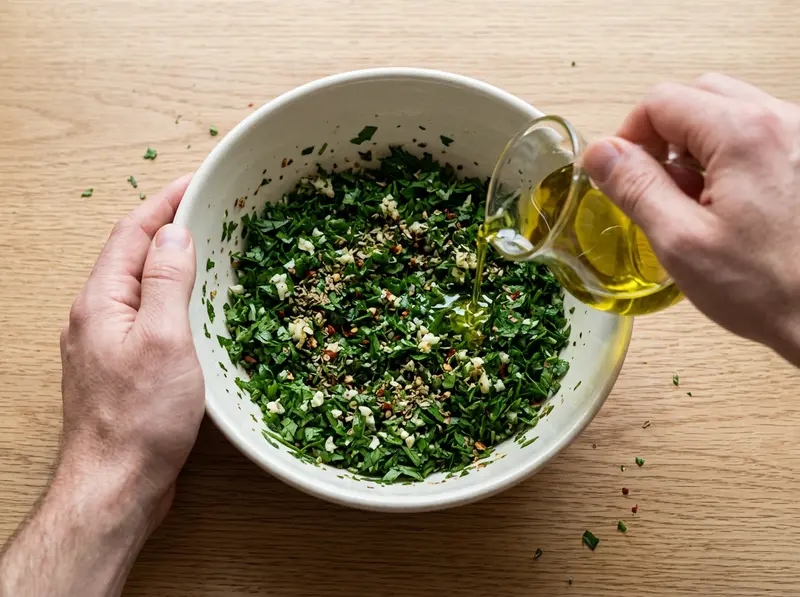
- Pour in the red wine vinegar and olive oil. Stir well until everything is evenly combined.
- Let the chimichurri rest at room temperature for at least 30 minutes before serving — the vinegar softens the raw garlic and the flavors come together. It gets better with every hour.
FAQ
Green chimichurri (chimichurri verde) is the original — parsley, garlic, oregano, vinegar, and oil. Red chimichurri (chimichurri rojo) adds roasted red peppers, tomato, and smoked paprika, giving it a sweeter, smokier flavor. Green is sharper and more herbaceous, and it is the traditional choice for grilled steak in Argentina. Red works better with chicken, pork, or roasted vegetables. Both are excellent — think of green as a bright knife cut and red as a warm embrace.
You can, but the result is different. A food processor turns the parsley into a smooth green paste and releases bitter chlorophyll. The texture of hand-chopped chimichurri — small distinct pieces suspended in oil — is part of what makes it special. If you must use a machine, pulse briefly in 2-second bursts and stop while the pieces are still visible. Never blend to a smooth consistency. A sharp knife and 5 minutes of chopping gives a clearly better result.
Chimichurri keeps for 7 to 10 days in the fridge in a glass jar with a tight lid. The flavor actually improves over the first 24 to 48 hours as the vinegar tames the raw garlic and the herbs infuse the oil. After day 4 or 5 the parsley starts to lose its bright green color, turning slightly olive, but the flavor is still excellent. Always use a clean spoon and keep the herbs submerged in oil. Do not freeze chimichurri — it destroys the texture of the parsley.
Chimichurri is far more versatile than most people realize. It is outstanding on grilled chicken, lamb chops, and pork tenderloin. Drizzle it over roasted vegetables, baked sweet potatoes, or grilled corn. Use it as a marinade for 1 to 2 hours before cooking. Spoon it over fried or poached eggs. Mix it into warm pasta or grain bowls. It makes an excellent bread dip — pour chimichurri into a shallow plate, add good bread, and you have an appetiser that takes 10 minutes and impresses everyone.
Fresh chimichurri always tastes sharp right after mixing — raw garlic and undiluted vinegar dominate. The fix is time, not technique: let it rest at room temperature for at least 30 minutes, and ideally 2 to 4 hours. The vinegar acid breaks down the harsh compounds in raw garlic (allicin) and everything balances out. If you want it milder from the start, use roasted garlic instead of raw — 4 roasted cloves give depth without any sharpness. You can also reduce the garlic to 2 cloves for a more subtle version.
Rate this
Recipes by email
One letter a week: a recipe picked for your taste, plus whatever is new on the site. Unsubscribe in one click.
Welcome gift: Sergei's cookbook (e-book).
By subscribing you agree to the privacy policy.
Tell us what you like to cook (30 seconds) →Keep browsing
More dishes from the American archive — picked by overlap with what you're cooking now.


Join the conversation
Comments (1)
The flat-leaf parsley quality is the entire dish here. With so few ingredients, every component of this chimichurri is exposed — there's absolutely nowhere for mediocre ingredients to hide.