


Cinnamon Rolls with Cream Cheese Frosting
Bakery-style cinnamon rolls: a pillowy, enriched dough made with the tangzhong technique — a Japanese method of cooking a small portion of flour and milk into a paste before adding it to the dough — which lets the dough hold far more moisture than normal, so the rolls are still soft the next day instead of going stale by evening. The filling is brown sugar, cinnamon, and butter that melts into gooey caramelized layers during baking. The crowning cream cheese frosting is spread over warm rolls so it partially melts into the swirls. These are the rolls that end arguments about what to bring to brunch.
Ingredients
- 40 gplain flour
- 200 mlwhole milk
- 400 gbread flour or strong white flour
- 60 gcaster sugar
- 7 ginstant yeast
- 1 tspfine salt
- 2 eggs
- 80 mlwarm whole milk
- 60 gunsalted butter
- 120 gsoft brown sugar
- 2 tbspground cinnamon
- 60 gunsalted butter, very soft
- 150 gfull-fat cream cheese
- 60 gunsalted butter
- 200 gicing sugar
- 1 tspvanilla extract
- 2 tbspwhole milk or double cream
Method
- Make the tangzhong. Whisk 40 g plain flour with 200 ml milk in a small saucepan until no lumps remain. Place over medium heat and stir constantly for 2 to 3 minutes until the mixture thickens to a smooth, pudding-like paste — when you drag a spatula across the bottom and it leaves a clean line, it is ready. Scrape into a bowl and cool to room temperature. This paste is the secret to ultra-soft rolls.
- Make and knead the dough. In the bowl of a stand mixer combine bread flour, caster sugar, yeast, and salt. Add the cooled tangzhong, eggs, and warm milk. Mix on low speed with the dough hook until a rough dough forms, about 2 minutes. Increase to medium and knead 5 minutes. Add the softened butter in small pieces over 3 minutes — the dough will look greasy and messy before it comes together. Continue kneading 8 to 10 more minutes until the dough is smooth, elastic, and pulls away cleanly from the sides of the bowl. It will be slightly tacky but not sticky. Cover and rise in a warm place until doubled, 60 to 90 minutes.
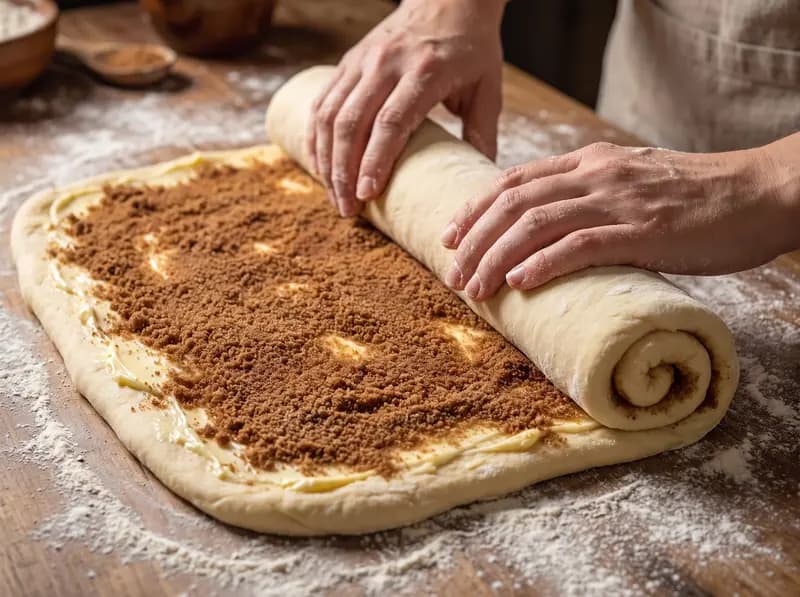
- Roll out and fill. On a lightly floured surface, roll the dough into a 40 × 30 cm (16 × 12 inch) rectangle. Mix the brown sugar and cinnamon together. Spread the very soft butter evenly over the entire surface, right to the edges. Sprinkle the cinnamon sugar evenly over the butter. Starting from a long edge, roll the dough tightly into a log. Using unflavoured dental floss or a sharp serrated knife, cut into 12 equal rolls. Arrange cut-side-up in a lined 23 × 33 cm (9 × 13 inch) baking tin. Cover and rise until the rolls are puffy and touching each other, 45 to 60 minutes.
- Bake. Preheat oven to 180°C (350°F). Bake for 20 to 25 minutes until the rolls are light golden — do not bake until deeply golden or they will be dry inside. The internal temperature of the dough should read 88°C (190°F). Remove from the oven and cool in the tin for 5 minutes only — they should be warm but not scorching when you frost them.
- Make the frosting and finish. Beat the cream cheese and butter together until smooth. Add the sifted icing sugar and vanilla, beating until light. Add milk or cream to reach a spreadable consistency — it should be thick enough to sit on the rolls but soft enough to melt slightly into the warm swirls. Spread generously over the warm rolls. Serve immediately for the gooey experience, or at room temperature where the frosting will set to a creamy layer. Frosted rolls should not sit out for more than 2 hours: cover and refrigerate them. If you are baking ahead, frost only what you will serve; unfrosted rolls keep, well wrapped, for up to 2 days at room temperature.

Cooked it? Rate the recipe
FAQ
Tangzhong (湯種) is a Japanese and Chinese bread-making technique in which a small portion of a recipe's flour and liquid are cooked together into a thick paste before being incorporated into the main dough. When heated to around 65°C (149°F), the starch granules in the flour gelatinise — they swell, rupture, and permanently bind water molecules. This pre-gelatinised starch can hold significantly more water than raw flour can, allowing the dough to be more hydrated overall. Higher hydration produces a softer, more tender crumb. The bound water is also more resistant to evaporation during baking and cooling, which is why tangzhong breads stay moist longer than conventional enriched breads.
Yes — the overnight method is actually preferable for flavor and convenience. After cutting the rolls and placing them in the tin, cover tightly with cling film and refrigerate overnight (up to 16 hours). The cold slows the yeast dramatically, allowing a long, slow rise that develops more flavor. In the morning, remove from the fridge and let the rolls sit at room temperature for 45 to 60 minutes to fully puff up before baking. Bake as normal. Alternatively, baked and cooled rolls (without frosting) freeze well in an airtight container for up to 1 month. Thaw at room temperature and reheat in a 160°C oven for 8 minutes, then frost. Another enriched dough that takes well to a long cold rest is brioche.
Three common causes. First: over-kneading or under-kneading — the dough should be smooth and elastic when pulled; if it tears, it needs more kneading; if it is very tough and rubbery, it may be over-kneaded. Second: over-baking — rolls should be pale golden, not dark brown; baking until dark means the interior is overcooked and dry. Third: too much flour — if the dough was sticky and you added flour to the counter when rolling, you incorporated extra flour that made the dough dense. Use a light flour dusting or roll on a silicone mat, or oil the surface slightly instead of flouring.
The most reliable method is dental floss: slide a 40 cm length of plain, unflavoured dental floss under the log, cross the ends over the top, and pull firmly — it cuts through cleanly without compressing the roll. A sharp serrated knife also works: use a gentle sawing motion rather than pressing down; pressing compresses the layers. A plain knife pressed straight down is the worst option — it squashes the layers and the filling spills out. Refrigerating the rolled log for 20 minutes before cutting makes it firmer and easier to slice neatly.
Frosted warm — the sweet spot. Adding cream cheese frosting to rolls straight from the oven melts it immediately into a liquid that pools at the bottom of the pan. Waiting until fully cool produces a solid, stiff layer that sits on top without integrating. The ideal is about 5 minutes after the rolls come from the oven: the rolls are still warm enough that the frosting softens and flows slightly into the cinnamon swirls, but cool enough that it remains thick and creamy rather than turning to liquid. Frosting applied warm becomes part of the roll; frosting applied cold sits separately on top.
Keep browsing
More dishes from the American archive — picked by overlap with what you're cooking now.



Recipes by email
One letter a week: a recipe picked for your taste, plus whatever is new on the site. You can stop the letters in one click.
Welcome gift: Sergei's cookbook (e-book).
By signing up for the newsletter you agree to the privacy policy.
Tell us what you like to cook (30 seconds) →
Join the conversation
Comments
No comments yet — be the first!