
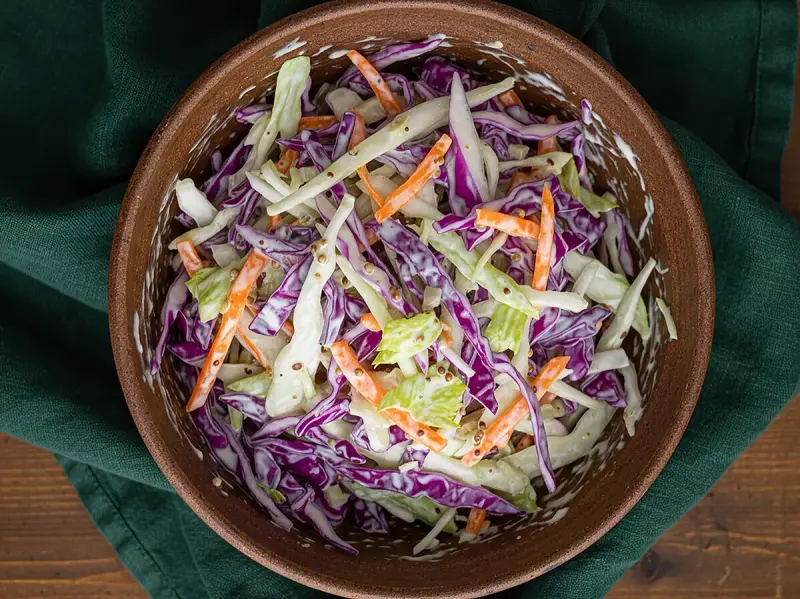
Coleslaw
Shredded cabbage and carrots dressed in a tangy, slightly sweet mayo-based dressing with a kick of vinegar. The secret is salting the cabbage first to draw out water — otherwise it turns soggy within an hour.
Ingredients
- 500 gwhite cabbage
- 2 mediumcarrots
- 1 smallonion
- 120 mlmayonnaise
- 2 tbspapple cider vinegar
- 1 tbspDijon mustard
- 1 tbspsugar
- 1/2 tspsalt
- 1/4 tspblack pepper
- 1/2 tspcelery seed
Method
- Finely chop the cabbage with a knife, on a mandoline or in a food processor. Grate the carrots on a coarse grater. If using, thinly slice the onion.
- In a large bowl, combine mayonnaise, apple cider vinegar, mustard, sugar, salt, pepper and celery seed. Whisk well until smooth.
- Add the chopped cabbage, carrots and onions to the bowl with the dressing. Mix thoroughly.
- Cover the bowl and refrigerate for at least 1 hour before serving.
FAQ
Watery coleslaw is caused by osmosis: salt and sugar in the dressing draw moisture out of the shredded cabbage, which then pools at the bottom of the bowl. The fix is to pre-salt the cabbage before dressing it. Shred the cabbage, toss with 1 teaspoon of salt per 300 g of cabbage, and let it sit in a colander for 20–30 minutes. Rinse briefly under cold water, then squeeze firmly with your hands or press through a clean towel to remove as much water as possible. Pat dry. This step removes 30–40% of the cabbage's water content before the dressing goes on. The result is coleslaw that stays crisp and doesn't pool liquid even after several hours. If you skip pre-salting, dress the coleslaw no more than 30 minutes before serving and drain any accumulated liquid before plating.
Yes — there are several excellent lighter alternatives to full mayonnaise. The most popular lighter version uses a mix of half mayonnaise and half Greek yoghurt (full-fat), which cuts calories while maintaining creaminess and tang. Sour cream (or crème fraîche) alone makes a rich, slightly tangier dressing. For a completely mayo-free coleslaw, a vinaigrette-style dressing works well: 3 tablespoons apple cider vinegar, 2 tablespoons olive oil, 1 tablespoon honey or sugar, 1 teaspoon Dijon mustard, salt and pepper — this gives a crisp, bright result that's very popular in Southern US-style coleslaw. Tahini thinned with lemon juice and a little water is an unusual but excellent substitute for a nuttier flavor. Whatever you use, the dressing should coat the cabbage, not drown it — start with less than you think you need and add more gradually.
Coleslaw improves significantly with resting time, and this is one of the few salads where making it a day ahead is genuinely recommended. Fresh coleslaw straight after mixing is crunchy but the dressing flavors haven't melded yet and it can taste sharp and raw. After 1–2 hours in the fridge the cabbage softens slightly and absorbs the dressing, giving a more cohesive flavor. After overnight (8–12 hours) the coleslaw reaches its best flavor — the dressing permeates the cabbage fully, the sharpness mellows, and all the flavors come together. However, after 24 hours the cabbage starts to go limp and the coleslaw becomes soggy. For maximum crunch, serve within 4 hours. For best flavor, make it the night before and drain any excess liquid before serving. For events, make it the morning of and refrigerate.
Vinegar provides acidity and acts as a preservative, but it can be replaced or reduced. The best vinegar-free acid alternatives: lemon juice (fresh, not bottled) gives a bright citrusy acidity that works very well, especially in creamy coleslaw — use the juice of half a lemon per 300 g of cabbage. Lime juice is excellent in Asian-style or Mexican-inspired slaws. Buttermilk adds tang naturally without sharp vinegar flavor and makes the dressing exceptionally creamy. Greek yoghurt or sour cream also provide mild acidity. If you want a completely neutral, no-acid coleslaw (unusual but possible), rely on the sweetness and seasoning of the dressing to balance the raw cabbage — add a little extra sugar, Dijon mustard, and plenty of salt. The crunch comes from the cabbage itself, not the acid.
White (green) cabbage is the traditional choice and the most common — it has a mild flavor, firm texture, and holds up well under creamy dressing. It produces the classic pale, creamy coleslaw. Red cabbage has a slightly stronger, more peppery flavor and a firmer, crunchier texture that holds its crunch longer. It turns the dressing a vivid purple color, which looks dramatic but can be unappealing if the color bleeds into a white dressing. Using a combination of 2 parts white to 1 part red gives the best of both: visual color contrast, more complex flavor, and good texture. Napa (Chinese) cabbage is softer and milder, making a more delicate coleslaw that wilts faster — good for Asian-style slaws. Savoy cabbage works but is less sturdy. Whatever cabbage you use, shred it as thinly as possible — a mandoline gives the best results.
Rate this
Recipes by email
One letter a week: a recipe picked for your taste, plus whatever is new on the site. Unsubscribe in one click.
Welcome gift: Sergei's cookbook (e-book).
By subscribing you agree to the privacy policy.
Tell us what you like to cook (30 seconds) →Keep browsing
More dishes from the American archive — picked by overlap with what you're cooking now.

Join the conversation
Comments (1)
The knife work is what makes this coleslaw special. Every piece of white cabbage cut to the same size means every forkful is balanced. It's the kind of detail you taste but can't quite identify.