

Cottage Cheese Flatbread
High-protein flatbread made entirely from cottage cheese and eggs — no flour, no yeast, no kneading. This two-ingredient base blends into a smooth batter, bakes into a golden sheet with crispy edges and a soft, pliable center. Perfect as a keto pizza crust, a wrap for lunch prep, or torn into pieces and dipped into hummus. It has to cool completely on the baking sheet before you peel it off the paper; that wait is not counted in the time. Each serving has about 17 g of protein, making it one of the easiest high-protein breads you can bake.
Ingredients
- 200 gcottage cheese
- 2 eggs
- 0.5 tspgarlic powder
- 1 tspItalian herbs
- to tastesalt
- to tasteblack pepper
- 1 tbspolive oil
Method
- Preheat your oven to 175°C (350°F). Line a baking sheet with parchment paper and brush it lightly with the olive oil so the flatbread does not stick.
- Add the cottage cheese, eggs, garlic powder, Italian herbs, salt, and pepper to a blender. Blend on high for 30–45 seconds until completely smooth with no lumps. The batter should be pourable, like a thick pancake batter.
- Pour the batter onto the prepared baking sheet and spread it evenly into a rectangle or circle about 5 mm thick. Use a spatula or the back of a spoon to smooth it out — thinner edges will get crispier.
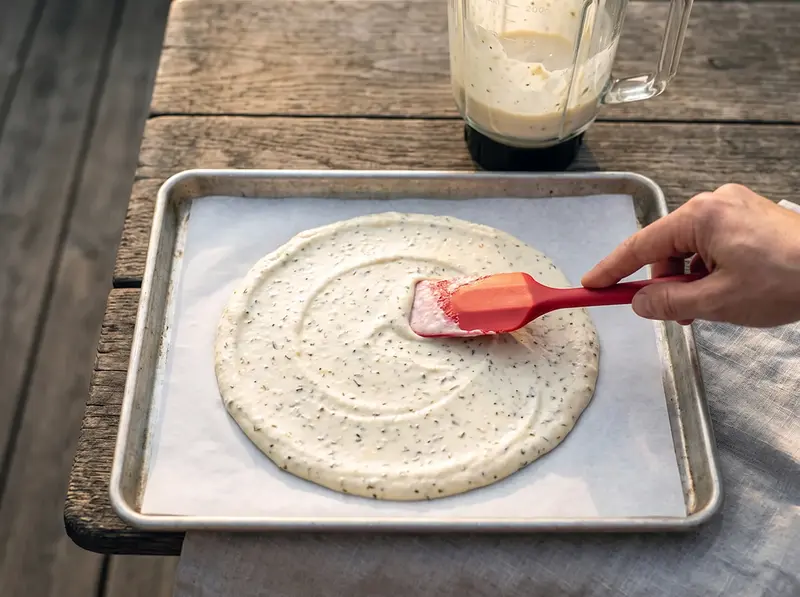
- Bake for 30–40 minutes, until the surface is golden and dry to the touch and the center is set. Start checking at 30 minutes. The flatbread puffs up in the oven and sinks back as it cools.
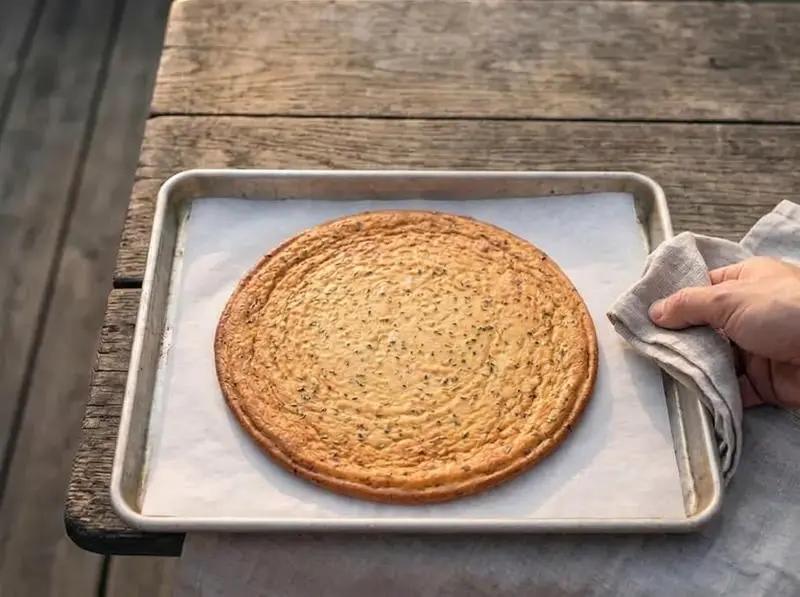
- Leave the flatbread on the baking sheet until it is completely cool. Do not rush this: it firms up as it cools, and if you peel it off the parchment while it is still hot, it falls apart. Then lift it off the paper onto a cutting board. Cut into squares or triangles, or use the whole sheet as a pizza base — slide it off the parchment onto the bare tray, add your toppings and broil for 3–4 minutes.
FAQ
The most likely cause is peeling it off the parchment too soon. The flatbread is fragile while hot and only firms up as it cools, so leave it on the baking sheet until it is completely cool. The second cause is cottage cheese that is too wet: if it looks watery, drain it for a few minutes before blending, or the flatbread stays too soft to hold together. Full-fat and low-fat cottage cheese both work. The third is not blending long enough: you need 30–45 seconds on high speed to break down every single curd into a completely smooth batter. Visible lumps mean the structure won't hold.
Yes, this is one of the best keto pizza bases you can make. The entire flatbread (both servings) contains approximately 8–9 g of carbs in total, so each serving has about 4 g — well within keto limits. To use it as pizza base: bake and cool the flatbread as in the recipe, then slide it off the parchment onto the bare tray and add tomato sauce, mozzarella, and your toppings. Put it under the broiler for 3–4 minutes until the cheese is bubbly and golden. The edges get beautifully crispy while the center stays sturdy enough to hold toppings.
The base recipe with garlic powder and Italian herbs is a great starting point, but this flatbread takes well to many flavors. For Mediterranean style, add 2 tablespoons of sun-dried tomatoes (finely chopped) and a teaspoon of dried oregano to the batter. For Indian-inspired, use 1/2 teaspoon each of cumin and turmeric. Everything bagel seasoning sprinkled on top before baking is phenomenal. Fresh herbs like rosemary or thyme pressed into the surface give it an artisan bread feel. Grated Parmesan (2 tablespoons) mixed into the batter adds umami depth.
A food processor works just as well — pulse for 20–30 seconds until smooth. A hand blender (immersion blender) in a tall container also does the job perfectly. However, a fork or whisk will not give good results. The cottage cheese curds need to be completely broken down into a smooth, pourable batter. With a fork, you'll have lumpy batter that bakes into an uneven sheet with weak spots that tear. If you truly have no blending tools, push the cottage cheese through a fine-mesh sieve first, then whisk vigorously with the eggs — this is slower but achievable.
The flatbread keeps well in the fridge for 3–4 days stored in an airtight container or wrapped tightly in plastic wrap. To reheat, place it in a dry skillet over medium heat for 1–2 minutes per side — this restores the crispiness much better than a microwave, which makes it rubbery. You can also freeze it: let it cool completely, place parchment paper between layers, and store in a freezer bag for up to 2 months. Thaw in the fridge overnight, then crisp up in a hot skillet. The texture is nearly as good as fresh.
Rate this
Recipes by email
One letter a week: a recipe picked for your taste, plus whatever is new on the site. Unsubscribe in one click.
Welcome gift: Sergei's cookbook (e-book).
By subscribing you agree to the privacy policy.
Tell us what you like to cook (30 seconds) →Keep browsing
More dishes from the American archive — picked by overlap with what you're cooking now.



Join the conversation
Comments (1)
Timing is everything with cottage cheese flatbread. I have the plate warming in the oven while I cook, so everything goes from pan to table at peak temperature. This is not a dish that waits well.