
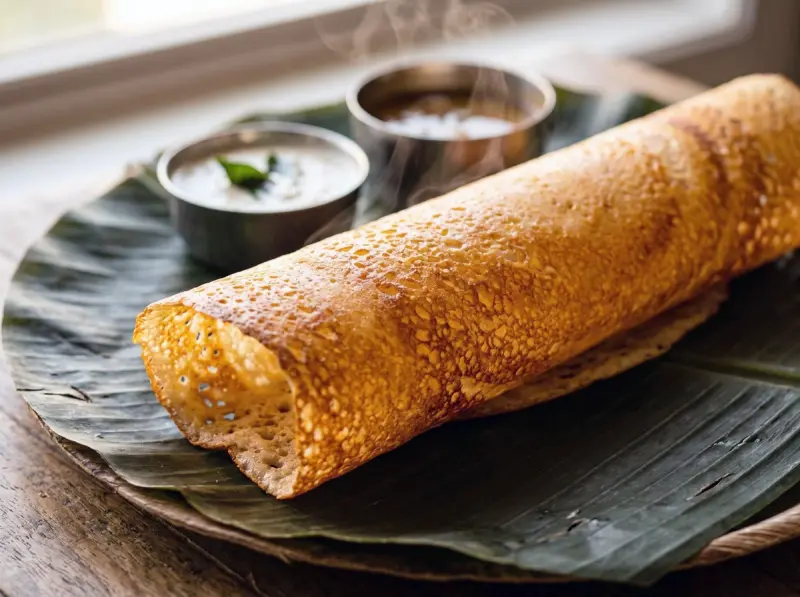
Dosa
Thin, crispy fermented rice and lentil crepes from South India. The batter is made the day before: rice and urad dal soaked separately, ground to a smooth batter, then left overnight to ferment. The fermentation is what makes dosa different from every other flatbread — it develops a mild sourness, creates air pockets throughout the batter, and produces a crispiness when the thin layer hits a hot pan that no unfermented batter can replicate. The technique for spreading the batter is specific and takes one or two practice rounds to get right. Makes 8 to 10 dosas.
Ingredients
- 300 glong-grain white rice or parboiled rice, rinsed 2-3 times
- 100 gurad dal
- 0.5 tspfenugreek seeds
- 1 tspnon-iodised salt
- 2 tbspneutral oil or ghee
- 4 medium potatoes (masala filling)
- 1 tspmustard seeds (masala filling)
- 1 onion, sliced (masala filling)
- 2 green chillies (masala filling)
- 1 sprigcurry leaves (masala filling)
- 0.5 tspground turmeric (masala filling)
- 0.5 lemon (masala filling)
Method
- Soak separately. Place rice in one bowl and urad dal with fenugreek seeds in a second bowl. Cover each with cold water by several centimetres. Soak for 6 to 8 hours or overnight. The rice and dal must soak separately: they grind to different textures and take different amounts of time in the blender. Don't over-rinse the urad dal — you want to keep the natural yeasts on the surface.
- Grind. Drain the urad dal (reserve the soaking water). Blend dal with fenugreek seeds and 80 to 100 ml of cold water for 4 to 5 minutes until completely smooth, pale, and slightly fluffy — it should almost look like thick cream. Transfer to a large bowl. Drain the rice and blend with 100 to 130 ml of cold water until the texture is smooth with just a slight graininess — not as fine as the dal. Add to the bowl with the dal and mix well. The combined batter should pour like thick pancake batter. Add a little more water if needed.
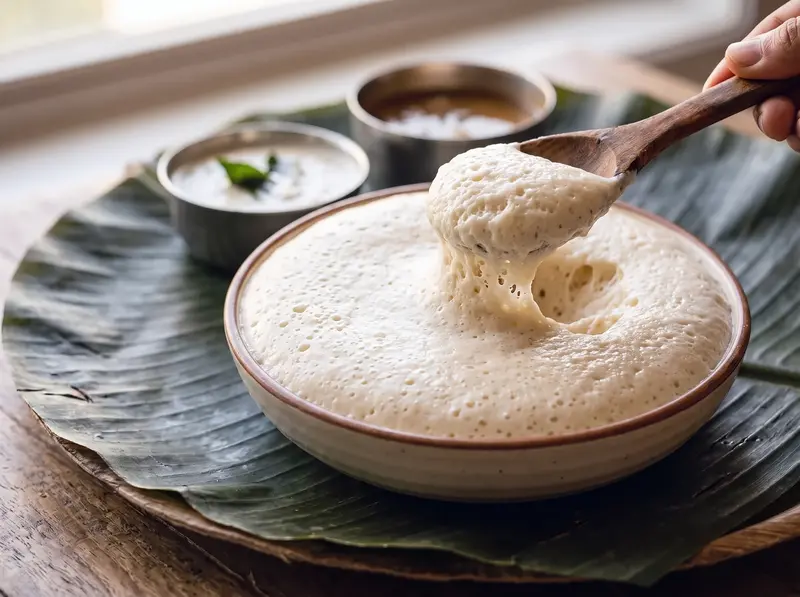
- Ferment. Cover the bowl loosely with a cloth or lid (not sealed — fermentation produces gas). Leave in a warm place (25 to 30°C) for 8 to 12 hours until the batter has risen noticeably, smells mildly sour, and shows small bubbles throughout. In a cold kitchen: place in a turned-off oven with just the oven light on. Do not add salt before fermentation — iodised salt especially inhibits yeast activity. Once fermented, add the non-iodised salt and stir gently to preserve the air in the batter.
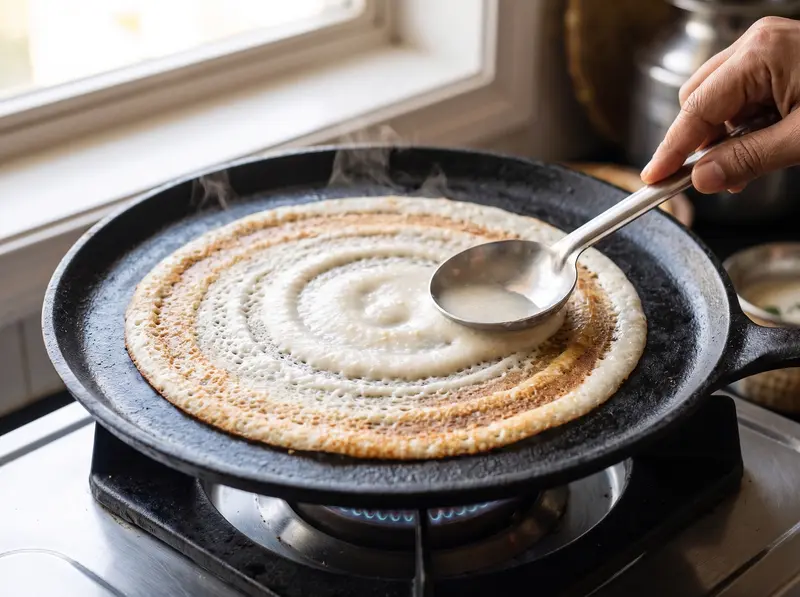
- Cook the dosas. Heat a cast-iron tawa or heavy flat pan over medium-high heat until very hot. Wipe with a paper towel dipped in oil. Pour a small ladle (about 80 ml) of batter into the center of the pan. Immediately use the back of the ladle or a flat-bottomed cup to spread the batter outward in a spiral motion — from center outwards — pressing lightly and working quickly. The dosa should be thin and even, about 20 to 22 cm across. Drizzle a teaspoon of oil around the edges. Cook without moving for 2 to 3 minutes until the top surface turns from white to off-white and the edges lift. Flip and cook 30 seconds more. Roll or fold and serve immediately.
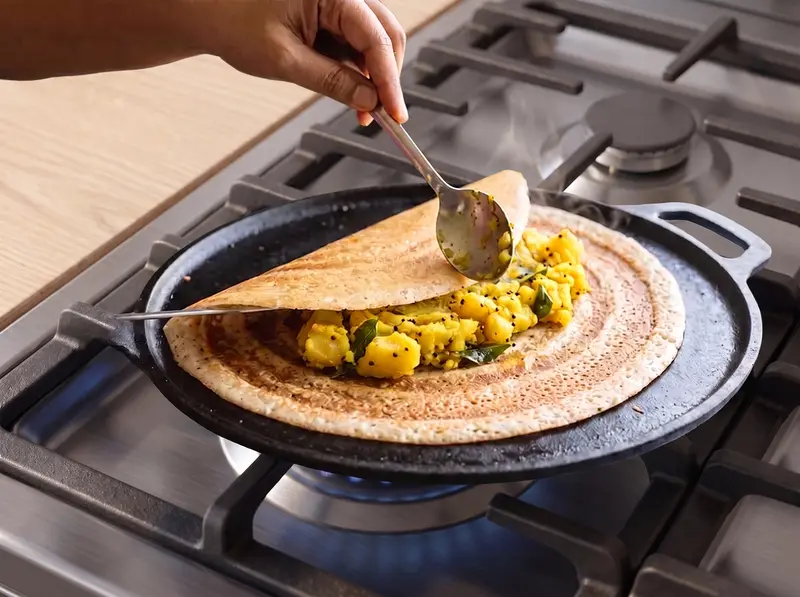
- Masala dosa (optional filling). Boil and mash 3 to 4 medium potatoes. In a pan, heat oil and add 1 tsp mustard seeds. When they pop, add 1 sliced onion, 2 green chillies, a sprig of curry leaves, and ½ tsp turmeric. Cook until soft. Add the mashed potato, salt, and a squeeze of lemon. Stir well. Place 2 to 3 tablespoons of filling on one half of the dosa before folding. Serve immediately with coconut chutney and sambar.
FAQ
Dosa is a fermented rice and lentil crepe from South India. The batter is made from rice and urad dal (hulled black gram lentils), soaked separately, ground to a smooth batter, and fermented for 8 to 12 hours. The fermentation creates mild acidity and air pockets throughout — these are what produce the characteristic crispiness when the thin layer hits a hot pan. Dosa is one of the principal breakfasts of South India and is now eaten across India and globally. The most famous version is masala dosa: a thin, crispy rolled dosa filled with spiced potato curry.
Fermentation needs warmth and live yeasts. Three reasons it fails. First: too cold. The ideal temperature is 25 to 30°C. Solution: turn the oven on low for a few minutes, turn it off, then put the batter inside with the door closed — or place it under just the oven light with no heat. Second: the urad dal was over-rinsed and the natural yeasts on the surface were washed away. Rinse rice 2 to 3 times but urad dal only once, gently. Third: iodised salt was added before fermentation — iodine inhibits yeast. Always add salt after fermentation is complete. Fenugreek seeds (half a teaspoon) soaked with the dal help trigger fermentation.
The technique is specific and takes two or three dosas to learn. Batter consistency is crucial: it should pour like thin pancake batter. If it tears, the batter is too thin — add a tablespoon of rice flour and stir. If it doesn't spread, either the batter is too thick (add a little water) or the pan is too hot (let it cool for 30 seconds). The spreading motion: pour the batter into the center of the pan and immediately use the back of the ladle in a spiral motion from the center outward, pressing lightly and moving fast. The whole spreading action should take about 5 seconds. A flat-bottomed cup or the back of a metal spoon also works.
They use the same ingredients but in different proportions. Dosa batter uses more rice (typically 3:1 rice to dal ratio) and is made thinner — the higher rice content and the thinner consistency give crispiness when spread on a hot pan. Idli batter uses a slightly higher proportion of urad dal and is cooked thicker in a steamer, which gives the idli its soft, spongy texture. Many South Indian households make a single batch at a 2:1 rice-to-dal ratio and use it for both, adjusting thickness with water. Leftover dosa batter can also make uttapam (thick pancakes topped with vegetables) and paniyaram (small dumplings).
The essential pairing is coconut chutney (fresh coconut blended with green chilli, ginger, and tempered with mustard seeds and curry leaves) and sambar (a tangy lentil and vegetable soup made with tamarind and sambar masala powder). For masala dosa: spiced potato filling (potato mashed with mustard seeds, onion, curry leaves, and turmeric). Other traditional chutneys include tomato chutney, coriander chutney, and ginger chutney. In South Indian restaurants, dosa typically arrives with two or three chutneys and a bowl of sambar. The combination of crisp dosa, cool coconut chutney, and hot sambar is the classic way to eat it.
Rate this
Recipes by email
One letter a week: a recipe picked for your taste, plus whatever is new on the site. Unsubscribe in one click.
Welcome gift: Sergei's cookbook (e-book).
By subscribing you agree to the privacy policy.
Tell us what you like to cook (30 seconds) →Keep browsing
More dishes from the Indian archive — picked by overlap with what you're cooking now.

Join the conversation
Comments (2)
Dosa batter needs time. I know the recipe says "ferment overnight" and people think 8 hours is enough, but in a cold kitchen it can take 24 hours. You want the batter to double in volume and smell slightly sour. The fermentation is what makes dosa crispy on the outside and lacy — without it you just get a rice flour crepe. Use a non-stick pan if your cast iron is not perfectly seasoned.
La dosa me salió crujiente y finita como en los restaurantes indios!! El truco es que la sartén tiene que estar a fuego medio, no fuerte. Y la masa se extiende con el dorso de un cucharón haciendo círculos desde el centro. La salsa de coco que viene con la receta está increíble, mis hijos la comieron con todo.