


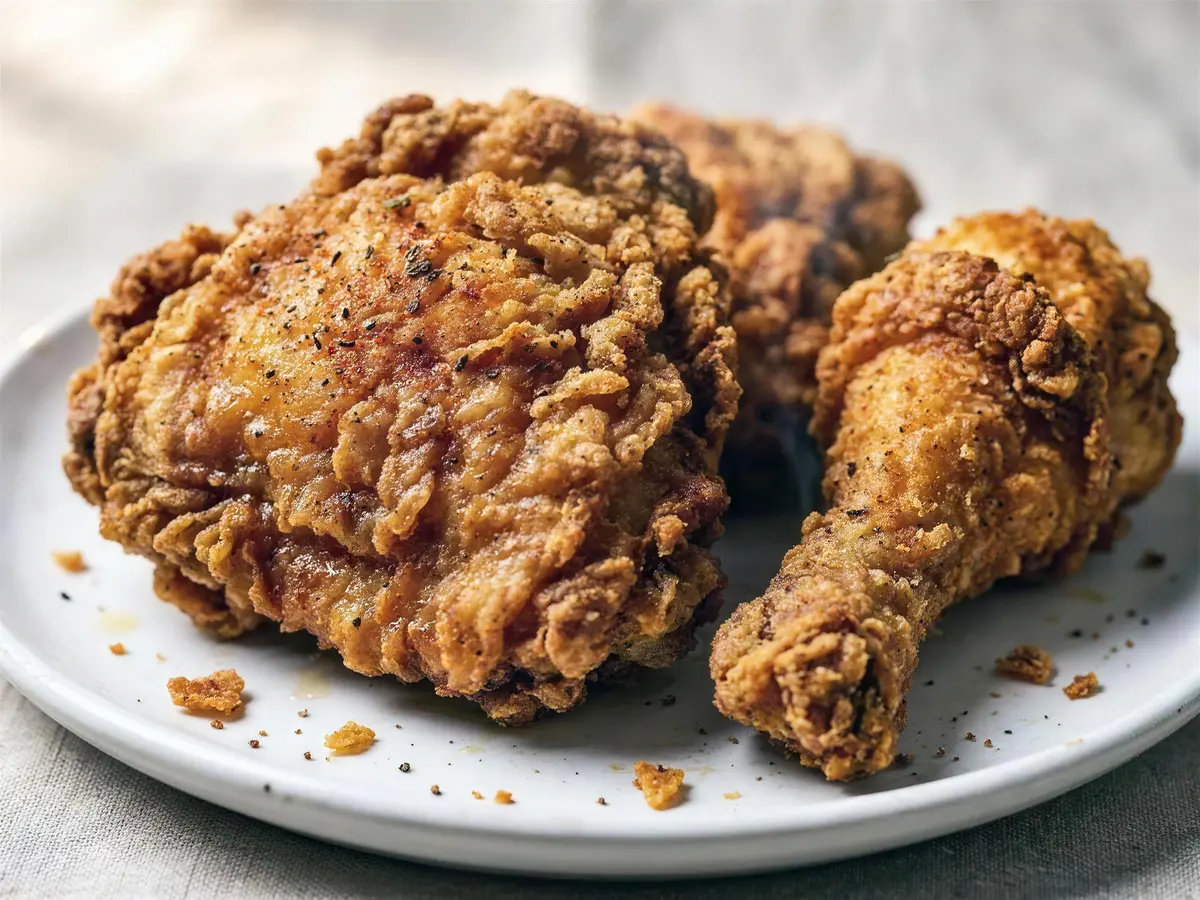
Fried Chicken
Fried chicken is the Southern American dish of bone-in chicken pieces soaked in buttermilk, dredged in seasoned flour and fried until the crust is crisp and golden. This version uses one whole bird of about 1.5 kg, cut into 8 pieces. The chicken soaks in buttermilk for 4 hours or overnight first.
Ingredients
- 1 whole chicken, cut into 8 pieces
- 2 cupbuttermilk
- 2 cupflour
- 1 tbsppaprika
- 1 tspgarlic powder
- 1 tsponion powder
- 1 tspdried thyme
- 1 tspdried oregano
- 2 tspsalt
- 1 tspblack pepper
- 1/2 tspcayenne pepper
- 1 lvegetable oil
1 cup = 240 ml
Method
- Stir 1 teaspoon of the salt into the buttermilk. Add the chicken pieces (a whole bird of about 1.5 kg, cut into 8), cover and refrigerate for at least 4 hours, ideally overnight (up to 12 hours).
- Mix the flour with the spices (paprika, garlic powder, onion powder, thyme, oregano, black pepper and cayenne) and the remaining 1 teaspoon of salt in a large bowl.
- Pour the oil into a deep, heavy frying pan: 1 litre comes about 2 cm up the side of a 30 cm cast-iron skillet. Fill the pan no more than halfway, because the oil rises when the chicken goes in. Heat the oil slowly to 175–180°C while you coat the chicken in the next step, and stay at the stove. Never leave hot oil unattended, keep water away from it and keep a metal lid within reach. If the oil catches fire, turn off the heat and cover the pan with the lid; never pour water on it.
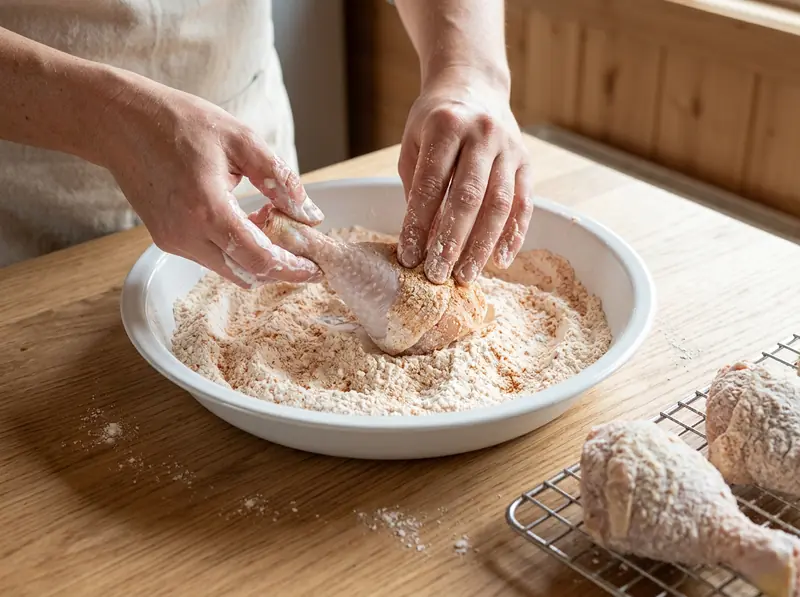
- Lift the chicken out of the buttermilk and let the excess drip off. Dip each piece in the flour and spice mixture, pressing it on well. Set the coated pieces on a wire rack for 15 minutes so the coating can hydrate and cling.
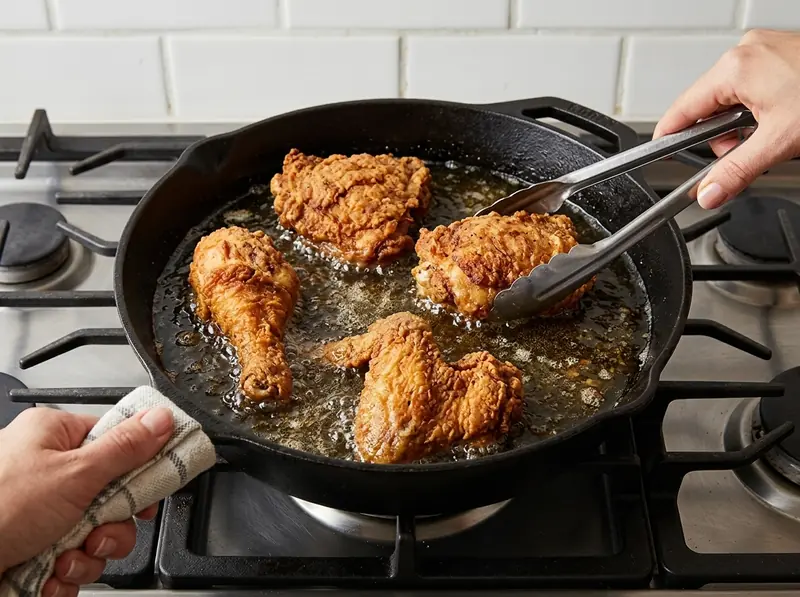
- Fry the chicken pieces in batches for 12–15 minutes, turning once. Lower each piece into the oil away from you. The temperature drops when the chicken goes in: adjust the heat to keep the oil at 150–165°C while it fries, and bring it back to 175°C before the next batch. The chicken is done when it is deep golden brown and cooked through: 74°C in the thickest part of a thigh or breast, not touching the bone, and the juices run clear when the meat is pierced. Lift the pieces onto a wire rack set over a tray to drain. Serve hot.
Cooked it? Rate the recipe
FAQ
Breading falls off for several reasons. First, let the excess buttermilk drip off before dredging, because a thick wet layer slides off in the oil. Press the flour firmly onto every surface and let the coated pieces rest on a wire rack for 15 minutes before frying, which helps the coating bond to the meat. Second, the oil must be at the correct temperature (175–180°C before the chicken goes in); if it is too cool, the coating absorbs oil and slides off before it can crisp. Third, do not move the pieces for the first 3–4 minutes — let the crust set undisturbed. Using a mix of flour and cornstarch (3:1 ratio) creates a crispier, more adhesive coating than flour alone.
Buttermilk does two things: the lactic acid gently tenderizes the meat by partially breaking down muscle proteins, and the thick liquid coats the chicken to help the flour adhere. An overnight soak (8–12 hours) gives the best result, but 4 hours is sufficient. Plain kefir is an excellent substitute — it has the same acidity and thickness as buttermilk. Plain yogurt thinned with a little water (3 parts yogurt to 1 part water) also works well. Regular milk with a tablespoon of lemon juice or white vinegar (let sit 5 minutes) makes a quick substitute. Do not use cream or whole milk alone — they lack the acidity needed for tenderizing.
This is a classic sign that the oil was too hot. At temperatures above 190°C, the coating browns and crisps in 5–6 minutes while the center of a thick piece (like a thigh or drumstick) never reaches 74°C. Keep the oil at 150–165°C while the chicken fries and use a thermometer: the temperature drops when cold chicken is added, so bring it back to 175°C between batches. Bone-in pieces need 12–15 minutes in total, turned once halfway (wings about 12, thighs and breasts about 15). The safest method: fry until deep golden (about 6 minutes per side), then move the pieces to a 180°C oven for 5–10 minutes to finish cooking through without further browning. Always verify with an instant-read thermometer: 74°C at the thickest point.
Oil temperature is the single most important variable in fried chicken. Too low (below 150°C) and the chicken absorbs fat, the coating becomes greasy and soft, and cooking time doubles. Too high (above 190°C) and the outside burns before the inside cooks. Use a deep-fry or candy thermometer clipped to the pot. Start the oil at 175–180°C. It drops when the cold chicken goes in, so adjust the heat to hold it at 150–165°C while the chicken fries. Fry in small batches (3–4 pieces at a time in a 30 cm skillet) to avoid a large temperature drop. Between batches, let the oil reheat to 175°C before adding more chicken. Cast iron pots and Dutch ovens hold heat better than thin stainless steel pots.
Yes, with good results. After the buttermilk soak and flour coating, place the pieces on a wire rack set over a baking tray. Spray or brush generously with vegetable oil — the oil is essential for crisping the coating. Bake at 220°C (fan) for 40–45 minutes, turning once halfway. The rack lets hot air circulate underneath, preventing a soggy bottom. For the crispiest result, use panko breadcrumbs mixed into the flour (50:50) — they brown faster and hold their crunch longer. Adding a teaspoon of baking powder to the flour mix also helps — it creates tiny bubbles during baking that make the coating lighter and crispier. The result is less juicy than deep-fried chicken but takes a few spoonfuls of oil instead of a litre.
Keep browsing
More dishes from the American archive — picked by overlap with what you're cooking now.


Recipes by email
One letter a week: a recipe picked for your taste, plus whatever is new on the site. You can stop the letters in one click.
Welcome gift: Sergei's cookbook (e-book).
By signing up for the newsletter you agree to the privacy policy.
Tell us what you like to cook (30 seconds) →
Join the conversation
Comments
No comments yet — be the first!