


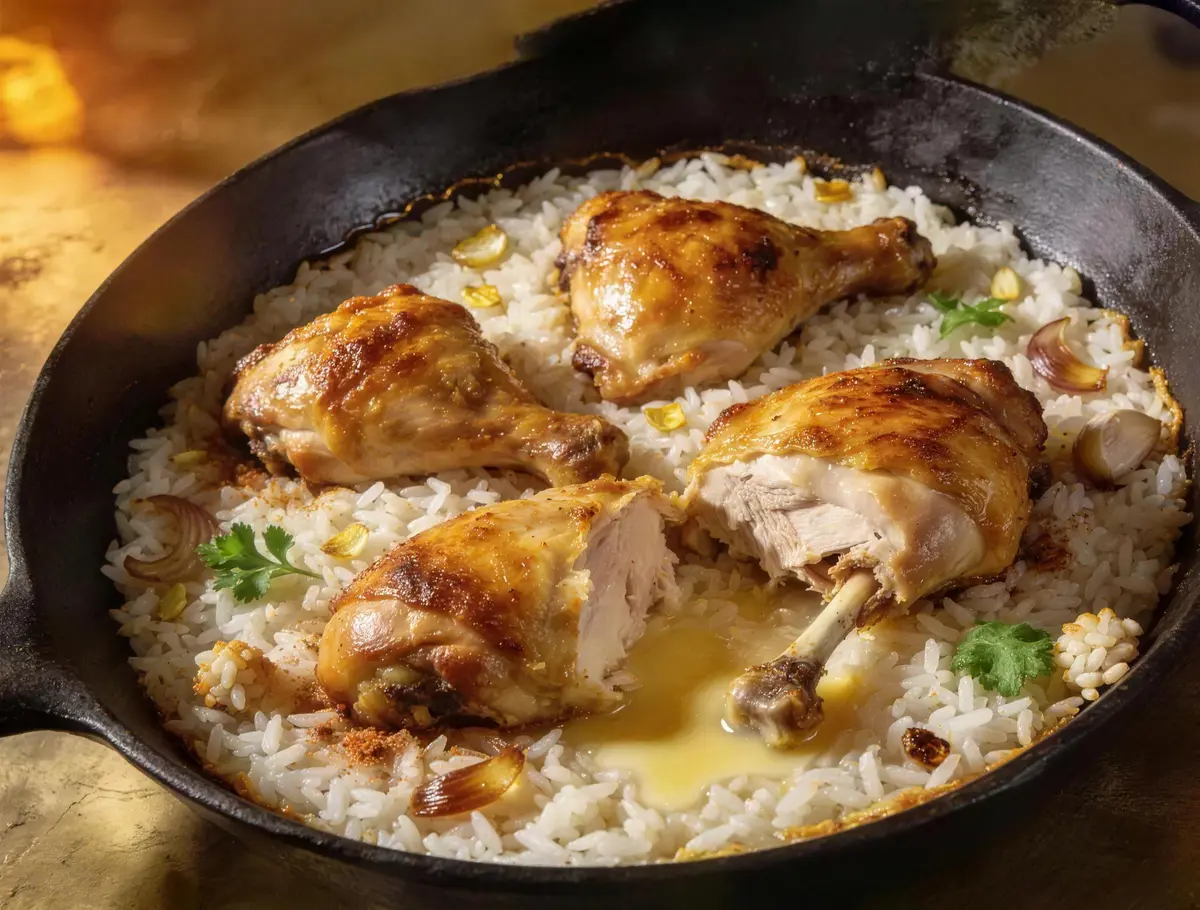
Garlic Butter Chicken with Rice
Chicken thighs seared skin-side down until the fat renders and the skin turns deep gold, then finished in the oven on a bed of garlic-butter rice that absorbs all the drippings. The rice cooks in chicken fat and broth simultaneously — which is why it tastes nothing like rice made separately. One pan, about an hour from start to table, and about 33 g of protein per serving.
Ingredients
- 800 gbone-in skin-on chicken thighs
- 300 glong-grain white rice
- 700 mlchicken broth
- 3 tbspbutter
- 6 garlic cloves
- 1 small onion
- 1 tspsmoked paprika
- 0.5 tspdried thyme
- salt and black pepper to taste
- fresh parsley
Method
- Preheat oven to 200°C (400°F). Pat chicken thighs completely dry with paper towels. Season all over with smoked paprika, thyme, salt, and pepper.
- Heat an oven-safe skillet over medium-high heat. Add 1 tbsp butter. Place chicken skin-side down and do not move it. Sear 5–6 minutes until the skin is deep golden and releases cleanly from the pan. Flip and sear 2 more minutes. Transfer to a plate.
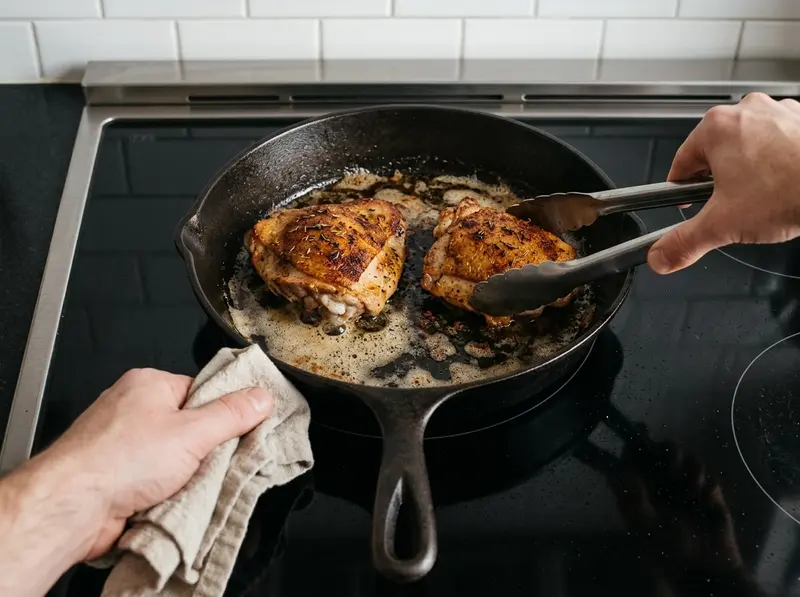
- Reduce heat to medium. Add remaining 2 tbsp butter, onion, and garlic. Cook 2–3 minutes, stirring, until soft and fragrant.
- Add rice. Stir to coat every grain in the butter for 30 seconds. Pour in the chicken broth, stir once to level the rice and bring it to a simmer. Then stop stirring completely. Do not stir again.
- Place chicken thighs on top, skin-side up. The skin must sit above the liquid, not touching the broth. Cover tightly with foil or a lid.
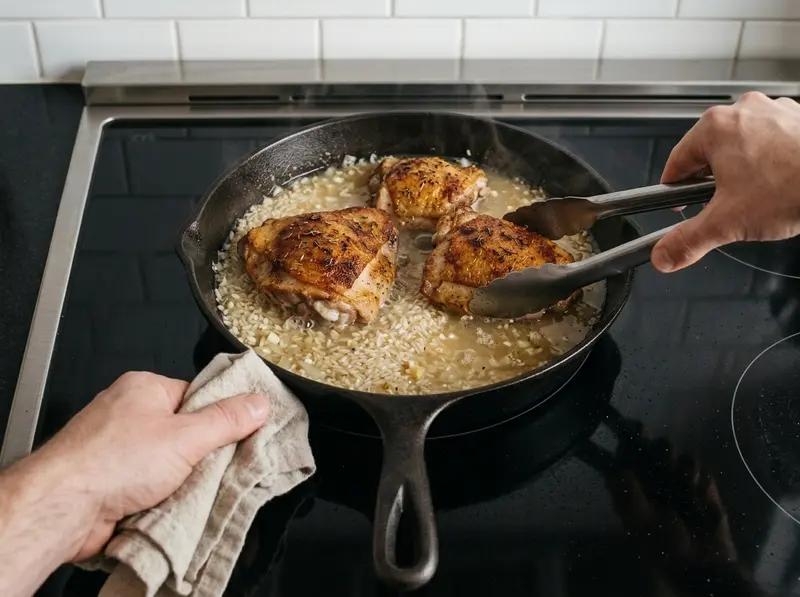
- Bake covered at 200°C for 25 minutes. Remove the cover and bake 10–12 minutes more, until all the liquid is absorbed, the skin is crisp and the thickest thigh reads 74 °C next to the bone, with clear juices when pierced. Rest 5 minutes, garnish with parsley, and serve from the pan.
Cooked it? Rate the recipe
FAQ
The rice absorbs the chicken drippings and fat as it bakes — it cooks in what is essentially a homemade stock. Chicken thigh fat is dense and rich, far more flavorful than the water plain rice cooks in. Combined with the garlic-butter base at the start, the rice picks up layered flavor you cannot replicate by cooking the components separately.
They will dry out with this method as written. Thighs take 35–40 minutes and finish exactly when the rice is done. Chicken breasts cook faster and will be overdone by then. If you only have breasts, sear them as in step 2, but bake the rice covered for 25 minutes without them. Then lay the breasts on top and bake uncovered for 10–12 minutes, until the thickest part reads 74 °C and the juices run clear.
Two causes: too much liquid or a loose foil seal. Use 700 ml of broth per 300 g of dry rice, and bring it to a simmer in the pan before it goes into the oven. Loose foil lets steam escape, causing uneven cooking — wet in the center, dry at the edges. Press the foil firmly around the rim before the pan goes in the oven. If your oven runs hot, check at 20 minutes instead of 25.
Three steps: pat the chicken completely dry before seasoning, sear skin-side down in a hot pan before adding the rice, and finish the last 10–12 minutes without any cover. The final uncovered phase is the one that crisps it — covered, it only steams. If it still looks pale after the uncovered bake, run it under the broiler for 3–4 minutes.
Up to 3 days. Add 2 tablespoons of water or broth per serving and microwave covered on medium power for 90 seconds. Stir the rice and keep going in 30-second bursts until the chicken is steaming hot right through (74 °C). Rice dries out if reheated without added moisture. The skin will not be crispy reheated — accept that. Both the meat and the rice hold well.
Keep browsing
More dishes from the American archive — picked by overlap with what you're cooking now.



Recipes by email
One letter a week: a recipe picked for your taste, plus whatever is new on the site. You can stop the letters in one click.
Welcome gift: Sergei's cookbook (e-book).
By signing up for the newsletter you agree to the privacy policy.
Tell us what you like to cook (30 seconds) →
Join the conversation
Comments (1)
Объедение