
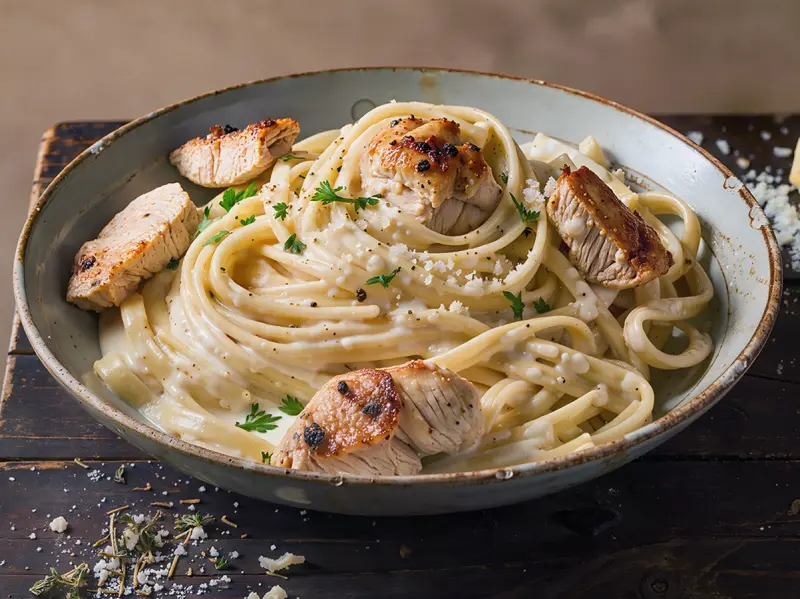
High-Protein Chicken Alfredo
Fettuccine in a garlic-Parmesan sauce built with Greek yogurt instead of all cream. The yogurt is added off the heat so it doesn't curdle, and you can't taste it in the finished dish. Around 38g of protein per serving instead of the usual 22g.
Ingredients
- 400 gfettuccine
- 600 gchicken breast
- 200 gfull-fat Greek yogurt
- 120 mlheavy cream
- 80 gParmesan cheese
- 4 garlic cloves
- 2 tbspbutter
- 120 mlchicken broth
- 1 tspItalian seasoning
- 2 tbspolive oil
- 1 tspsalt
- 0.5 tspblack pepper
- 2 tbspfresh parsley
Method
- Cook the fettuccine in well-salted water until al dente. Reserve 1 cup of the pasta cooking water before draining — this starchy water is what you'll use to adjust the sauce consistency later.
- Slice the chicken breasts in half horizontally to make 4 thinner cutlets. Season with Italian seasoning, salt and pepper. Heat olive oil in a large skillet over medium-high heat. Cook the chicken 4–5 minutes per side until golden and cooked through at 74°C. Rest for 5 minutes, then slice into strips.
- In the same skillet, reduce heat to medium-low. Melt the butter, add the minced garlic and cook for 1 minute. Pour in the chicken broth and let it simmer for 2 minutes.
- Add the heavy cream and grated Parmesan. Stir over low heat until the Parmesan melts and the sauce comes together, about 2 minutes. Do not boil.
- Remove the pan from the heat completely. Let it sit for 1 minute to cool slightly. Then whisk in the Greek yogurt a few tablespoons at a time — the pan must be off the heat or the yogurt will curdle. If the sauce looks too thick, add pasta water one splash at a time until it coats the pasta without clumping.
- Add the drained fettuccine and sliced chicken to the sauce. Toss well over low heat for 1 minute. Serve immediately, topped with extra Parmesan and chopped parsley.
FAQ
Yogurt curdles in sauce because it is acidic and its proteins are unstable at high temperatures. The fix is simple but must be followed exactly: remove the pan from the heat before adding the yogurt, let it cool for at least a minute, then whisk the yogurt in slowly in small additions rather than all at once. If the pan is still hot enough to simmer, the yogurt will split regardless of how carefully you add it. Full-fat Greek yogurt (5% fat or higher) is more stable than low-fat versions. If the sauce does split, blending it with an immersion blender usually brings it back.
Yes, and the difference is smaller than you'd expect. Greek yogurt has a slight tang, but once it's mixed with Parmesan, butter and garlic, most of that tang disappears. What you do notice is that the sauce is slightly lighter — less coating on the tongue than a full-cream Alfredo. This is not a bad thing. The protein count roughly doubles compared to a sauce made with all cream. If you want the richest possible version, you can do half yogurt and half cream rather than all yogurt, which maintains more of the traditional texture.
Pasta water is salty and contains dissolved starch from the noodles. The starch acts as a natural emulsifier, helping fat and water stay combined rather than separating. When you add pasta water to Alfredo sauce it does two things: it loosens a sauce that's become too thick, and it helps the sauce bind to the noodles rather than pooling at the bottom of the bowl. Add it in small amounts — one or two tablespoons at a time — after you've tossed the pasta in the sauce. This is standard restaurant technique for any cream pasta sauce.
Fettuccine is traditional because the flat wide surface holds cream sauce well, but it is not essential. Any pasta with some surface area works: linguine, pappardelle, tagliatelle. Short pasta like rigatoni or penne also works but the sauce sits in the tubes rather than coating the outside, which changes the texture. For more protein: chickpea pasta or lentil pasta adds 10–14g of protein per 100g dry compared to 12–13g for regular wheat pasta — a small but real difference. The sauce technique is the same regardless of pasta shape.
The sauce in this recipe splits more easily on reheating than a pure cream sauce because of the yogurt. The only reliable method is low heat with added liquid. Put the leftovers in a small pan over low heat, add 2–3 tablespoons of water or chicken broth, and stir constantly as it heats. Never microwave on full power — it heats the outside of the pasta while the center is still cold, which means part of the sauce is boiling while the rest is warming, and it splits. If using a microwave, use 50% power and stop to stir every 30 seconds.
Rate this
Recipes by email
One letter a week: a recipe picked for your taste, plus whatever is new on the site. Unsubscribe in one click.
Welcome gift: Sergei's cookbook (e-book).
By subscribing you agree to the privacy policy.
Tell us what you like to cook (30 seconds) →Keep browsing
More dishes from the American archive — picked by overlap with what you're cooking now.

Join the conversation
Comments (1)
I use bone-in pieces for high-protein chicken alfredo whenever possible. The bones release gelatin during cooking, creating a richer, more full-bodied sauce. Boneless is faster but the depth of flavor isn't comparable.