
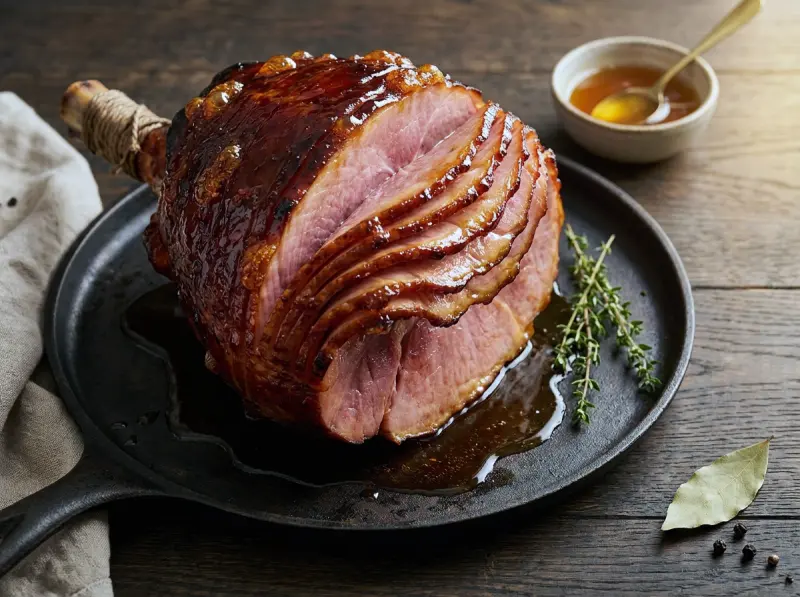
Honey-Glazed Ham (Easter Spiral-Cut Ham with Honey Mustard Glaze)
Honey-glazed ham is the centerpiece of the American Easter table — a fully cooked spiral-cut bone-in ham, slow-warmed under foil and brushed with a sticky lacquer of honey, brown sugar, and Dijon mustard. The bone keeps the meat moist, the spiral cut lets the glaze seep into every slice, and a final blast under the broiler gives the signature caramel crust. Serves twelve, makes great sandwiches the next day, and the leftover bone goes into split pea soup. The technique is forgiving: low oven, foil tent, glaze in the last 30 minutes.
Ingredients
- 4 kgbone-in spiral-cut ham
- 250 mlapple cider
- 320 glight brown sugar
- 240 ghoney
- 75 gDijon mustard
- 30 gunsalted butter
- 30 mlapple cider vinegar
- 1 pinchground cloves
- ½ tspground cinnamon
Method
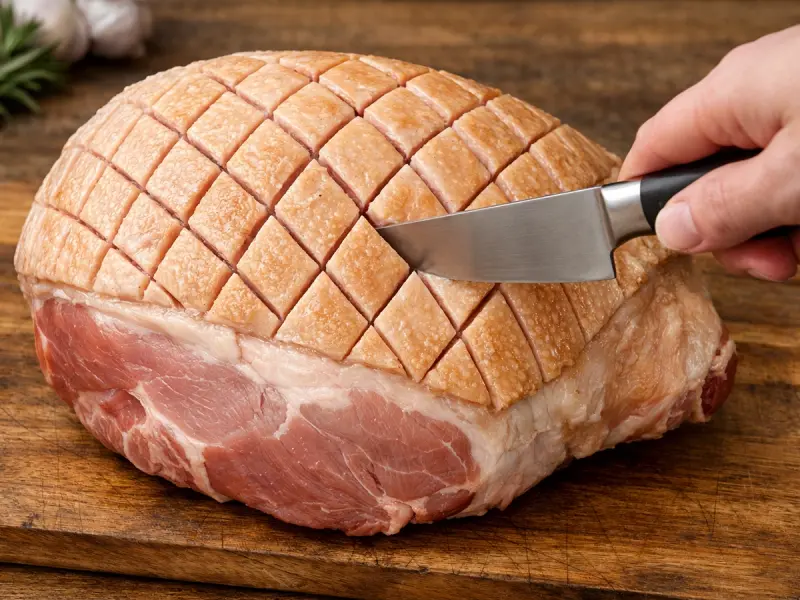
- Take the ham out of the fridge 1 hour before cooking to take the chill off — a cold ham heats unevenly. Heat the oven to 160°C (325°F) with the rack in the lower-middle position. Line a large roasting pan with two long sheets of foil that overhang on every side. Place the ham flat-side down in the pan and pour the apple cider into the pan around it. The cider creates steam that keeps the meat moist.
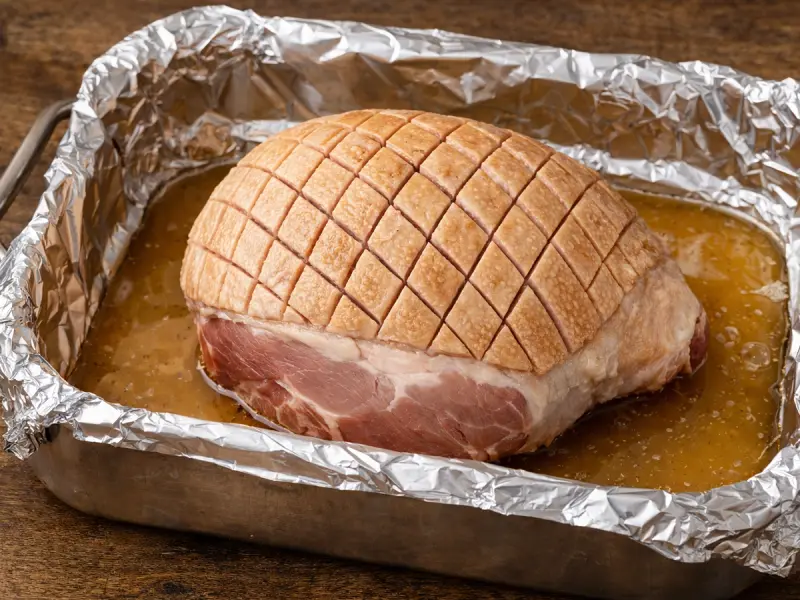
- Wrap the foil up and over the ham, sealing the seams tightly. Bake covered for 1 hour 30 minutes — about 12 minutes per 450 g. The ham is already fully cooked, so you are only warming it through to 60°C (140°F) internal. The foil tent is critical: without it the surface dries out before the centre warms up.
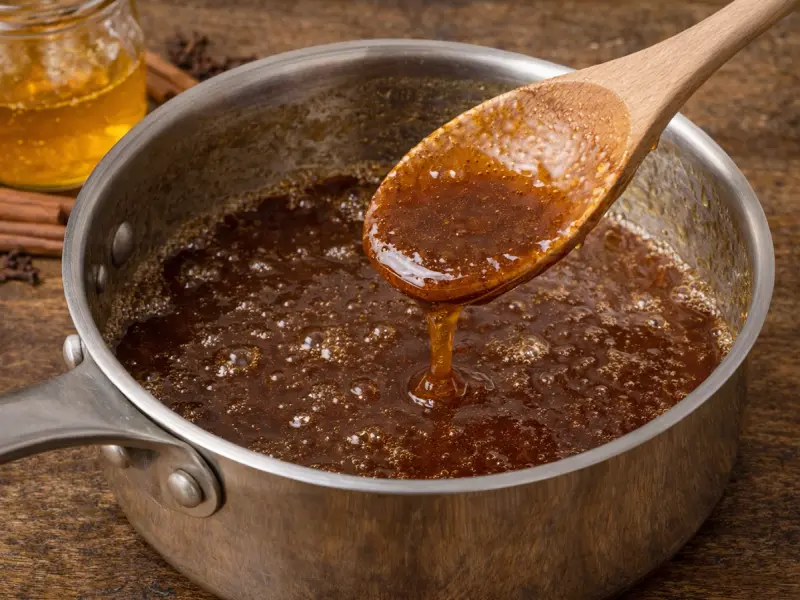
- Meanwhile, make the glaze. Combine brown sugar, honey, Dijon mustard, butter, apple cider vinegar, ground cloves, and cinnamon in a small saucepan. Heat over medium-low, stirring, until the sugar dissolves and the mixture is smooth and glossy — about 3 to 4 minutes. Do not boil hard or simmer long: oversimmering turns the glaze into a hard caramel that will not spread. Pull off the heat at the consistency of warm honey.
- After 1 hour 30 minutes, take the ham out and carefully open the foil — watch the steam. Brush about one third of the warm glaze over the ham, working it into the cuts between the spiral slices with a pastry brush. Leave the foil open and return the ham to the oven uncovered.
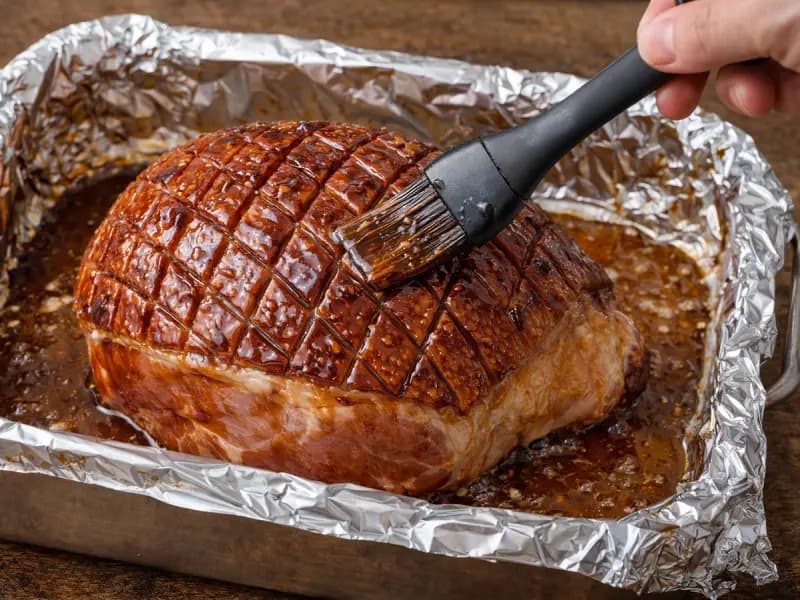
- After 15 minutes, brush on another third of the glaze, again pushing it into the spirals. The surface should look glossy and amber. Insert an instant-read thermometer into the thickest part, away from the bone — you are aiming for 60°C (140°F).
- Brush on the remaining glaze 15 minutes later. Continue baking until the internal temperature hits 60°C — usually 30 to 35 minutes total uncovered for a 4 kg ham. The glaze should look deep mahogany and slightly bubbly at the edges.
- For the signature lacquered crust, switch the oven to broil/grill and watch closely for 2 to 3 minutes — the sugar burns fast. Turn the pan halfway if your broiler heats unevenly. Pull as soon as deep caramel patches form on the high points of the slices.
- Transfer the ham to a board and rest 15 minutes loosely tented with foil. Skip this and the juices run out at the first cut. To carve, slide a long knife around the bone to release the spiral slices — they fan out naturally. Spoon the pan juices, mixed with any remaining glaze, over the slices to serve.
FAQ
The main culprit is too high an oven temperature or roasting uncovered from the start. A spiral-cut ham is already fully cooked at the store — you are only warming it through to 60°C (140°F) internal. Bake at 160°C (325°F), tightly wrapped in foil, and only open the foil for the final 30 minutes when you apply the glaze. Pour a cup of apple cider or water into the pan to create steam. If the ham has already dried out, slice it and serve with warmed pan juices and glaze poured over — the sauce rescues the texture.
Maple syrup works one for one and gives a deeper caramel note without the floral edge of honey — a great option if you find honey too sweet or perfumed. Dark molasses thinned with apple juice (3:1) gives similar viscosity with spicier character. Plain sugar syrup (200 g sugar plus 100 ml water, simmered 5 minutes) works mechanically but loses aroma. The one rule: do not drop the acid — without vinegar or citrus juice, the glaze becomes cloying. Avoid artificial honey or stevia syrups; they turn bitter at 160°C.
Sliced and sealed in an airtight container, leftovers keep up to 5 days in the fridge — flavour actually deepens by day two as the glaze soaks into the cut surfaces. The crust softens after 24 hours but the meat stays juicy. To freeze, portion the slices, wrap tightly in cling film plus foil, and freeze up to 3 months. Thaw in the fridge for 12 hours and reheat in a 150°C oven covered with foil — microwaving turns ham rubbery. Save the bone for split pea soup or bean stews; it makes better stock than any store-bought broth.
Honey Baked Ham is an American brand (HoneyBaked Ham Company, founded 1957 in Detroit) with a signature technique: the glaze is torched until each spiral slice has its own caramelized edge. Honey-glazed ham is the generic term for homemade versions where glaze is brushed on and baked to a glossy finish. The flavours are close, but the branded version takes 4 to 5 days (cure, smoke, spiral-slice, glaze) while a home version is done in 3 hours from a pre-cooked spiral ham. Hitting it under the broiler for 2 to 3 minutes at the end is a cheap imitation of that trademark caramel crust.
The sweetness of the glaze begs for sour and bitter counterpoints. Best pairings: creamy mashed potatoes, roasted asparagus with lemon, braised cabbage with apple, beetroot salad with horseradish, soft dinner rolls. For a full American Easter spread: green bean almondine, deviled eggs, mac and cheese, cornbread. To drink: dry cider, off-dry Riesling, light Pinot Noir. Next day, leftovers go into Gruyère and Dijon sandwiches on brioche, or split pea soup with the bone.
Rate this
Keep browsing
More dishes from the American archive — picked by overlap with what you're cooking now.
Join the conversation
Comments (1)
I've tested six glaze recipes over the years and this one wins because of the vinegar — it cuts through the sweetness and keeps the glaze from becoming candy. Baste every 15 minutes during the last hour, no shortcuts. The pan juices mixed with the drippings make a sauce that's almost better than the ham itself.