
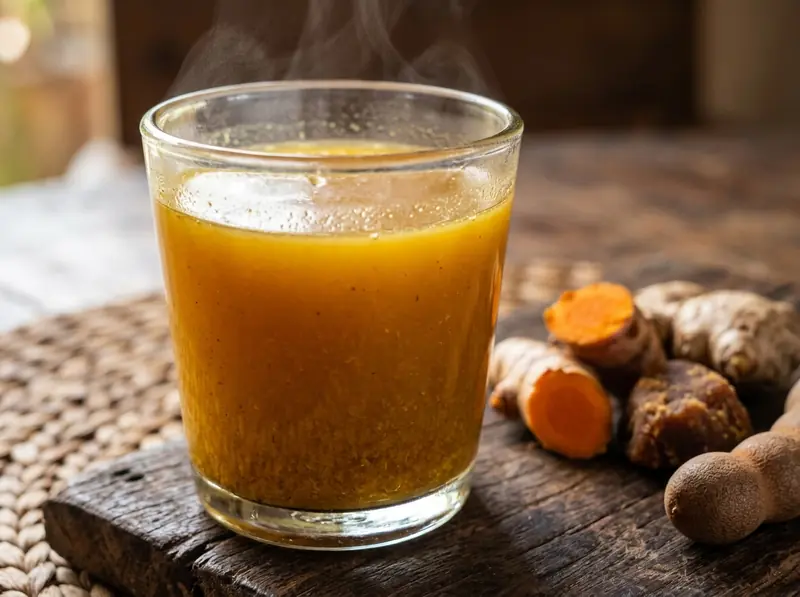
Jamu (Indonesian Turmeric Ginger Tonic)
Jamu is the general name for Indonesian herbal drinks; this version follows kunyit asam, which in Indonesia is fresh turmeric boiled with tamarind, palm sugar and a pinch of salt. Some cooks there add ginger, as here; black pepper, honey and coconut oil are not part of the Indonesian drink and are optional. Serve it warm on a rainy morning, or over ice in the afternoon.
Ingredients
- 60 gfresh turmeric root
- 40 gfresh ginger root
- 1 lwater
- 2 tbsptamarind paste (pressed seedless pulp from a block), about 30 g
- 3 tbsppalm sugar, shaved or finely chopped, about 35 g (or about 45 g honey)
- 1 pinchblack pepper (optional)
- 1 stalklemongrass (optional)
- 1 tspcoconut oil (optional)
- 1 pinchsalt
Method
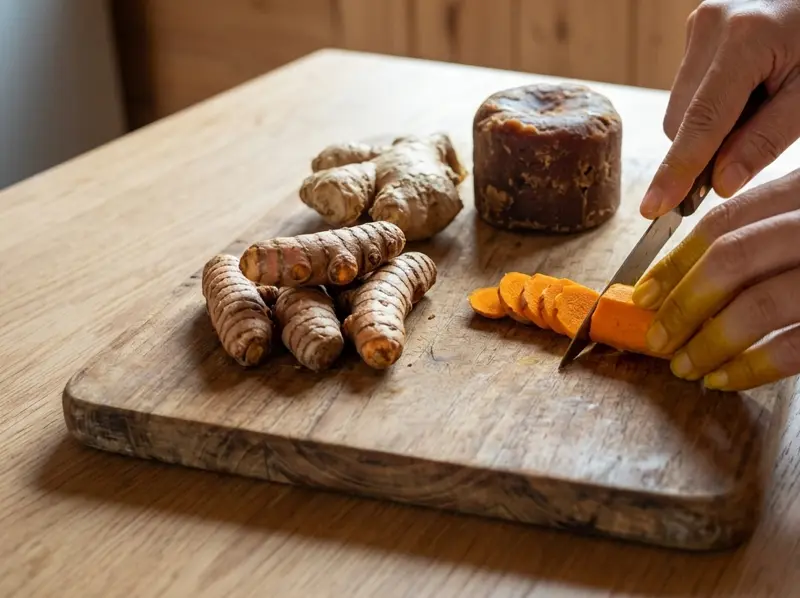
- Peel the turmeric and ginger roots, then grate or thinly slice them. Turmeric stains everything it touches — cutting boards, fingertips, countertops — so work on a surface you don't mind discoloring, or wear gloves. If your palm sugar comes as a block, shave or chop it finely so it dissolves quickly. If using lemongrass, bruise the stalk with the back of a knife to release its oils.
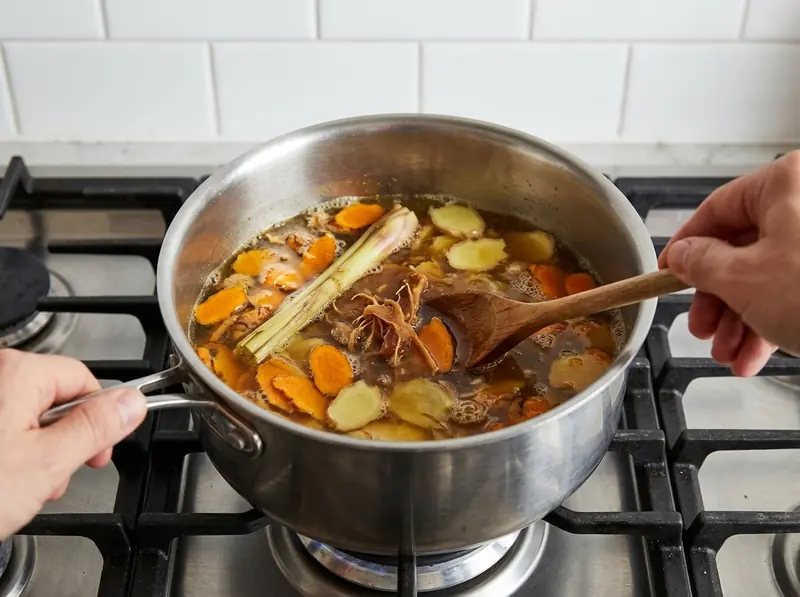
- Bring the water to a boil in a medium saucepan. Add the turmeric, ginger, tamarind paste, palm sugar (unless you are sweetening with honey), salt and the lemongrass if using, and stir until the sugar has dissolved and the tamarind has broken up. Reduce the heat to a gentle simmer and cook uncovered for 10 to 15 minutes. The liquid will turn a deep golden-orange. Don't cut this short: this is how kunyit asam is made in Indonesia, with everything boiled together, and the full 10 minutes is what brings the flavors together.
- Take the saucepan off the heat and taste. The tamarind should give a clear sourness against the earthy turmeric: if the drink tastes flat, stir in a little more tamarind; if it is too sharp, a little more palm sugar. If you are using black pepper, add it now. If you are sweetening with honey instead of palm sugar, don't boil it: stir in about 45 g at this point.
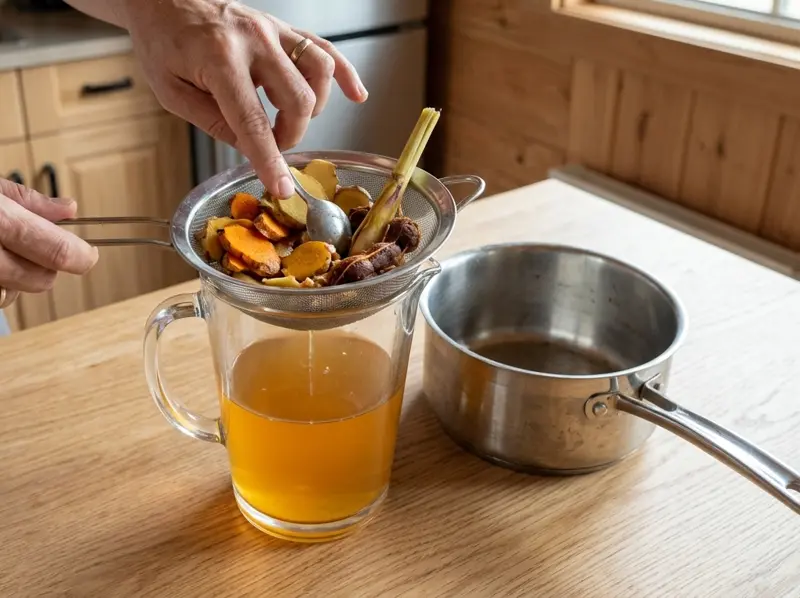
- Let the mixture steep for 5 minutes, then strain it through a fine-mesh sieve or cheesecloth into a clean pitcher, pressing on the solids to extract every drop of flavor. Discard the pulp. If using coconut oil, stir it in now.
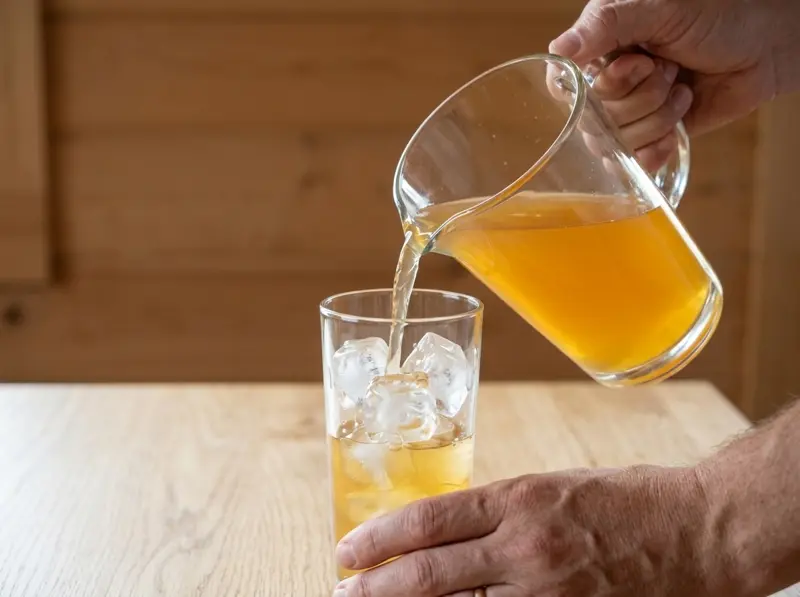
- Serve the jamu warm in cups, or let it cool to room temperature and pour it over ice. It keeps in the refrigerator for up to 3 days — shake or stir before serving, as the turmeric settles to the bottom.
FAQ
Bitterness usually comes from too much turmeric for the amount of water, or from too little tamarind and sugar to balance it. Stick to 60 g of turmeric per 1 liter of water and keep the pot at a gentle simmer rather than a rolling boil, which only reduces and concentrates the drink. Tamarind does most of the balancing: its sourness cuts through the earthy notes. If it's still too bitter, stir in an extra tablespoon of palm sugar or honey, or a squeeze of fresh lime juice, at the end.
Yes: for this recipe start with 2 teaspoons of ground turmeric for the litre of water and add more, half a teaspoon at a time, until the brew turns deep golden-orange. The flavor will be slightly less complex and the color more muted. Dissolve the powder in a small amount of warm water before adding it to the pot to prevent clumping. You'll still want the fresh ginger — its brightness is harder to replicate with powder. For a creamier turmeric drink made with milk, see golden milk.
Tamarind paste is the sour-sweet pulp of the tamarind pod, sold either as a pressed block (asam jawa in Indonesia) or as a smooth concentrate in a jar. This recipe is written for the block: break off 2 tablespoons (about 30 g), check it for seeds and let it break up in the pot — the fibers stay behind in the sieve. Jarred concentrate is sharper, so start with less and add to taste. Without tamarind the drink tastes like plain turmeric water; if you can't find it, substitute 1 tablespoon of fresh lime juice plus 1 teaspoon of brown sugar, stirred in off the heat — the sour-sweet balance is similar, though the flavor shifts.
Strained jamu stores well in a sealed glass jar or bottle in the refrigerator for up to 3 days. Beyond that, the flavor starts to flatten and the tamarind can develop an off taste. The turmeric will settle to the bottom — that's normal, just shake or stir before pouring. For longer storage, freeze it in ice cube trays and thaw portions as needed; frozen jamu keeps for up to a month.
Turmeric contains curcumin, which is a powerful natural dye. For hands, scrub with a paste of baking soda and lemon juice. For plastic cutting boards, make a paste of baking soda and hydrogen peroxide and let it sit for 10 minutes. Wooden boards are trickier; try rubbing with vegetable oil, then washing with dish soap. The easiest prevention: wear disposable gloves and use a glass or stainless steel cutting surface.
Rate this
Recipes by email
One letter a week: a recipe picked for your taste, plus whatever is new on the site. Unsubscribe in one click.
Welcome gift: Sergei's cookbook (e-book).
By subscribing you agree to the privacy policy.
Tell us what you like to cook (30 seconds) →Keep browsing
More dishes from the Indonesian archive — picked by overlap with what you're cooking now.



Join the conversation
Comments (1)
I make this jamu in slightly larger batches and store it for up to two days. The flavors actually integrate better after resting, and having it ready to pour saves you the prep time.