
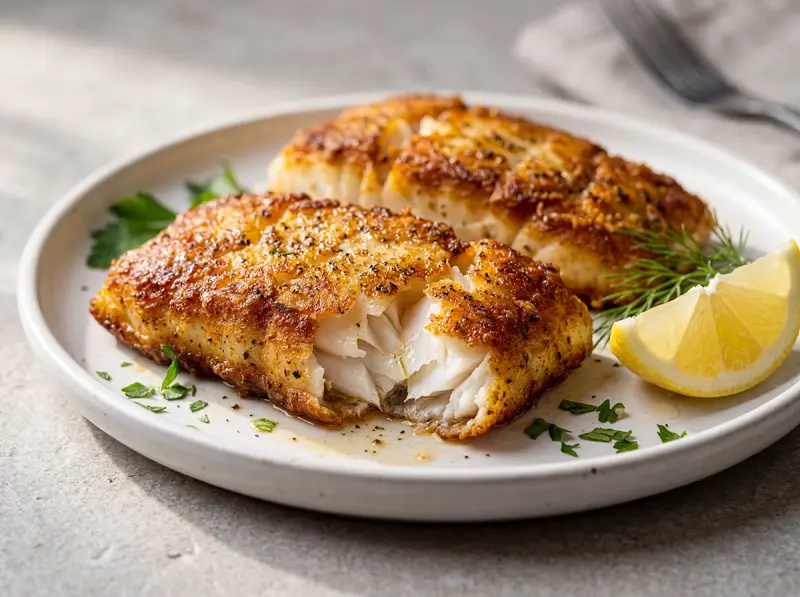
Pan-Fried Fish Fillets
White fish fillets dredged in seasoned flour and pan-fried until crispy outside and flaky inside. Works with cod, haddock, sea bass, tilapia or any firm white fish. Done in under 15 minutes once the prep is done.
Ingredients
- 4 white fish fillets, about 150g each
- 80 gall-purpose flour
- 1 tspsmoked paprika
- 0.5 tspgarlic powder
- 1 tspsalt
- 0.5 tspblack pepper
- 4 tbspvegetable or canola oil
- 1 tbspbutter
- 1 lemon
- 2 tbspfresh parsley or dill
- tartar sauce or remoulade
Method
- Pat the fish fillets completely dry with paper towels. Wet fish never gets a crispy crust — moisture creates steam instead of a sear.
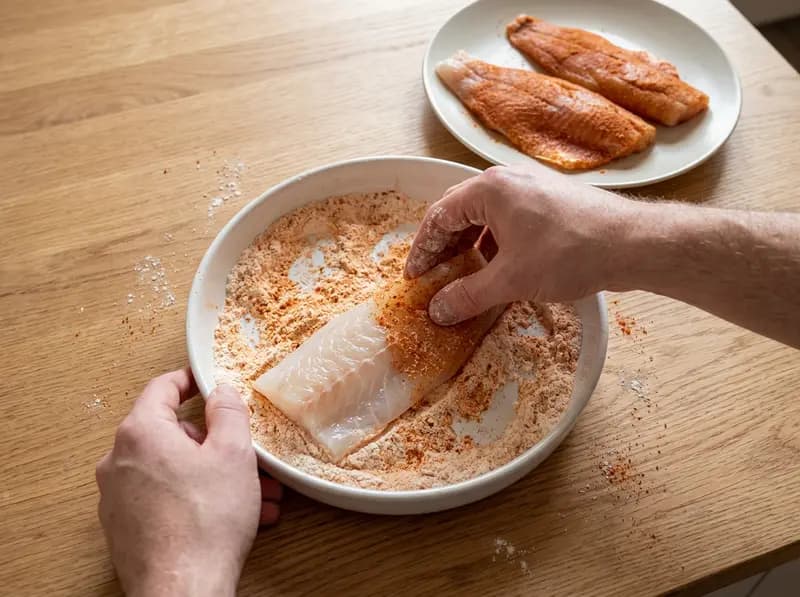
- Mix flour, smoked paprika, garlic powder, salt and pepper in a shallow dish. Dredge each fillet on both sides, pressing so the flour adheres, then shake off all the excess. The coating should be thin and barely visible, not thick and pasty.
- Heat a heavy skillet over medium-high heat until hot. Add the oil — it should shimmer immediately. Test with a pinch of flour: if it sizzles on contact, the pan is ready.
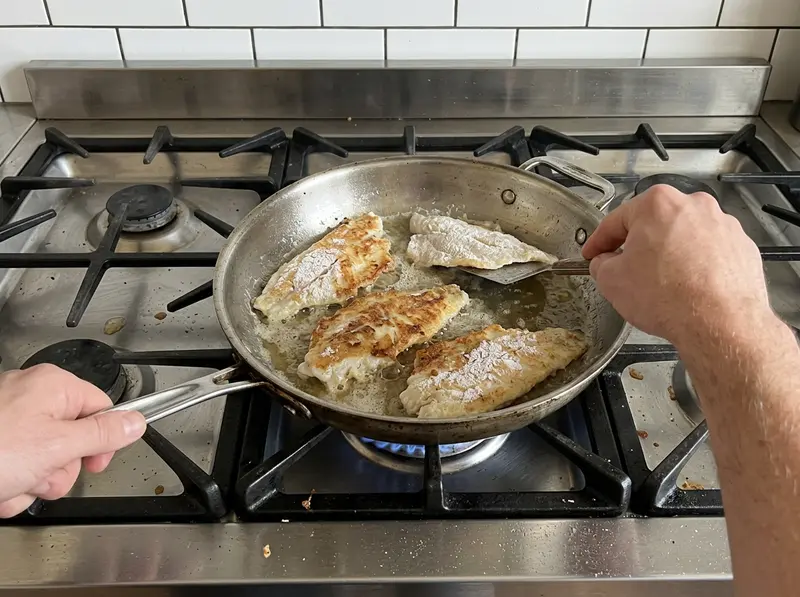
- Add the fillets in a single layer — do not crowd. Cook without moving for 2–3 minutes until the bottom edge turns golden and the crust releases cleanly from the pan. If it sticks, it is not ready — give it 30 more seconds.
- Flip carefully using a thin spatula. Cook the second side for 2–3 minutes. The fish is done when it flakes easily along its natural lines and the center is fully opaque.
- If using butter, add it in the last 30 seconds and spoon it over the fish as it foams. Transfer to a plate lined with paper towel for 30 seconds to absorb excess oil.

- Serve immediately with lemon wedges, fresh herbs and tartar sauce on the side.
FAQ
Two causes. First: the pan or oil wasn't hot enough. Heat the pan dry over medium-high, add oil only when you see wisps of smoke, and add the fish only when the oil shimmers. A cold pan means the fish proteins bond to the surface before a crust forms. Second: you flipped too early. Fish initially sticks as it starts to cook, then naturally releases once the bottom crust is set. If it's resisting, wait 30 seconds and try again. Never force a flip.
The key is removing the excess. Dredge the fillet in seasoned flour and then shake it firmly — the coating should be almost transparent, not thick. Thick flour on the fish makes a doughy layer instead of a crispy one. Pat the fish completely dry before dredging: flour on a wet surface turns to paste. Add the spices directly into the flour — salt, pepper and smoked paprika work right in the coating.
Cod, haddock, tilapia, sea bass, snapper, or flatfish all work well. Aim for fillets 1.5 to 2 cm thick — thin enough to cook through before the crust over-browns, thick enough to stay moist inside. Very thin fillets (sole, flounder) cook in 2 minutes per side. Thicker pieces (cod center-cut) need 3 to 4 minutes. Salmon also pan-fries well — start skin-side down.
Enough oil to cover the base of the pan 2 to 3 mm deep — not more. Too much oil makes the fish greasy; too little means it sticks. Use neutral high-smoke-point oil: vegetable, canola, sunflower. Extra-virgin olive oil is not ideal for fish — its smoke point is too low and it can turn bitter. After frying, rest the fillet on a paper towel for 30 seconds to absorb surface oil.
Overcooked. Fish cooks very quickly — the common mistake is always leaving it on too long. The fish is ready when it flakes easily along its natural lines and the center is just opaque and still moist-looking. White juices actively seeping out mean it is already dry. For a 1.5 cm fillet, 2 to 3 minutes per side on medium-high is enough. Remove it slightly before it looks completely done — it finishes cooking on the plate.
Rate this
Recipes by email
One letter a week: a recipe picked for your taste, plus whatever is new on the site. Unsubscribe in one click.
Welcome gift: Sergei's cookbook (e-book).
By subscribing you agree to the privacy policy.
Tell us what you like to cook (30 seconds) →Keep browsing
More dishes from the American archive — picked by overlap with what you're cooking now.
Join the conversation
Comments (1)
Don't move the fish once it's in the pan for pan-fried fish fillets. If it sticks, it's not ready to flip — the proteins haven't released yet. When it's ready, it slides freely. Patience prevents broken fillets.