
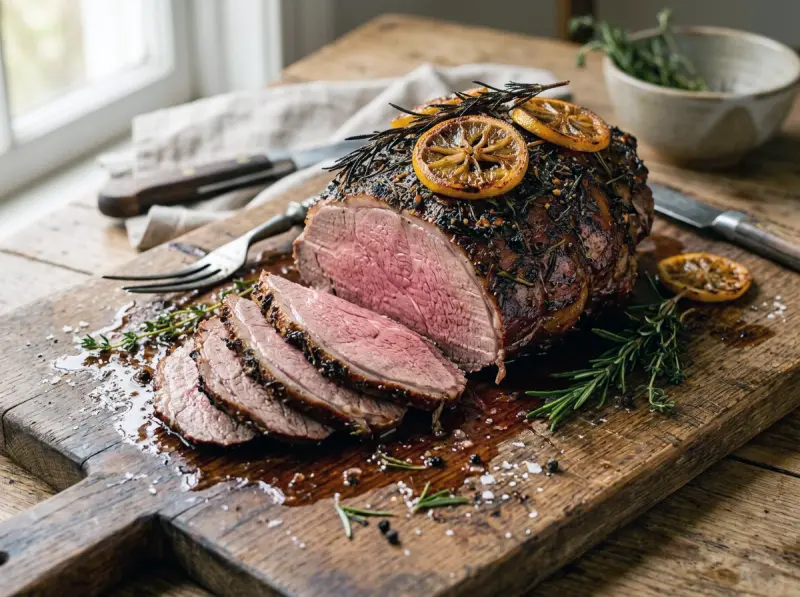
Roasted Leg of Lamb with Meyer Lemon
This is a boneless leg of lamb rolled around a paste of Meyer lemon zest, garlic, rosemary and thyme, started at 220°C and finished at 180°C, an hour and a half to just under two hours in the oven. You get a deeply browned crust, a center that is still slightly pink, and pan juices worth mopping up with bread. Meyer lemon zest has a floral note that regular lemon lacks: it sits in the herb paste, works on the lamb for hours and turns slightly sweet as it roasts, so it cuts the richness without tasting sour. If you can't find Meyer lemons, use two parts regular lemon zest to one part orange or mandarin zest; the point is less tartness and more perfume. The paste goes inside the rolled roast and outside. Inside matters more, because that's where the flavor lives between slices.
Ingredients
- 2 kgboneless leg of lamb
- 2 Meyer lemons
- 6 garlic cloves
- 3 tbspfresh rosemary
- 2 tbspfresh thyme leaves
- 2 tbspfresh flat-leaf parsley
- 1 tbspDijon mustard
- 4 tbspextra-virgin olive oil
- 1.5 tspcoarse salt
- 1 tspblack pepper
- 240 mldry white wine
- 1 Meyer lemon
Method
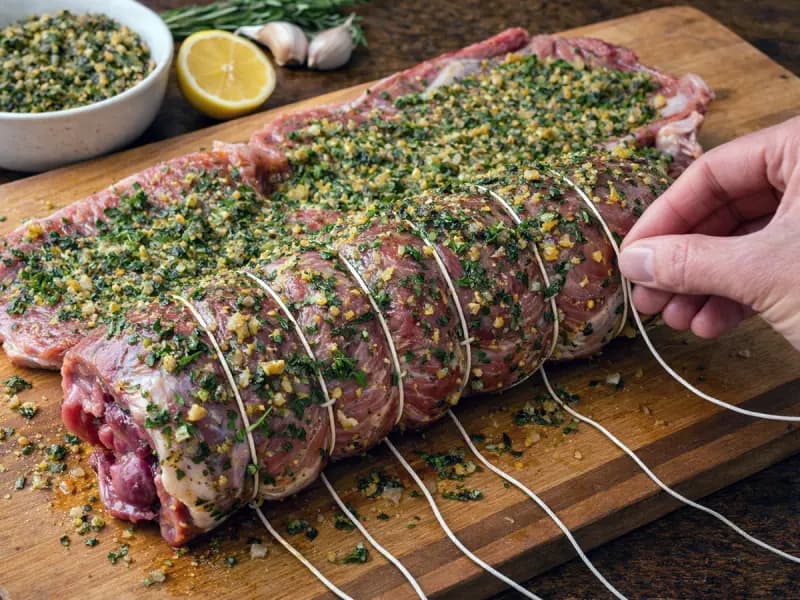
- Make the herb paste and marinate. Finely grate the zest of the 2 Meyer lemons and keep the zested lemons for juice. Mix the zest, minced garlic, rosemary, thyme, parsley, Dijon mustard, olive oil, salt, and pepper into a coarse paste. It shouldn't be smooth — you want texture so the herbs don't just slide off. Take the butterflied lamb and open it flat on a board. Spread two-thirds of the paste all over the interior surface. Roll the lamb up firmly, tuck in any loose ends, and tie at 4 cm intervals with kitchen twine. Rub the remaining paste over the outside. If you have time, wrap it in cling film and refrigerate it overnight; if not, give it at least 2 hours in the fridge, which still makes a real difference. Either way, take it out of the fridge 30 minutes before it goes in the oven.
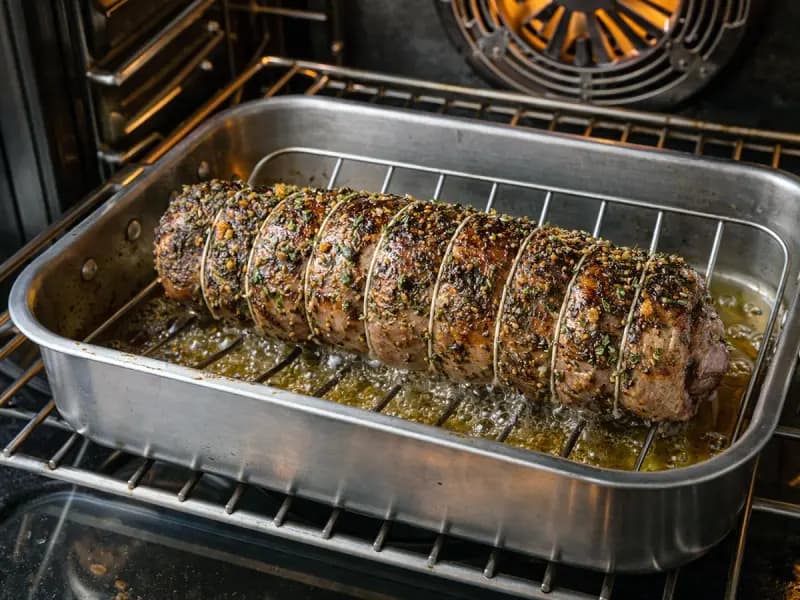
- Sear the outside at high heat. Preheat your oven to 220°C (425°F). Set the lamb on a rack in a roasting pan, seam-side down. Pour the white wine into the bottom of the pan — it keeps the drippings from burning and gives you something to work with for pan sauce later. Roast at 220°C for 20 minutes. At this point the outside should be brown, the herbs slightly charred at the tips, the fat beginning to render and sizzle audibly. This is what you want.
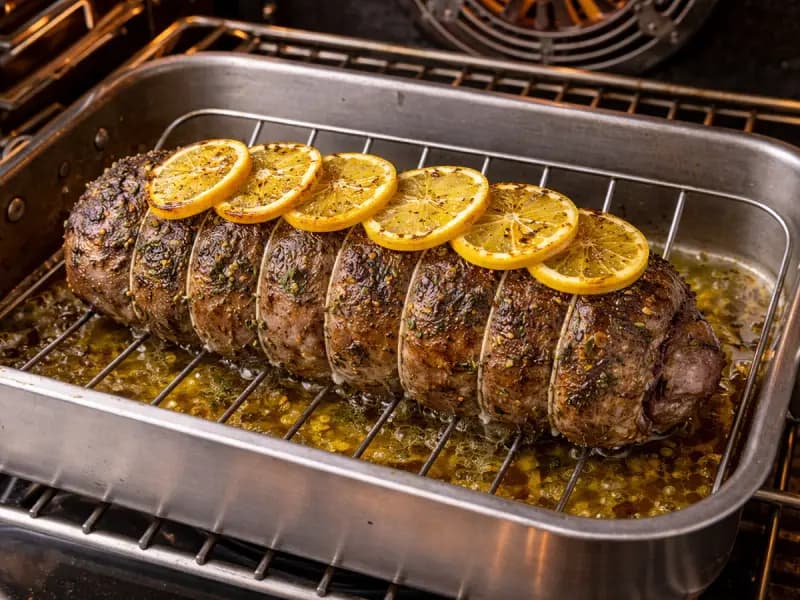
- Finish at lower heat. Reduce the oven to 180°C (350°F) and keep roasting until the thickest part of the meat, away from the twine, reads 58°C (136°F); for a 2 kg rolled leg that takes about 70 to 85 more minutes. After the rest it will reach 63°C (145°F): slightly pink in the center and safe for a rolled roast, whose outer surface ends up inside. About 20 minutes before the end, slice the third Meyer lemon into thin rounds and lay them over the top of the roast — they caramelize slightly and the oils in the peel baste the meat with a last round of citrus.
- Rest — this part is not optional. When the thermometer reads 58°C, pull the lamb. Cover loosely with foil and rest it for 20 minutes minimum, 30 if you can wait. The internal temperature will climb the rest of the way on its own. Skipping the rest means the first cut releases all the accumulated juice onto the board instead of keeping it in the meat.
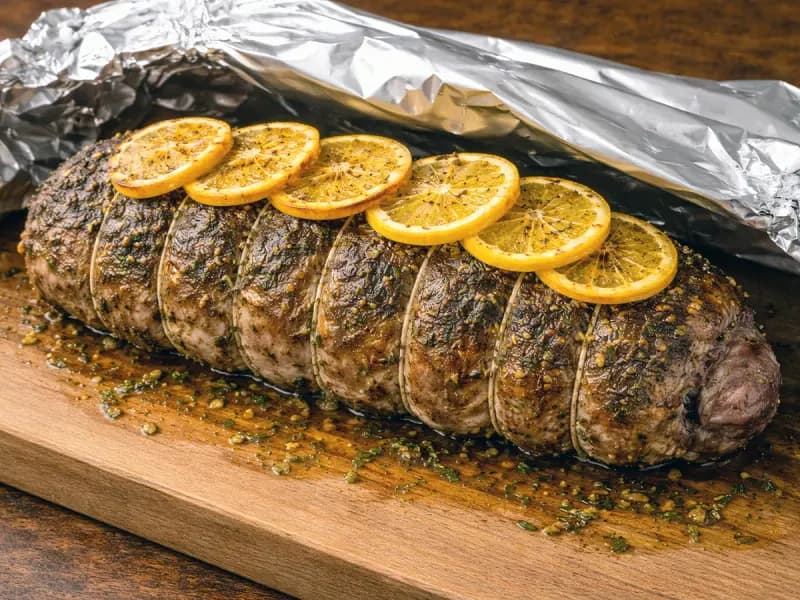
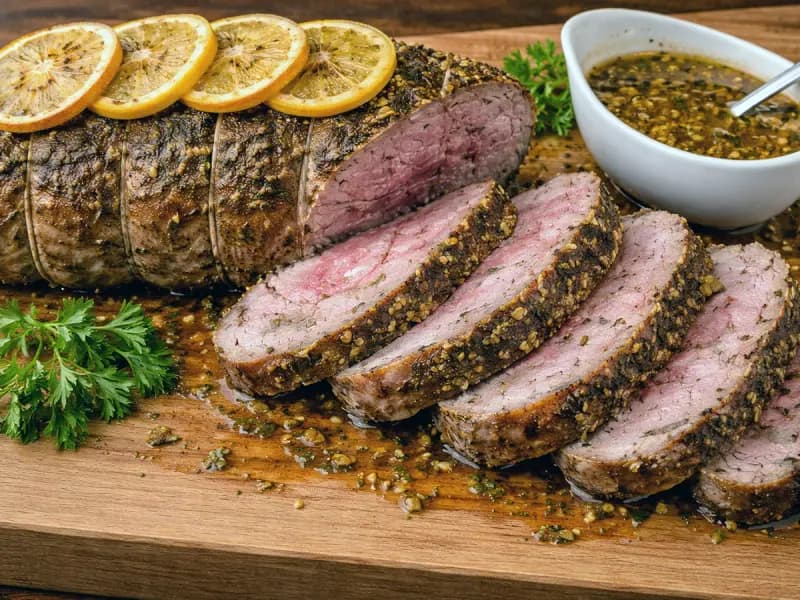
- Make a quick pan sauce and carve. Pour the pan drippings into a small saucepan. Skim the fat from the surface or tilt the pan and spoon it off. Add a splash of juice squeezed from one of the zested lemons and bring to a simmer for 2 to 3 minutes. Taste and season. Remove the twine from the lamb, slice against the grain into 1.5 cm thick pieces, and arrange on a warm platter. Pour the pan sauce over the top. The lemon rounds from the roasting pan make a decent garnish — they're edible and carry the flavor of the roast.
FAQ
A bone-in leg of lamb looks more dramatic on the table and the bone adds flavor to the pan juices. Practically, it's harder to carve and harder to get even cooking — the meat near the bone cooks at a different rate from the exposed end. Boneless butterflied lamb, once rolled and tied, gives you a uniform cylinder that cooks predictably and slices into neat pieces. Every slice gets some crust. The flavor difference is real but modest — the herb paste and the Meyer lemon do more for the taste than the bone ever could.
For a rolled boneless leg like this one, cook to 63°C (145°F), the USDA minimum for lamb, with a rest of at least 3 minutes: the meat is slightly pink in the center and firmer. Pull it at about 58°C, because the temperature keeps rising during the rest. Lower, pinker targets are only for whole, unrolled joints and steaks: when you roll a butterflied leg, the outer surface ends up in the middle. Well-done is 71°C (160°F) and above, gray throughout and noticeably drier.
Yes — this is one of the genuinely make-ahead-friendly roasts. The uncooked paste-rubbed lamb keeps in the refrigerator for up to 3 days, improving slightly each day as the herbs penetrate deeper. Take it out of the fridge 30 minutes before roasting. Once cooked, leftover lamb keeps well for 3 days refrigerated and reheats best in a low oven (150°C, covered with foil and a splash of stock) until steaming hot, 74°C in the center, rather than in a microwave, which toughens the protein. Or simply serve it cold. Cold sliced lamb in a sandwich with Dijon mustard is genuinely one of the better uses of leftovers.
Use two parts regular lemon zest to one part orange or mandarin zest, for example 2 teaspoons of regular lemon zest to 1 teaspoon of orange zest. Meyer lemon is sweeter and less acidic than a regular lemon, so it can go generously into the paste without the citrus overwhelming the lamb.
Lamb flavored with lemon, garlic and rosemary pairs best with sides that don't compete. Roasted potatoes in the same pan (add them cut-side down 45 minutes before the lamb finishes, tossed in the pan drippings) are the obvious choice and require no additional dishes. Braised white beans with a handful of fresh sage absorb the pan sauce well. A simple green salad with a lemon vinaigrette keeps the citrus thread going. For spring specifically: roasted asparagus, pea shoots with olive oil and flaky salt, or a couscous salad with the same herbs in the paste.
Keep browsing
More dishes from the American archive — picked by overlap with what you're cooking now.
Recipes by email
One letter a week: a recipe picked for your taste, plus whatever is new on the site. Unsubscribe in one click.
Welcome gift: Sergei's cookbook (e-book).
By subscribing you agree to the privacy policy.
Tell us what you like to cook (30 seconds) →
Join the conversation
Comments (1)
Аппетитно выглядит!