

Sausage and Peppers
Italian sausage links browned until the skin blisters, then simmered with bell peppers, onions and tomatoes until the sauce comes together. An Italian-American street fair classic that works as a sandwich, over pasta, or straight from the pan.
Ingredients
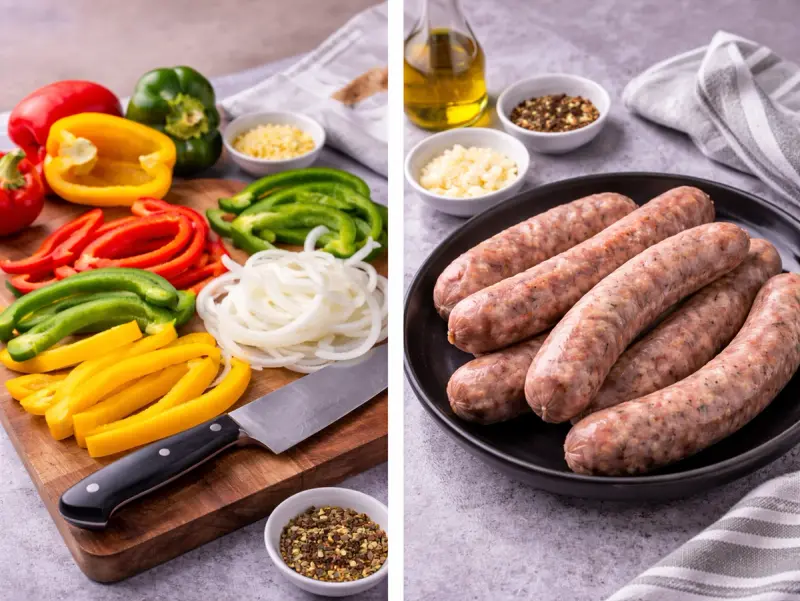
- 600 gItalian sausages
- 2 red bell peppers
- 1 green bell pepper
- 2 onions
- 4 garlic cloves
- 400 gcanned tomatoes
- 3 tbspolive oil
- 1 tspdried oregano
- 0.5 tspchili flakes
- 1 tspsalt
- 0.5 tspblack pepper
Method
- Slice the peppers into wide strips — 1.5–2 cm. Slice the onions into half-rings. Mince the garlic. Do not pierce the sausages.
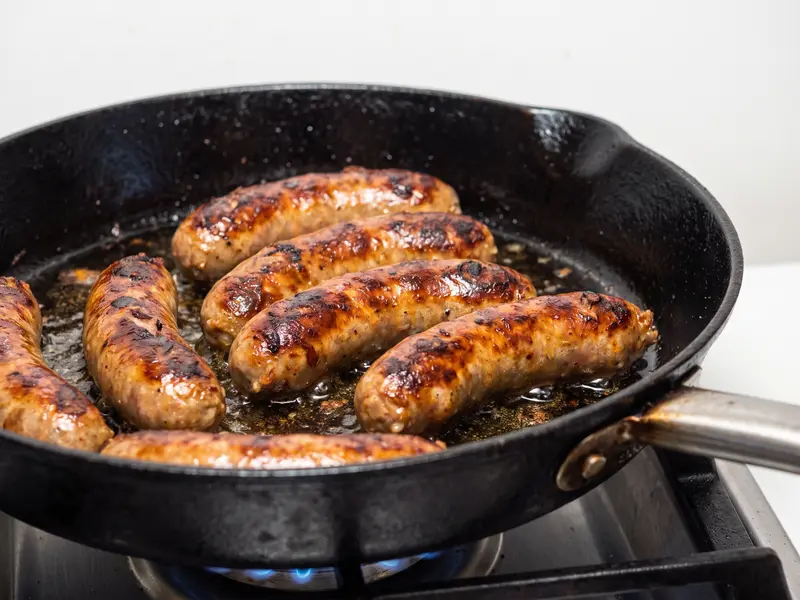
- Heat 2 tbsp olive oil in a large heavy skillet over medium heat. Add the sausages in a single layer and brown on all sides, turning every 3–4 minutes, until deep golden with blistered skin — about 12 minutes total. They don't need to be cooked through yet. Remove and set aside.
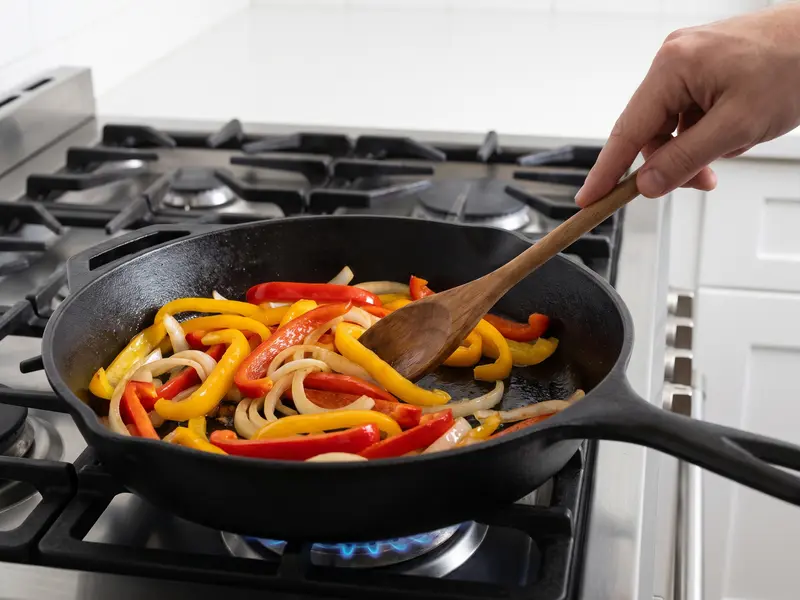
- In the same skillet, add the remaining oil and the onions. Cook over medium heat for 5–6 minutes, scraping up the browned bits, until the onions are soft and golden. Add the peppers and cook another 4–5 minutes until they soften slightly but still hold their shape.
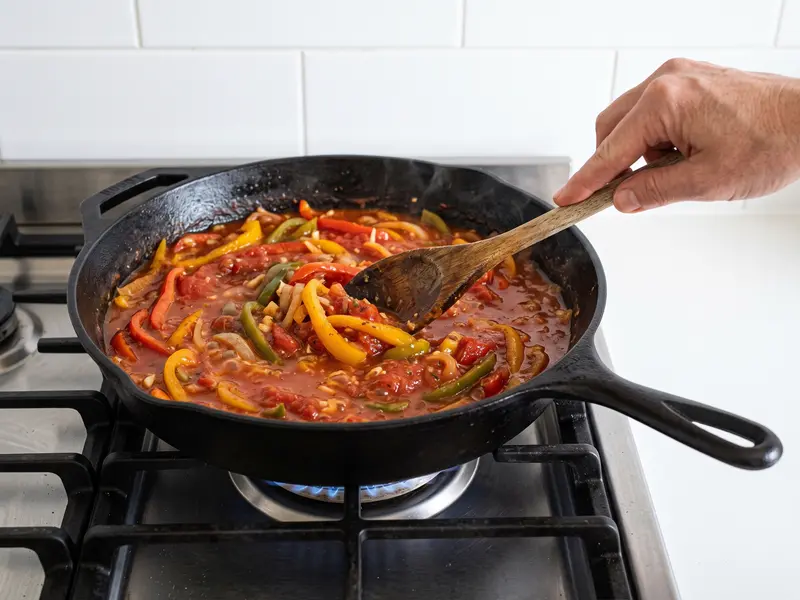
- Add the garlic, oregano and chili flakes. Stir and cook 1 minute. Add the canned tomatoes, crushing them roughly with a spoon. Season with salt and pepper. Stir to combine.
- Nestle the sausages back into the pan, pressing them into the sauce. Cover and simmer on low heat for 12–15 minutes until the sausages are cooked through and the sauce thickens.
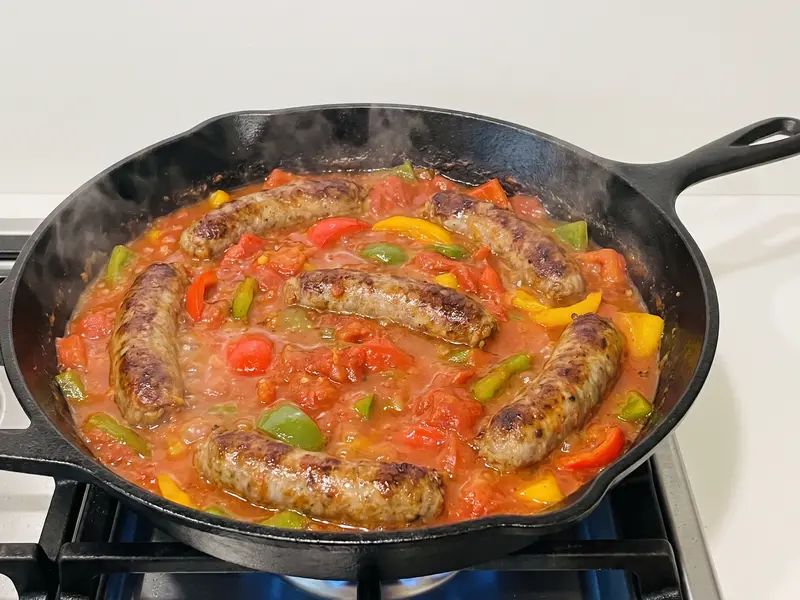
- Remove the lid for the final 3–4 minutes to reduce the sauce. Taste and adjust salt. Serve in hoagie rolls, over pasta, or on their own with crusty bread to mop up the sauce.
FAQ
The main mistake is piercing the sausages before cooking. Pricking releases the fat that holds the moisture in, and you get dry, tight links. Cook them whole over medium heat — not high — turning every 3–4 minutes until the skin is genuinely dark and blistered, about 12 minutes total. They don't need to be fully cooked at this stage: they'll finish cooking in the sauce with the peppers over the next 12–15 minutes. High heat browns the outside fast but leaves the center raw; medium heat cooks them through evenly while still building proper color on the skin.
Both versions are authentic. The New York street fair style — served at Italian-American festivals — is traditionally made without tomatoes: just sausages, peppers, onion and olive oil, cooked down until everything is deeply caramelized. The tomato version is more common in home kitchens and produces a thicker, saucier result that works well over pasta or in a sandwich. Without tomatoes the flavor is cleaner and the peppers and onion develop more caramel sweetness. With tomatoes it's richer and closer to a braised ragu. Both take the same amount of time — choose based on how you want to serve it.
Cut the peppers into wide strips — 1.5–2 cm — not thin slices. Thin strips soften in under 5 minutes and dissolve into the sauce. Add the peppers after the onions have already turned soft and golden, about 5–6 minutes into cooking. Cook the peppers on medium heat for 4–5 minutes until they're slightly softened with a few light char marks but still holding their shape. When the sausages go back in and everything simmers covered, the peppers will finish cooking to the right texture on their own without falling apart.
The classic is a 50/50 mix of sweet and hot pork Italian sausages: sweet ones provide the baseline fennel-herb flavor, hot ones add character and heat. If you don't like spice, use sweet only. Chicken or turkey sausages work but are considerably drier — add a little more olive oil and don't overcook them. Quality matters more than type: sausages from a butcher or deli counter are dramatically better than vacuum-packed supermarket versions. Fennel seed in the ingredient list is the reliable marker of a proper Italian sausage.
Three classic ways. First: in a hoagie roll — place the whole sausage in the bread, pile peppers and onion on top with a spoon of sauce, and optionally add a slice of provolone or mozzarella. Use a slotted spoon so the extra liquid stays in the pan or the bread goes soggy. Second: over pasta — pappardelle or rigatoni hold the chunky tomato sauce well, add freshly grated Parmigiano on top. Third: as a standalone dish with crusty Italian bread to soak up the sauce. The sauce left in the pan after plating is the best part — don't let it go to waste.
Rate this
Recipes by email
One letter a week: a recipe picked for your taste, plus whatever is new on the site. Unsubscribe in one click.
Welcome gift: Sergei's cookbook (e-book).
By subscribing you agree to the privacy policy.
Tell us what you like to cook (30 seconds) →Keep browsing
More dishes from the American archive — picked by overlap with what you're cooking now.


Join the conversation
Comments (1)
The pan needs to be properly hot before the italian sausages goes in for sausage and peppers. A lukewarm pan steams instead of sears. Wait until you see the faintest wisp of smoke — that's your signal.