
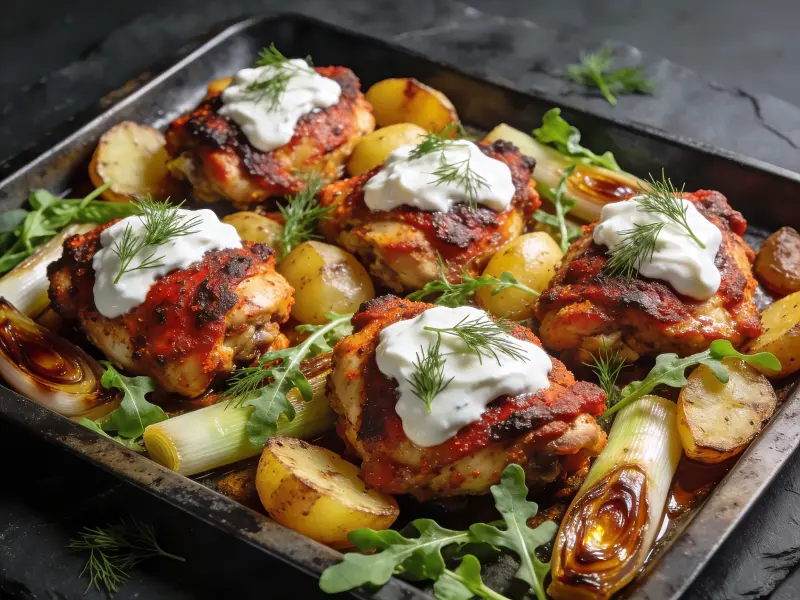
Sheet-Pan Harissa Chicken with Garlic Yogurt
One pan, one hour, a lot of flavor. Bone-in chicken thighs marinated in harissa, cumin, and olive oil roast at high heat alongside waxy potatoes and leeks, developing a spiced crust that stays crisp while the interior stays juicy. The garlic yogurt comes together in two minutes while the chicken is in the oven — cold, garlicky, slightly sharp, the exact counterpoint to the hot, smoky chicken. A handful of peppery rocket and fresh dill over the top before serving keeps the whole thing from being heavy. This is mid-week food that tastes like you planned it.
Ingredients
- 1.2 kgbone-in, skin-on chicken thighs
- 500 gwaxy potatoes
- 3 tbspharissa paste
- 1.5 tspground cumin
- 4.5 tbspextra-virgin olive oil
- 1 tspfine salt
- 2 leeks
- 1 lemon
- 250 gfull-fat plain yogurt
- 2 garlic cloves
- 0.5 tspblack pepper
- 50 grocket
- 15 gfresh dill
Method
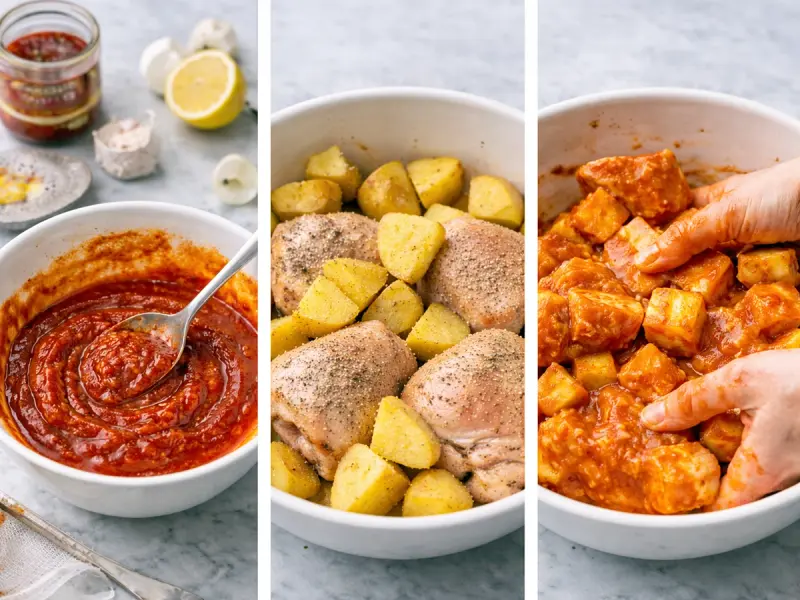
- Marinate the chicken and potatoes. In a small bowl whisk together the harissa, cumin, and 3 tablespoons of the olive oil to make the marinade. Put the chicken thighs and potatoes in a large bowl, season with 3/4 teaspoon of the salt and some black pepper, then pour the harissa marinade over and toss well — use your hands to get the paste under the chicken skin and into all the crevices. Leave to marinate at room temperature for 30 minutes, or cover and refrigerate for up to 8 hours. Longer marinating means more flavor, but even 30 minutes makes a real difference. Meanwhile, toss the sliced leeks with the lemon zest, a pinch of salt, and the remaining 1.5 tablespoons of olive oil in a separate bowl.
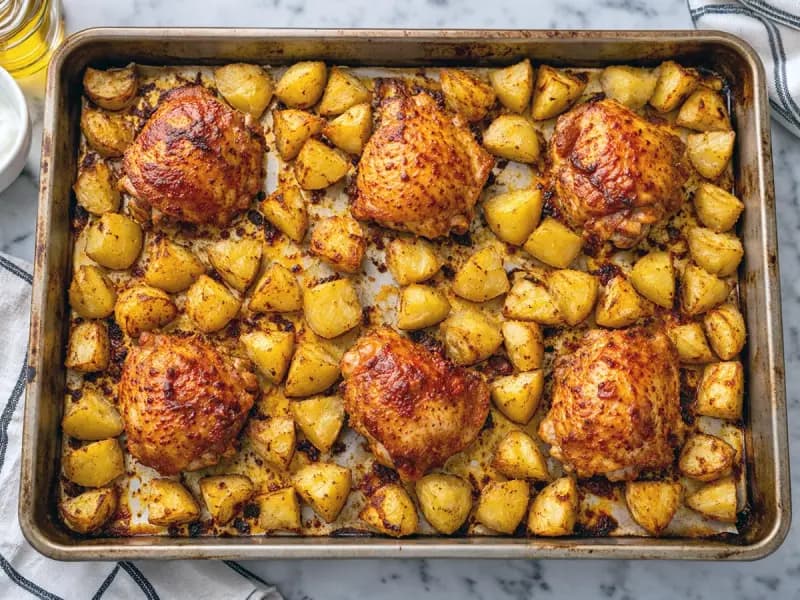
- Roast the chicken and potatoes. Preheat the oven to 220°C (425°F). Arrange the marinated chicken thighs skin-side up and the potatoes in a single layer on a large rimmed baking sheet — the key word is single layer. If they're crowded the chicken steams rather than roasts, and the potatoes won't crisp. If you don't have a large enough pan, use two. Roast for 20 minutes at 220°C. The chicken should already be showing color; the potatoes should be starting to brown on their undersides.
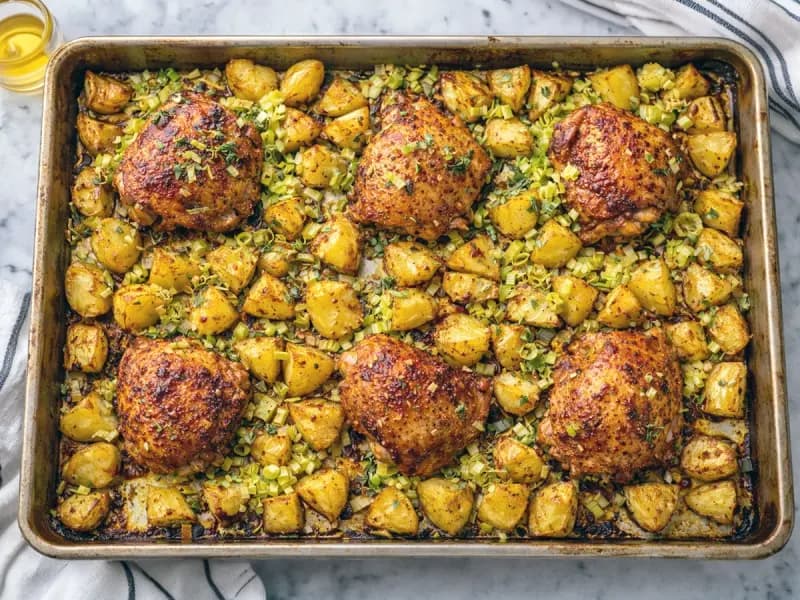
- Add the leeks and finish roasting. After 20 minutes, toss the potatoes lightly so they brown on a different surface, then scatter the lemony leeks over the pan. Return to the oven and roast for a further 20 to 25 minutes, until the chicken skin is deep reddish-brown and crisp, the potatoes are golden and tender, and the leeks are soft and beginning to caramelize at the edges. Check the chicken is done by inserting a skewer into the thickest part — the juices should run clear, or check with a thermometer for 75°C (165°F) in the thickest part of the thigh, away from the bone.
- Make the garlic yogurt. While the chicken roasts, put the yogurt in a bowl and grate the garlic cloves over it using a microplane or fine grater — raw grated garlic is sharp and strong, which is the point; it cuts through the richness of the harissa chicken. Season with the remaining 1/4 teaspoon of salt and 1/4 teaspoon of black pepper. Add a squeeze of lemon juice. Stir together. Taste and adjust. The yogurt should taste well-seasoned and garlicky. It can be made ahead and refrigerated for up to 2 days.
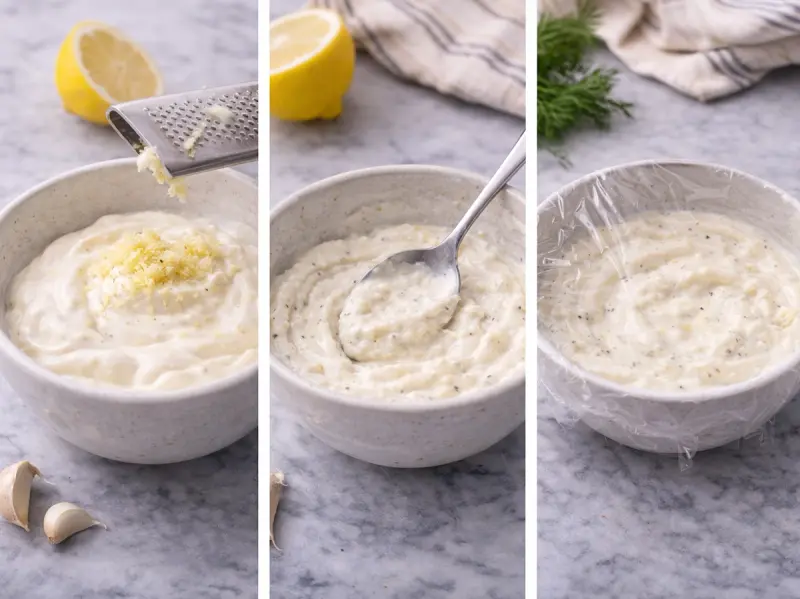
- Serve. Remove the pan from the oven. Spoon the garlic yogurt over the chicken and vegetables directly in the pan, or transfer everything to a large platter first. Scatter the rocket and torn dill over the top. The rocket will wilt slightly from the heat of the chicken — this is fine; a mix of slightly wilted and fresh is good. Serve with flatbread or crusty bread to mop up the pan juices and yogurt, which are worth not wasting.
FAQ
Harissa is a North African chilli paste made from roasted red peppers, dried chillies, garlic, cumin, coriander, and olive oil. It originated in Tunisia and is used throughout the Maghreb region — Tunisia, Algeria, Morocco — and the broader Middle East. The flavor profile is smoky, spiced, and fruity from the peppers, with heat that varies significantly between styles and brands. Rose harissa, a Moroccan variant, includes dried rose petals and tends to be more aromatic and slightly less hot than standard Tunisian harissa. Both work in this recipe. Harissa is sold in tubes, jars, and tins in most supermarkets, usually near the Middle Eastern or international foods.
Greek yogurt has been strained to remove most of the whey, making it much thicker — the consistency of soft cream cheese. That texture works well for dips but is too heavy when spooned over roasted chicken. Regular plain yogurt (the unstrained kind) has a pourable consistency that spreads over the hot chicken and vegetables, picks up the pan juices and harissa drippings as it sits, and creates a sauce rather than a topping. If Greek yogurt is all you have, thin it with a tablespoon or two of cold water or milk until it reaches a consistency you can spoon. The flavor difference is minimal.
Boneless thighs work and cook faster — check at 25 to 30 minutes total rather than 40 to 45. The result is less crisp than bone-in because the skin is thinner and less insulated, but the flavor is comparable. Chicken breast is less suitable for this method: it cooks faster than the potatoes, dries out at 220°C if left for 40 minutes, and doesn't develop the same crust as thighs. If using breast, cut into large pieces, add them to the pan after the potatoes have had 20 minutes, and check at 20 to 25 minutes from when the breast went in.
The formula — dense vegetable that takes the full cook time, delicate vegetable added late — can use many substitutes. Instead of potatoes: sweet potato (cut smaller as it cooks faster), butternut squash, parsnips, or halved fennel. Instead of leeks: red onion cut into wedges, sliced shallots, cherry tomatoes (add for the last 10 minutes only), or courgette (add for the last 15 minutes). The harissa marinade works with all of them. One addition that improves the dish: a tin of chickpeas drained and tossed with the potatoes — they crisp at the edges and add protein.
The most reliable method: an instant-read thermometer into the thickest part of the thigh, away from the bone, should read 75°C (165°F). Visual signs: the skin should be a deep reddish-brown and crisp, not pale and soft; the juices that run from a pierced thigh should be clear, not pink; the meat near the bone should look opaque rather than translucent. Bone-in chicken thighs cooked at 220°C for 40 to 45 minutes total are reliably done — they're very forgiving compared to breast and don't dry out even if they cook a few minutes longer.
Rate this
Recipes by email
One letter a week: a recipe picked for your taste, plus whatever is new on the site. Unsubscribe in one click.
Welcome gift: Sergei's cookbook (e-book).
By subscribing you agree to the privacy policy.
Tell us what you like to cook (30 seconds) →Keep browsing
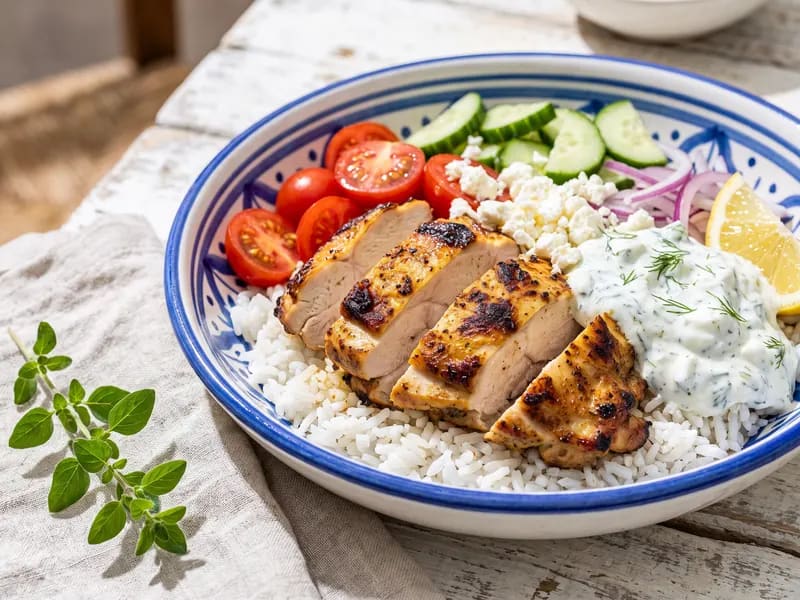
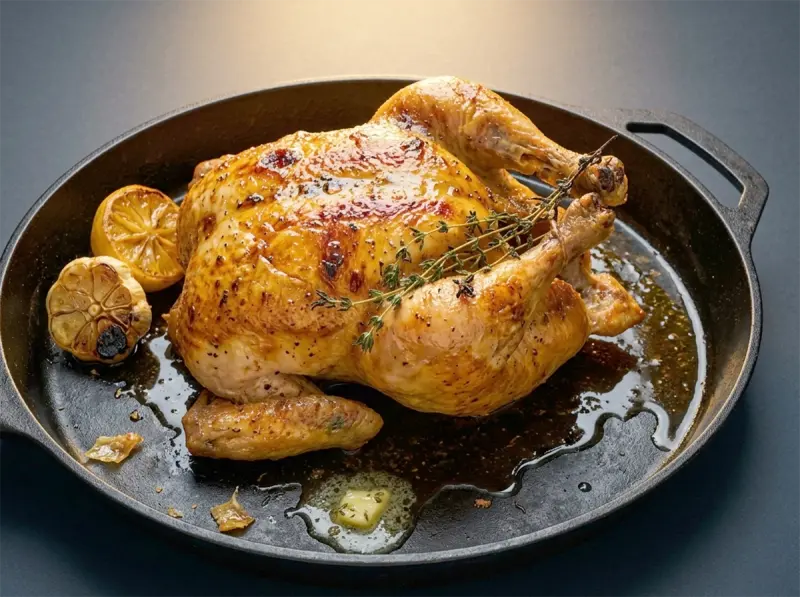
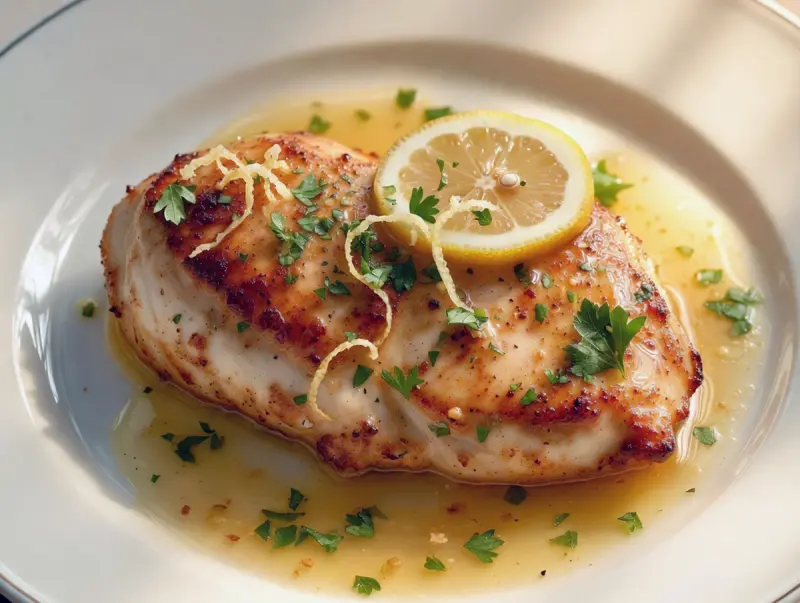
More dishes from the Mediterranean archive — picked by overlap with what you're cooking now.
Join the conversation
Comments (1)
This is the recipe I cook when I want maximum impact with minimum dishes. Everything goes on one pan, the chicken skin gets crispy from the harissa oil, and the garlic yogurt takes 30 seconds to make. Use good harissa paste, not the dry powder — rose harissa from Tunisia is best. The leeks underneath the chicken become silky and sweet, don't skip them.