
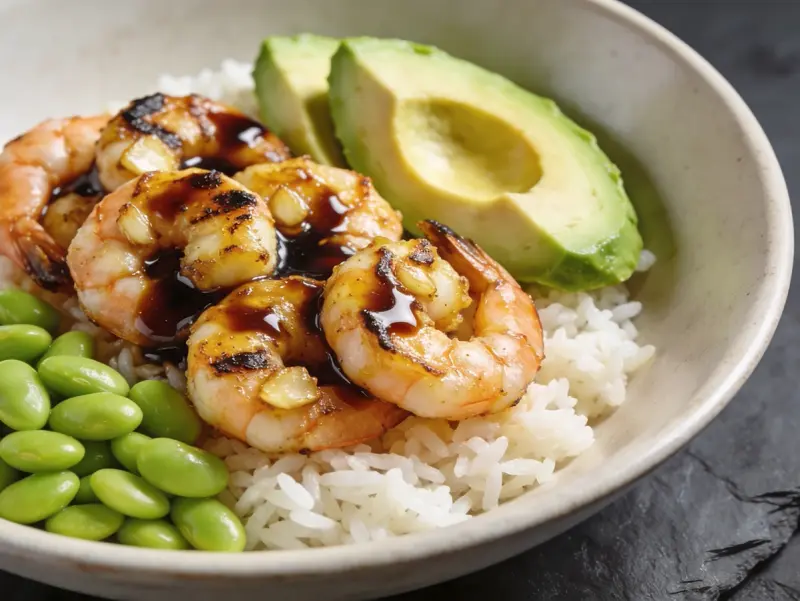
Shrimp Rice Bowls
Garlic butter shrimp glazed with soy sauce over jasmine rice with edamame, avocado and a drizzle of sesame-honey dressing. Shrimp cooks in 3 minutes. If the rice is already done, this is a 10-minute meal. Around 30g of protein per bowl.
Ingredients
- 500 glarge shrimp
- 300 gjasmine rice
- 150 gshelled edamame (frozen), cooked
- 2 avocados
- 4 garlic cloves
- 3 tbspbutter
- 2 tbspsoy sauce
- 1 tbspsesame oil
- 1 tbsphoney
- 1 tbsprice vinegar
- 1 tspfresh ginger
- 1 tbspolive oil
- 3 scallions
- 1 tbspsesame seeds
Method
- Cook the rice according to package instructions. While it cooks, pat the shrimp completely dry — this is the one step most people skip and it's why shrimp comes out pale and steamed rather than properly seared. Dry shrimp hits the pan and browns; wet shrimp releases moisture and poaches. Meanwhile cook the frozen shelled edamame in boiling salted water as the package directs, until hot and tender, then drain.
- Make the sesame dressing: whisk together sesame oil, honey, rice vinegar and a pinch of salt. Set aside.
- Heat olive oil in a large skillet over high heat. Add the shrimp in a single layer — don't crowd them. Cook undisturbed for 1.5–2 minutes until pink and slightly charred on the bottom. Flip and cook 1 more minute.
- Reduce heat to medium. Add the butter, minced garlic and 1 tsp grated fresh ginger. Cook 30 seconds until the garlic is fragrant but not brown. Add the soy sauce and toss quickly to coat the shrimp — keep this step fast, about 30 seconds. If the butter starts to break and look greasy rather than glossy, pull the pan off the heat.
- Assemble the bowls: rice at the base, shrimp and any pan sauce on top, edamame and sliced avocado alongside. Drizzle the sesame dressing over everything.
- Scatter green onions and sesame seeds on top. Serve immediately.
FAQ
Rubbery shrimp is overcooked shrimp. Shrimp is done the moment it turns pink and curls into a C shape — this takes about 2 minutes per side depending on size. If the shrimp curls into a tight O, it's already overcooked. The cooking window is narrow: 30 seconds too long makes a noticeable difference. Pull the pan off the heat as soon as the shrimp are done, even if they look like they could use another moment. Residual heat in the pan continues cooking them.
Yes, frozen shrimp is fine and what most people actually use. The important thing is that it's fully thawed and completely dry before cooking. Partially thawed shrimp releases cold water into the pan, drops the temperature, and the shrimp steams rather than sears. Thaw in a bowl of cold water for 10–15 minutes, then drain and pat aggressively with paper towels. Frozen shrimp that was properly thawed and dried is indistinguishable from fresh in a cooked dish like this.
The bowl format is flexible. Cucumber sliced thin and dressed with a little rice vinegar adds crunch and freshness. Shredded purple cabbage adds color and crunch. Thinly sliced bell peppers work well raw. Pickled red onion adds acidity. Steamed broccoli or bok choy makes the bowl more substantial. Mango cubed adds sweetness that works well against the soy-garlic shrimp. The only things that don't work: heavy proteins competing with the shrimp, anything that needs long cooking time, and strong cheeses.
The sesame-honey dressing here is mild and slightly sweet, designed to coat the rice and vegetables rather than overpower the garlic butter shrimp. For more heat: add sriracha or sambal oelek to the dressing. For more umami: replace the honey with oyster sauce or add a dash of fish sauce. For something tangier: more rice vinegar and a squeeze of lime juice. Spicy mayo — just mayonnaise and sriracha — is the most popular alternative and takes 10 seconds to make.
Yes. Cook the rice and shrimp separately, cool both quickly, and refrigerate them in airtight containers for up to 2 days. Keep avocado and dressing separate, then assemble just before eating so the vegetables stay fresh. Reheat the rice until steaming, but warm the shrimp only briefly to avoid making it rubbery.
Rate this
Recipes by email
One letter a week: a recipe picked for your taste, plus whatever is new on the site. Unsubscribe in one click.
Welcome gift: Sergei's cookbook (e-book).
By subscribing you agree to the privacy policy.
Tell us what you like to cook (30 seconds) →Keep browsing
More dishes from the American archive — picked by overlap with what you're cooking now.
Join the conversation
Comments (1)
Fresh seafood should smell like the ocean, not like fish. If your large shrimp smells strongly when you buy it for shrimp rice bowls, it's past its prime. Your nose is the most reliable freshness test.