
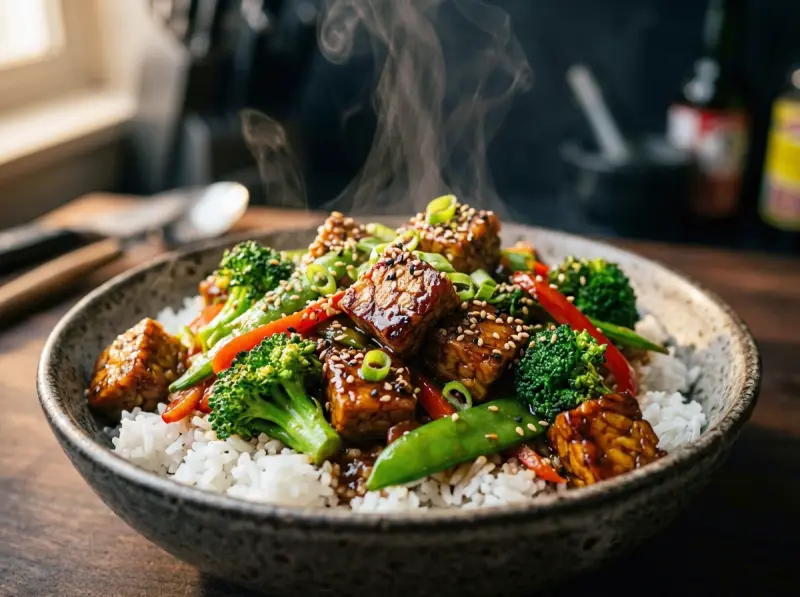
Tempeh Stir-Fry
Crispy-edged tempeh cubes and stir-fried vegetables in a savory-sweet soy, ginger, and garlic sauce. Tempeh is one of the few plant proteins that genuinely crisps when fried — the dense, fermented structure browns at the edges while staying chewy in the center, which is exactly what a stir-fry needs. The sauce caramelizes against the hot pan in the last minute of cooking, coating everything in a glossy layer. Serve over jasmine rice or soba noodles with sesame seeds and spring onion.
Ingredients
- 300 gtempeh, cut into 2 cm cubes or thick slices
- 200 gbroccoli, cut into small florets
- 1 red bell pepper
- 1 medium carrot, julienned or thinly sliced on the diagonal
- 100 gsnap peas or shelled edamame (cooked)
- 3 garlic cloves
- 1 tbspfresh ginger
- 3 tbspsoy sauce or tamari
- 1 tbsprice vinegar
- 1 tbspmaple syrup or coconut sugar
- 1 tbsptoasted sesame oil
- 1 tspcornflour dissolved in 2 tbsp cold water
- 1 tbspsriracha or chilli garlic sauce
- 2 tbspneutral oil
- 2 tbspsesame seeds and sliced scallion
Method
- Optional: steam the tempeh. If you want to remove any bitterness and make the tempeh more porous so it absorbs more sauce, place the cubes in a steamer or a pan of simmering water for 8 minutes. Drain and pat dry. This step is optional — skip it if time is short or if you enjoy the slightly nutty, robust flavor of tempeh straight. Make the sauce: whisk together soy sauce, rice vinegar, maple syrup, sesame oil, sriracha (if using), and the cornflour slurry in a small bowl. Set aside.
- Crisp the tempeh. Heat 1.5 tablespoons of neutral oil in a large wok or heavy pan over medium-high heat until the oil shimmers. Add the tempeh cubes in a single layer — do not crowd. Cook without moving for 3 minutes until a golden crust forms on the underside, then turn and cook on the remaining sides for another 3 to 4 minutes total until golden and slightly crispy on all sides. The tempeh should look caramelized and firm. Transfer to a plate.
- Stir-fry the vegetables. Add the remaining half tablespoon of oil to the same pan over high heat. Add the carrot and broccoli — they need the longest cooking time. Stir-fry for 2 minutes. Add the red bell pepper, garlic, and ginger. Stir constantly for another 2 minutes — everything should be starting to char at the edges but still have crunch. Don't let the garlic burn.
- Combine and sauce. Edamame should go in already cooked: boil frozen shelled beans for the time on the packet and drain them before this step; snap peas go in raw. Add the snap peas or edamame and the crisped tempeh back to the pan. Give the sauce a final stir (the cornflour settles) and pour it over everything. Toss and stir-fry over high heat for 60 to 90 seconds — the sauce will thicken, glaze, and caramelize slightly against the hot pan. Every piece should be coated.
- Serve immediately. Divide over cooked jasmine rice or soba noodles. Scatter with sesame seeds and sliced spring onion. Serve with extra sriracha or soy sauce on the side. This dish is best eaten right out of the pan while the tempeh is still crispy — the texture softens as it sits.
FAQ
Tempeh is a compressed block of fermented whole soybeans. Unlike tofu, which is made from soy milk processed into a smooth block, tempeh contains whole beans held together by a mould culture — this gives it a dense, grainy texture, a distinctly nutty flavor, and a higher protein and fiber content than tofu. It is safe to eat straight from the package. However, briefly steaming or simmering the cubes for 8 to 10 minutes before cooking removes any mild bitterness some people notice, and makes the tempeh more porous — meaning it absorbs more marinade and sauce. Skip this step if time is short or if you prefer the stronger flavor.
Tempeh is a porous flavor sponge — unlike tofu, it actively absorbs marinade into its open structure. Minimum marinating time: 15 to 20 minutes at room temperature. Optimal: 1 to 4 hours in the fridge. For strongest flavor: overnight. A reliable base marinade: 2 tablespoons soy sauce, 1 tablespoon rice vinegar, 1 teaspoon sesame oil, 1 teaspoon maple syrup, 1 minced garlic clove, and a little grated ginger. Steaming the tempeh before marinating opens its pores further and allows it to absorb even more. Don't discard leftover marinade — add it to the stir-fry sauce.
Five rules for crispy tempeh. First, high heat — medium-high to high. Second, hot oil before the tempeh goes in. Third, single layer — no crowding, pieces should not touch. Fourth, do not move for the first 2 to 3 minutes — let a crust form before turning. Fifth, toss in cornflour — coat the cubes in 1 to 2 teaspoons of cornflour (cornstarch) before frying; the starch creates a crispier crust that holds up under sauce. For maximum crispiness: air-fry at 200°C for 12 to 15 minutes. Add the tempeh back to the sauce at the very end and toss briefly — long simmering in sauce softens the crust.
Yes. Extra-firm tofu is the closest substitute — press it dry, cube, and pan-fry until golden. The flavor is more neutral and the texture softer. Canned chickpeas (drained and dried) work well — fry until golden and crispy. Seitan has a very meaty, chewy texture and works well in stir-fry. Shiitake or portobello mushrooms provide umami and a satisfying bite — fry them separately until all liquid has evaporated before adding to the pan. Ready-made vegan chicken pieces are convenient. Each substitute changes the dish character slightly — tempeh remains unique in flavor profile and nutritional density, but all these options produce a good result.
Yes, this is one of the most protein-dense dishes in vegan cooking. Tempeh contains approximately 19 g of protein per 100 g — among the highest of any plant food, comparable to chicken breast. One serving of the stir-fry (around 100 g of tempeh) provides 18 to 20 g of protein, and when served over soba noodles (which are buckwheat-based and higher in protein than white rice) the total reaches 25 g or more per bowl. Tempeh protein is complete — it contains all essential amino acids. It also delivers significant fiber, iron, manganese, and natural probiotics from the fermentation process, making it one of the most nutritionally complete plant proteins available.
Rate this
Recipes by email
One letter a week: a recipe picked for your taste, plus whatever is new on the site. Unsubscribe in one click.
Welcome gift: Sergei's cookbook (e-book).
By subscribing you agree to the privacy policy.
Tell us what you like to cook (30 seconds) →Keep browsing
More dishes from the Indonesian archive — picked by overlap with what you're cooking now.

Join the conversation
Comments (1)
Most people who say they do not like tempeh have only had it steamed or crumbled. Slicing it thin and pan-frying until deeply golden on each side completely transforms the flavour — it gets nutty and almost bacon-like on the edges. I marinate for at least 20 minutes in the soy-sesame mixture before cooking. The other thing: get your wok screaming hot before the tempeh goes in. Medium heat will give you sad, pale, steamed slabs.