
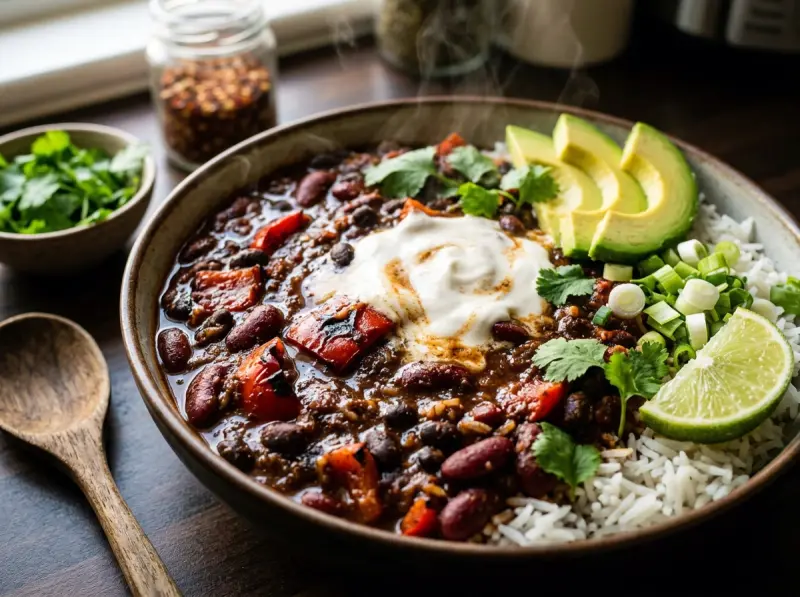
Vegan Chili
Three kinds of beans and a rich, dark, smoky tomato-based sauce built on chipotle peppers, bloomed spices, and a small amount of cocoa powder. This is the version of vegan chili that wins cook-offs. The cocoa sounds unusual until you taste what it does — it deepens the existing flavors without adding any sweetness or chocolate flavor, the same way it works in a mole. The chipotle gives smoke. The long simmer gives body. A splash of apple cider vinegar at the end lifts everything. Make it the day before if you can.
Ingredients
- 400 gcanned kidney beans
- 400 gcanned black beans
- 400 gcanned pinto beans or borlotti beans
- 800 gcanned crushed or fire-roasted tomatoes
- 1 large onion
- 4 garlic cloves
- 1 red bell pepper
- 2 tbspchipotle peppers in adobo sauce
- 2 tbsptomato paste
- 2 tspchilli powder
- 2 tspsmoked paprika
- 1.5 tspground cumin
- 1 tspdried oregano
- 1 tbspunsweetened cocoa powder
- 1 tspmaple syrup or light brown sugar
- 250 mlvegetable stock
- 1 tbspapple cider vinegar
- 2 tbspolive oil
Method
- Build the aromatic base. Heat the olive oil in a large, heavy-bottomed pot or Dutch oven over medium heat. Add the onion with a generous pinch of salt and cook for 8 to 10 minutes, stirring regularly, until golden and beginning to caramelize at the edges. Don't rush this — a properly cooked onion is the flavor foundation. Add the red bell pepper and garlic and cook for another 3 minutes.
- Bloom the spices and build depth. Add the chilli powder, smoked paprika, cumin, and oregano. Stir constantly for 60 seconds until the spices smell toasted and intensely fragrant. Add the tomato paste and cook, stirring, for 2 more minutes until it darkens — it should look almost like a dark paste stuck to the bottom. Add the chipotle peppers with a spoonful of their adobo sauce and stir to combine. This layering of aromatics and cooked spices is what makes vegan chili taste genuinely deep rather than flat.
- Add the bulk ingredients. Pour in the crushed tomatoes and vegetable stock. Stir to scrape up anything from the base of the pot. Add all three cans of drained beans, the cocoa powder, and the maple syrup. Stir everything together. Bring to a boil, then reduce to a steady gentle simmer. Leave uncovered.
- Simmer and thicken. Cook for 30 to 40 minutes over low heat, stirring every 10 minutes. The chili should thicken naturally as the liquid reduces. After 20 minutes, use the back of a spoon or a potato masher to lightly crush about one-quarter of the beans directly in the pot — this creates a creamy body while leaving the rest of the beans intact. Taste and adjust: more chipotle if you want more smoke, more salt, a pinch more sugar if too sharp.
- Finish and serve. Remove from heat and stir in the apple cider vinegar — it brightens and sharpens the whole thing. Taste one final time. Serve in deep bowls over rice or with cornbread, topped with diced avocado, sliced spring onion, vegan sour cream, and a wedge of lime. The chili tastes better the next day and freezes perfectly for up to 4 months.
FAQ
Watery chili usually comes from too much liquid or insufficient simmering time. Three ways to thicken: first, simmer uncovered over low heat — liquid evaporates and flavors concentrate. Second, mash a quarter of the beans with the back of a spoon or a potato masher directly in the pot — partially crushed beans create a natural body. Third, stir in 1 to 2 tablespoons of masa harina (Mexican corn flour) or fine cornmeal dissolved in a little cold water in the final 5 minutes — it thickens and adds a subtle corn flavor. Add liquid (stock) gradually during cooking rather than all at once: easier to control consistency.
Smokiness in chili comes from several sources working together. Chipotle peppers in adobo sauce are the most effective single ingredient — they provide smoke, heat, and umami simultaneously. Smoked paprika is non-negotiable; it cannot be replaced by regular paprika without losing the effect. Additional depth: 1 tablespoon of unsweetened cocoa powder or 20 g of dark chocolate added during simmering amplifies the earthy, fruity notes of the spices; 1 to 2 teaspoons of soy sauce adds umami without a detectable soy flavor; a teaspoon of apple cider vinegar or a squeeze of lime at the very end lifts and sharpens all the existing flavors. Liquid smoke (a few drops added at the end) is the most direct route to a campfire smokiness.
A mix of three types produces the best result. Kidney beans are the classic chili bean — dense, firm, and meaty in texture, they hold their shape through long cooking. Black beans are creamier and earthier, they partially soften and help thicken the sauce. Pinto or borlotti beans are the softest of the three — they break down more readily and contribute to the body of the sauce. If using a single type, kidney or pinto are the most appropriate. Half a cup of red lentils added with the beans will dissolve during cooking and thicken the sauce significantly without altering the flavor. Chickpeas work well as an addition or substitution — they stay firm and add a nutty flavor.
Yes, significantly. Chili is one of the dishes that improves most dramatically with resting time — the spices and smoky flavors continue developing in the sauce for 24 to 48 hours. By day two or three, it tastes noticeably more complex than it did when first made. Refrigerate in an airtight container for up to 5 to 6 days; when reheating, add a splash of water or stock as it thickens overnight. For freezing: cool completely, then portion into bags or containers with a little space for expansion. Freeze for up to 4 months. Thaw overnight in the fridge or reheat directly from frozen in a pot with a splash of water over low heat. Add toppings only when serving, never to the frozen batch.
Toppings are half the experience of chili. Essential: diced avocado or guacamole, sliced spring onions or fresh coriander, a squeeze of lime, vegan sour cream (cashew-based or store-bought). Optional but excellent: pickled jalapeños, shredded vegan cheese, tortilla chips for crunch, hot sauce. Classic sides: cornbread (the sweetness balances the smoky heat perfectly), tortilla chips, baked sweet potato (pour the chili directly over it), basmati or brown rice, quinoa for extra protein. The chili also works spooned over a baked potato, stuffed into tacos with avocado and pickled onion, or eaten the next day as a pasta sauce over rigatoni.
Rate this
Recipes by email
One letter a week: a recipe picked for your taste, plus whatever is new on the site. Unsubscribe in one click.
Welcome gift: Sergei's cookbook (e-book).
By subscribing you agree to the privacy policy.
Tell us what you like to cook (30 seconds) →Keep browsing
More dishes from the American archive — picked by overlap with what you're cooking now.

Join the conversation
Comments (1)
The cocoa powder in this recipe is not a gimmick — it is a technique borrowed from Mexican mole sauces. It adds a dark, almost coffee-like depth without any chocolate flavour. I use two types of beans because they have different textures: kidney beans hold their shape and give you something to bite into, while black beans break down slightly and thicken the broth naturally. Let this sit overnight if you can. Like most stews, it is dramatically better the next day.