
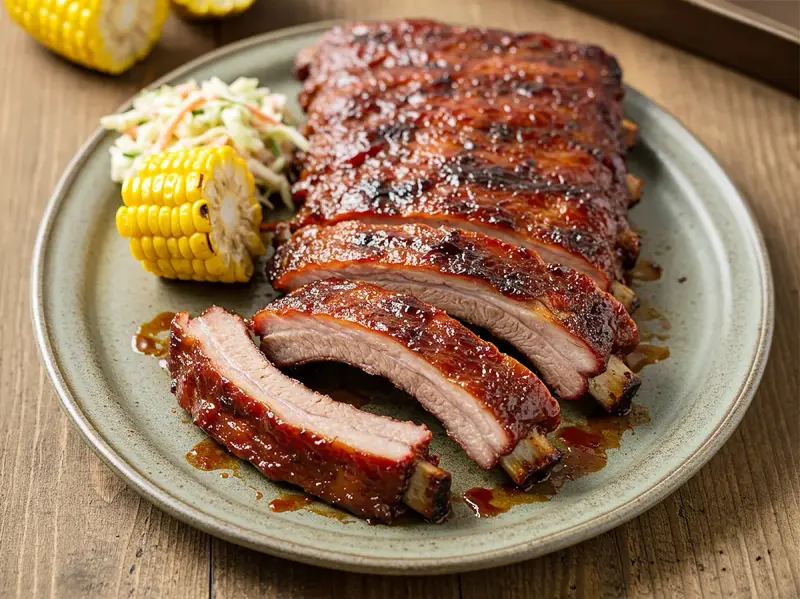
Свиные рёбрышки барбекю
Свиные рёбрышки медленного приготовления, покрытые ароматным соусом барбекю. Насыщенный вкус и сочность делают их любимым лакомством для всех ценителей мяса.
Ингредиенты
- 2-2.5 кгсвиные рёбрышки
- 2 ст.л.оливковое масло
- 2 ст.л.коричневый сахар
- 2 ст.л.паприка
- 1 ст.л.чесночный порошок
- 1 ст.л.луковый порошок
- 1 ч.л.чёрный перец
- 1 ч.л.соль
- 1/2 ч.л.кайенский перец
- 1 стаканкетчуп
- 1/4 стаканяблочный уксус
- 2 ст.л.коричневый сахар
- 1 ст.л.вустерский соус
- 1 ч.л.чесночный порошок
1 стакан = 240 мл
Приготовление
- Снимите плёнку с обратной стороны рёбрышек. Смешайте сухой маринад: коричневый сахар (2 ст.л.), паприку (2 ст.л.), чесночный порошок (1 ст.л.), луковый порошок (1 ст.л.), чёрный перец (1 ч.л.), соль (1 ч.л.) и кайенский перец (½ ч.л.). Натрите рёбрышки оливковым маслом, затем равномерно нанесите маринад со всех сторон. Оставьте мариноваться на 1–2 часа при комнатной температуре или на ночь в холодильнике.

- Разогрейте духовку до 150 °C. Плотно оберните рёбрышки фольгой и выложите на противень. Запекайте 2,5–3 часа до мягкости.
- Тем временем приготовьте соус: смешайте кетчуп (1 стакан), яблочный уксус (¼ стакана), коричневый сахар (2 ст.л.), вустерский соус (1 ст.л.) и чесночный порошок (1 ч.л.) в небольшой кастрюле и томите на слабом огне 15–20 минут до загустения.

- Разогрейте гриль до средне-высокой температуры. Достаньте рёбрышки из духовки, снимите фольгу и смажьте соусом.
- Обжарьте рёбрышки на гриле по 5–7 минут с каждой стороны, периодически смазывая соусом, до карамелизации. Дайте отдохнуть 10 минут перед подачей.
Вопросы
Жёсткие рёбра означают недостаточное время приготовления или слишком высокую температуру. Свиные рёбра нуждаются минимум в 2,5–3 часах при 150°C, завёрнутые в фольгу, чтобы коллаген превратился в желатин. Рёбра baby back тоньше и готовятся 2–2,5 часа. Метод 3-2-1 надёжен: 3 часа без фольги при 120°C, затем 2 часа плотно завёрнутыми в фольгу с небольшим количеством яблочного сока, затем 1 час без фольги с глазурью. Рёбра готовы, когда мясо отошло от кости примерно на 1 см и зубочистка входит без сопротивления. Эффект «отваливается от кости» достигается именно фольгой — без неё рёбра будут более упругими.
Да, снятие плёнки (тонкой серебристой кожицы на костяной стороне) заметно улучшает результат. При готовке она становится жёсткой и жёванной, препятствует проникновению специй и дыма в мясо и затрудняет поедание. Как снять: высушите рёбра, подденьте край плёнки столовым ножом с одного конца, схватите бумажным полотенцем (для сцепления) и потяните одним плавным движением. Если рвётся — воспользуйтесь плоскогубцами или начните с нового края. Некоторые рёбра продаются уже без плёнки — проверяйте при покупке.
Верхний гриль духовки (режим «гриль» или «бройлер») — лучший инструмент для глазирования дома. После основного долгого запекания нанесите щедрый слой BBQ-соуса или медовой глазури на мясную сторону и поставьте под гриль на максимальной температуре на 3–5 минут, внимательно следя, пока глазурь не запузырится и не карамелизуется. Повторите со вторым слоем глазури для более липкого, насыщенного цвета. Как вариант: запекайте рёбра без фольги при 230–240°C 10–15 минут. Главное — наносить глазурь только в конце: из-за содержания сахара она быстро горит, если добавить её раньше.
Варка рёбер — спорный ускоренный метод. Она сокращает общее время готовки на 30–40 минут, но также вымывает значительную часть вкуса и жира в воду, оставляя мясо более сухим и менее насыщенным. Если всё же варите — ограничьтесь 20–30 минутами максимум и добавьте в воду ароматику (лук, чеснок, лавровый лист, перец горошком) для компенсации. Гораздо лучшая альтернатива для быстрого смягчения — метод с фольгой: плотно заверните рёбра с небольшим количеством яблочного уксуса или сока и запекайте при 150°C 2 часа. Результат по нежности аналогичный, без потери вкуса.
Идеальная температура духовки для свиных рёбер — 135–150°C. При более высокой температуре снаружи готовится быстрее, чем успевает расплавиться коллаген, — мясо выходит жёстким и сухим. Рёбра готовы, когда: мясо отошло от кончиков костей примерно на 1 см, шпажка или зубочистка входит с нулевым сопротивлением, а поднятые щипцами за один конец рёбра сгибаются и почти трескаются посередине. Внутренняя температура должна быть около 90–95°C — значительно выше минимальной безопасной (63°C), потому что для нужной текстуры важна температура превращения коллагена в желатин.
Оцени
Рецепты на почту
Одно письмо в неделю: рецепт под ваш вкус и всё новое на сайте. Отключить рассылку можно в один клик.
В подарок — книга рецептов Сергея (epub).
Нажимая кнопку, вы соглашаетесь с политикой конфиденциальности.
Расскажите, что любите готовить (30 секунд) →Смотри дальше
Ещё блюда из архива — подобраны по пересечению с тем, что ты сейчас готовишь.

Обсудить рецепт
Комментарии (1)
Pork dries out faster than you'd expect in spare ribs. I pull it off heat at 63°C internal temperature and let carryover cooking take it to the safe 65°C. Those 2 degrees of rest make the difference between moist and sawdust.