GetCookMatch

Photo coming soon

USAUSA
📝Useful tips
S
Sergei Martynov

The baking soda marinade is not optional if you want restaurant-quality tender beef. A quarter teaspoon per 500g changes the pH of the meat surface, which breaks down the tough muscle fibres and gives you that silky, velvety texture you get at Chinese restaurants. Rinse it off if you're using more than ¼ tsp — too much makes the meat taste soapy.

💡

The key to a stir-fry that doesn't steam into a grey mess is cooking in batches at maximum heat. If your wok isn't screaming hot, the beef releases water, the temperature drops and everything steams instead of sears. Cook the beef in one layer, don't touch it for a full minute — let the crust form before stirring.

Meat Dishes

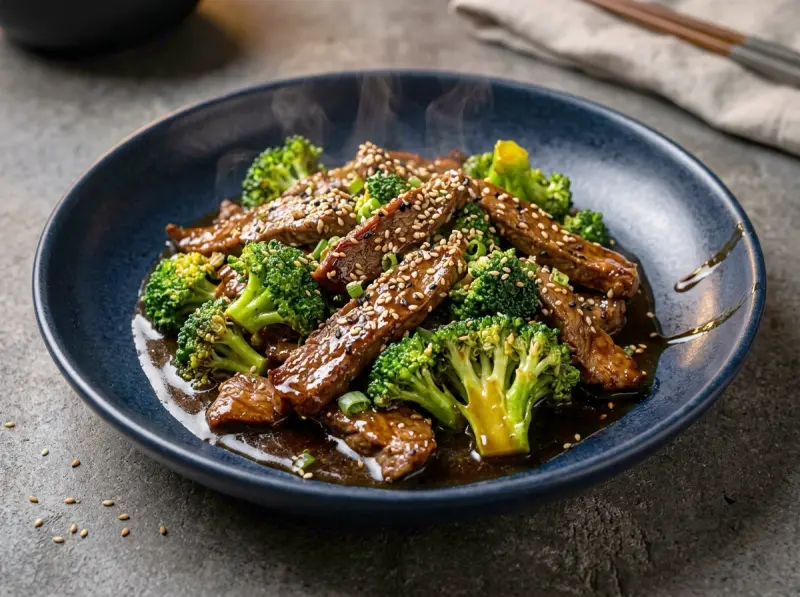
Beef and Broccoli Stir-Fry

Thinly sliced flank steak velveted in cornstarch, seared at screaming-hot heat, then combined with crisp broccoli in a glossy oyster-soy brown sauce. The most popular Chinese-American stir-fry — ready in 30 minutes and better than takeout if you follow the technique.

⏱️
30
Minutes
👥
4
Servings
🔥
390
kcal
Rate this recipe

Key Ingredients

What you'll need

Ingredients

How to make it

Instructions

  1. 1

    Slice the flank steak against the grain at a 45-degree angle into strips 3–4 mm thick. For easier slicing, freeze the steak for 30–45 minutes first. In a bowl, combine the sliced beef with ¼ tsp baking soda, 1 tbsp soy sauce, 1 tbsp cornstarch and 1 tbsp water. Mix well and marinate for 15–20 minutes. The baking soda tenderises the meat — this is the Chinese restaurant technique.

  2. 2

    Mix the sauce: combine oyster sauce, remaining soy sauce, brown sugar, sesame oil, broth and 1 tbsp cornstarch in a small bowl. Stir until the cornstarch dissolves. Set aside.

  3. 3

    Bring a pot of salted water to a boil. Blanch the broccoli florets for 45–60 seconds — they should turn bright green and be tender-crisp. Drain immediately and set aside. Do not overcook.

  4. 4

    Heat a wok or large heavy skillet over the highest heat until it smokes. Add 1 tbsp oil. Add the beef in a single layer — do not crowd the pan or it will steam instead of sear. Cook undisturbed for 1 minute until browned underneath, then stir and cook 30 seconds more. The beef should be 80–90% cooked. Remove and set aside.

  5. 5

    Add the remaining oil to the wok. Add the minced garlic and ginger, stir for 20 seconds. Pour the sauce around the sides of the wok (not in the centre) to deglaze. Bring to a simmer and stir for 30 seconds until slightly thickened.

  6. 6

    Return the beef and broccoli to the wok. Toss everything together over high heat for 30–60 seconds until the sauce coats everything and the beef is fully cooked. Serve immediately over steamed white rice, topped with sesame seeds if desired.

Join the conversation

Comments

Leave a comment

Loading comments…

Frequently Asked Questions

How to make beef in stir-fry tender like a Chinese restaurant — what is velveting and how does it work?

Velveting is the Chinese restaurant technique for tenderising beef before stir-frying. The basic method used here: marinate thin-sliced beef in a small amount of baking soda (¼ tsp per 500g), soy sauce and cornstarch for 15–20 minutes. The baking soda raises the pH of the surface, which inhibits the protein bonds from tightening during high heat — the result is silky, tender beef instead of the chewy, rubbery texture you get from unseasoned beef cooked at high heat. The cornstarch creates a light coating that holds the moisture in and gives the meat a glossy appearance in the sauce.

Why does beef and broccoli stir-fry turn out watery and grey instead of glossy with a proper sauce?

Two causes. First: too much beef in the pan at once. When you crowd a wok, the temperature drops instantly, the meat releases its liquid and everything steams — you get grey boiled beef in diluted liquid. Cook in a single layer with space between pieces, in batches if needed. Second: the wok or pan was not hot enough. It needs to be smoking before the oil goes in. A pan that's 'just hot' will never produce a proper stir-fry. The broccoli also contributes excess water if over-blanched — 45–60 seconds in boiling water, not more.

What cut of beef is best for beef and broccoli stir-fry — and how to slice it correctly?

Flank steak is the standard choice: it has visible parallel muscle fibres that make it easy to slice thinly against the grain, and it has enough fat to stay juicy through high-heat cooking. Skirt steak and flat iron steak also work well. Slice against the grain — this means cutting perpendicular to the direction the fibres run. Cutting with the grain produces tough, chewy strips. Aim for slices 3–4 mm thick; thicker pieces won't cook through in the 90-second window before the outside burns. Partially freezing the steak for 30–45 minutes makes thin, even slicing much easier.

Can you substitute oyster sauce in beef and broccoli — what gives the same glossy brown sauce flavour?

Oyster sauce provides the specific umami depth, slight sweetness and body of the brown sauce. The closest substitute is a mix of hoisin sauce (same quantity) plus an extra teaspoon of soy sauce — hoisin is sweeter, so reduce the brown sugar by half. Fish sauce plus a pinch of sugar also works (use half the quantity — fish sauce is much saltier). For a completely oyster-free version: soy sauce + a teaspoon of Worcestershire sauce + brown sugar + a dash of sesame oil produces a reasonable facsimile, though the sauce will be thinner and less glossy.

How to keep broccoli bright green and crisp in stir-fry — it always turns yellow and mushy

Broccoli turns yellow and mushy for one reason: too much heat for too long. The fix is blanching separately before stir-frying. Boil water, add the florets for 45–60 seconds — they should turn vivid green and be just barely tender when you bite one. Drain immediately and, ideally, cool briefly under cold water to stop the cooking. Add the blanched broccoli only in the final 30–60 seconds of stir-frying — just enough time to heat through and absorb the sauce. Adding raw broccoli to the wok and cooking it there will always produce overcooked, yellow results because the wok temperature needs to stay high for the beef.