
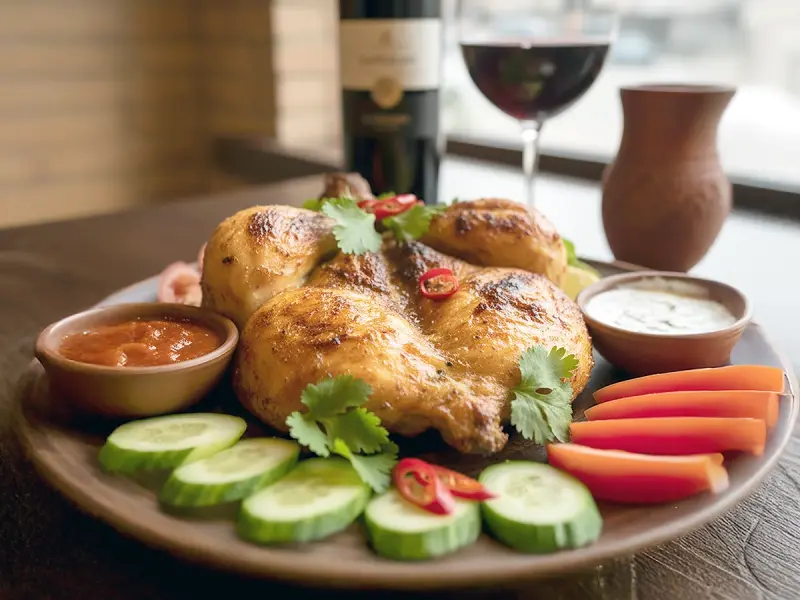
Pollo Tabaka
El plato icónico de Georgia: un pollo pequeño entero se aplana, se sazona con khmeli-suneli, adjika y vinagre de vino y se fríe bajo peso hasta quedar dorado y crujiente por ambos lados.
Ingredientes
- 500 gpollo joven entero
- 2 cdamantequilla clarificada
- 1 cdavinagre de vino
- 1 cdtakhmeli-suneli
- 1 cdtaadjika
- 3 dienteajo
- 1 hierbas frescas cilantro o perejil
Preparación
- Colocar el pollo pecho arriba. Cortar a lo largo del espinazo y retirarlo. Abrirlo en mariposa y presionar firmemente el esternón para aplanar a 1,5–2 cm.
- Frotar con sal, pimienta, khmeli-suneli y adjika. Rociar con vinagre. Marinar 15–20 min.

- Calentar sartén pesada con mantequilla clarificada a fuego medio. Colocar el pollo con la piel hacia abajo. Cubrir con tapa pesada o colocar peso encima.
- Freír bajo presión 15–20 min hasta piel dorada y crujiente. Dar la vuelta y cocinar 15–20 min más.

- Para la salsa: picar ajo fino, mezclar con caldo, sal y cilantro o perejil.
- Servir entero o en porciones con salsa de ajo.
Preguntas
El pollo tabaka duro y seco casi siempre se debe a cocinar con demasiado fuego durante demasiado tiempo, o a saltarse el marinado. El pollo debe aplanarse por completo para cocinarse de manera uniforme — cualquier grosor desigual hace que unas partes se pasen mientras otras están crudas. Marínalo al menos 1 hora (idealmente 3–4 horas) en una mezcla de ajo, sal, aceite vegetal y las especias que prefieras: la sal retiene la humedad en la carne y el aceite crea una barrera contra el resecado. Cocina a fuego medio, no alto — debe chisporrotear suavemente, no freírse con violencia. La temperatura interior de la parte más gruesa debe llegar a 74°C. Presionar con una tapa pesada o una sartén con peso garantiza un contacto uniforme con la superficie caliente e impide que el pollo se curve.
Sí — la sartén tabaka con prensa de tornillo es tradicional pero no imprescindible. Cualquier objeto pesado que quepa en la sartén funciona: una sartén de hierro fundido más pequeña, una olla llena de agua, un ladrillo limpio envuelto en papel de aluminio o una tapa pesada de otra cazuela. Lo clave es una presión firme y uniforme sobre toda la pieza — se necesita al menos 2–3 kg de peso para un pollo de 1 kg. Si usas otra sartén como prensa, aprieta con la mano durante el primer minuto y luego deja que el peso haga su trabajo. El peso obliga a la piel a estar en contacto total con la superficie caliente de la sartén, que es lo que crea la piel crujiente característica.
La marinada clásica georgiana es sencilla: ajo majado o picado fino (4–6 dientes por pieza), sal (1 cucharadita por cada 500 g de pollo), unas cucharadas de aceite vegetal, pimienta negra molida y, opcionalmente, zumo de limón o vinagre de vino blanco. Frota la mezcla por todo el pollo aplanado, bajo la piel donde sea posible y en los cortes que hagas en las partes más gruesas. Para cocinar entre semana, 1 hora a temperatura ambiente es suficiente. Para el mejor resultado, marina toda la noche en la nevera (hasta 12 horas). Saca el pollo de la nevera 30 minutos antes de cocinarlo — un pollo frío en una sartén caliente provoca una cocción desigual y que se pegue.
La piel blanda del pollo tabaka tiene varias causas habituales: la sartén no estaba suficientemente caliente antes de poner el pollo, la piel tenía demasiada humedad en la superficie o se usó poca grasa. Seca bien el pollo con papel absorbente antes de cocinarlo, sobre todo por el lado de la piel — la humedad superficial genera vapor e impide el dorado. Calienta la sartén hasta que esté verdaderamente caliente (una gota de agua debe evaporarse al instante) antes de añadir el aceite. Usa un aceite con alto punto de humo: girasol, oliva refinado o aguacate. Empieza con la piel hacia abajo y no muevas ni compruebes el pollo durante los primeros 8–10 minutos — levantarlo demasiado pronto rasga la piel antes de que se suelte sola. El peso de la prensa debe ser suficiente para mantener el contacto de la piel durante toda la cocción.
En la tradición georgiana, el pollo tabaka se acompaña sobre todo con tkemali — una salsa ácida elaborada con ciruelas agrias (cerezos silvestres o ciruelas verdes), cocidas con ajo, cilantro, eneldo y guindilla. Equilibra a la perfección la contundencia del pollo frito. La adjika (una pasta picante de nueces y hierbas) es otro acompañamiento tradicional. Las guarniciones sencillas más típicas de la cocina georgiana son ensalada fresca de tomate y pepino con hierbas, verduras asadas o a la plancha, y mchadi (pan de maíz georgiano). En los restaurantes son muy habituales las patatas fritas o las berenjenas con salsa de nueces (badrijani nigvzit). Un vino blanco seco georgiano bien frío o una cerveza helada completan el festín.
Valora
Recetas en tu correo
Un correo a la semana: una receta elegida a tu gusto y lo nuevo del sitio. Puedes dejar de recibirlo con un clic.
De regalo: el libro de recetas de Sergei (e-book).
Al pulsar el botón aceptas la política de privacidad.
Cuéntanos qué te gusta cocinar (30 segundos) →Sigue explorando
Más platos del archivo — elegidos por su solapamiento con lo que estás cocinando ahora.

Únete a la conversación
Comentarios (1)
Salt the whole young chicken at least 30 minutes before cooking chicken tabaka, or right before — never in between. Salt draws moisture to the surface; given 30+ minutes it reabsorbs. At 10 minutes, it's just sitting there making things wet.