


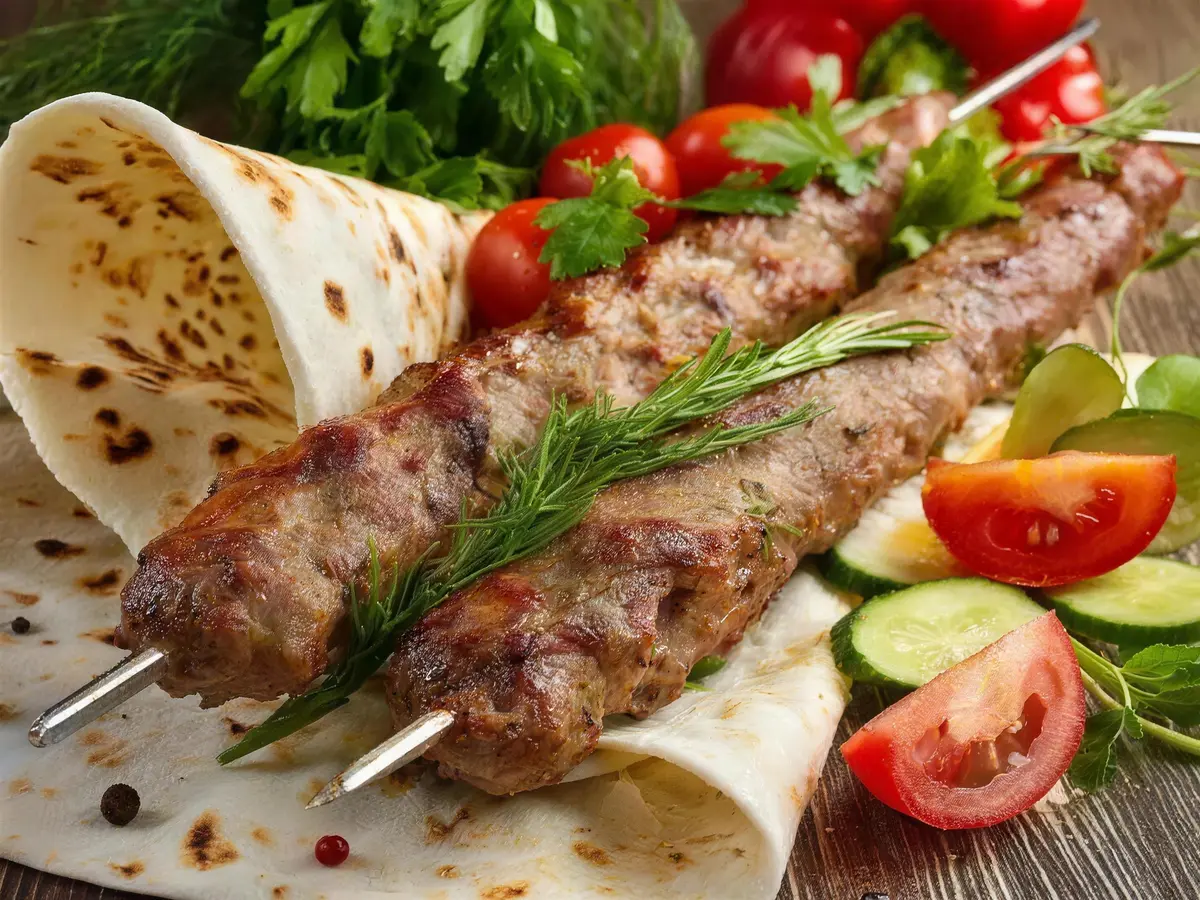
Adana Kebab
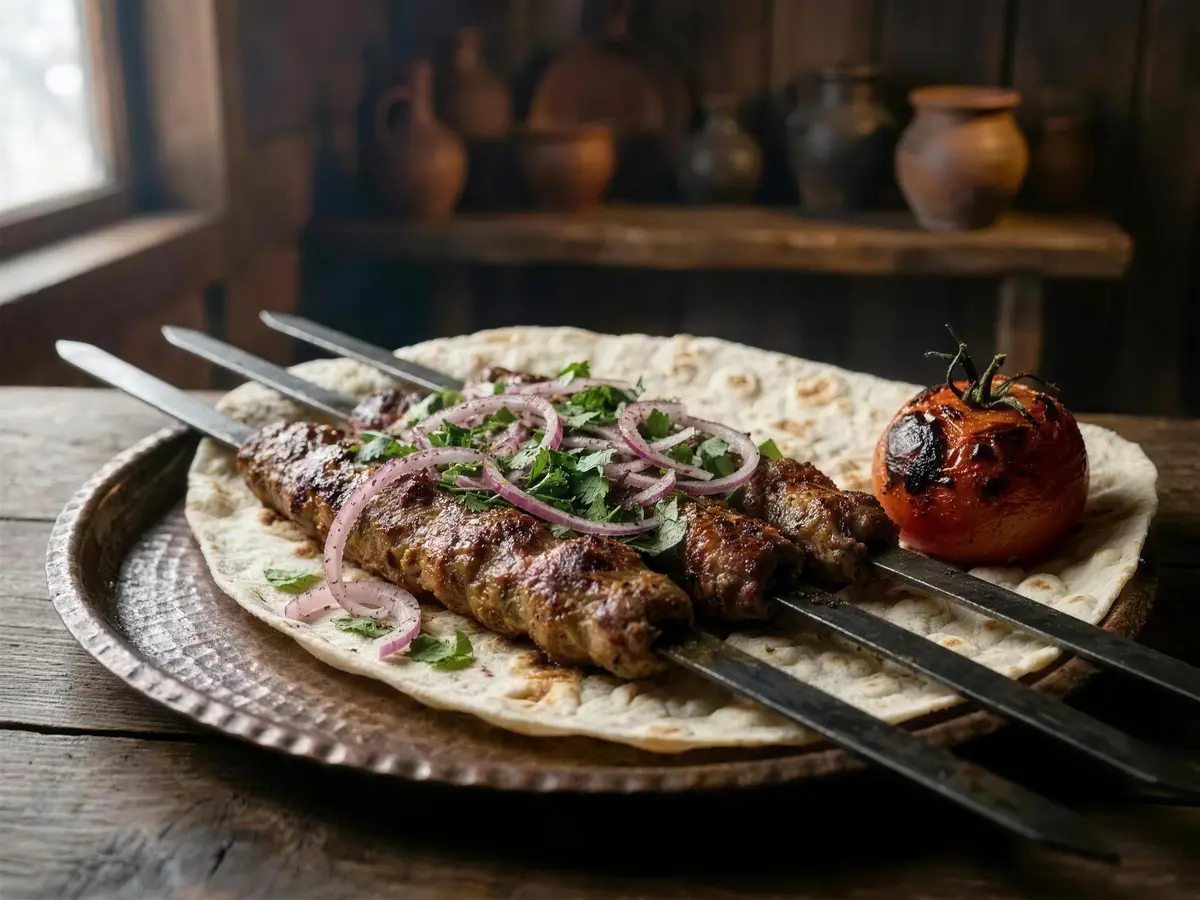
Adana kebab is a long, flat kebab of hand-minced lamb and lamb tail fat, seasoned with hot red pepper and salt and grilled on a wide iron skewer over charcoal. It comes from Adana in southern Turkey, where that recipe is registered as a geographical indication. This is a home version in the Adana style: like many cooks outside Adana, it adds a little onion, garlic and cumin, so leave them out if you want the registered recipe. The mixture needs an hour in the fridge before it goes on the skewers.
Ingredients
- 500 gboneless lamb shoulder, hand-chopped very finely or coarsely ground (or ready-ground lamb)
- 75–100 glamb tail fat, finely minced or grated
- 1 medium onion, very finely chopped and drained
- 1–2 clovesgarlic
- 1 tspred pepper flakes, or to taste
- 0.5 tspground cumin
- 1 tspsalt
- 0.5 tspfreshly ground black pepper
- for servingflatbreads, parsley, mint, sumac onions, grilled tomatoes and peppers
Method
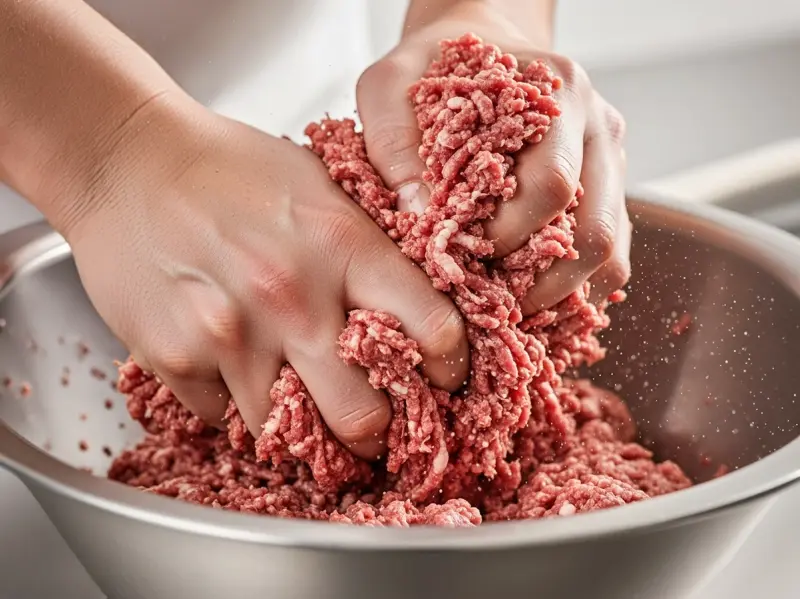
- In a large bowl, combine the lamb and finely minced lamb tail fat. Add the finely chopped and drained onion, minced garlic (if using), red pepper flakes, cumin, salt and black pepper. Knead the mixture vigorously with your hands for at least 5–7 minutes until sticky and paste-like. Cover and refrigerate for at least 1 hour.
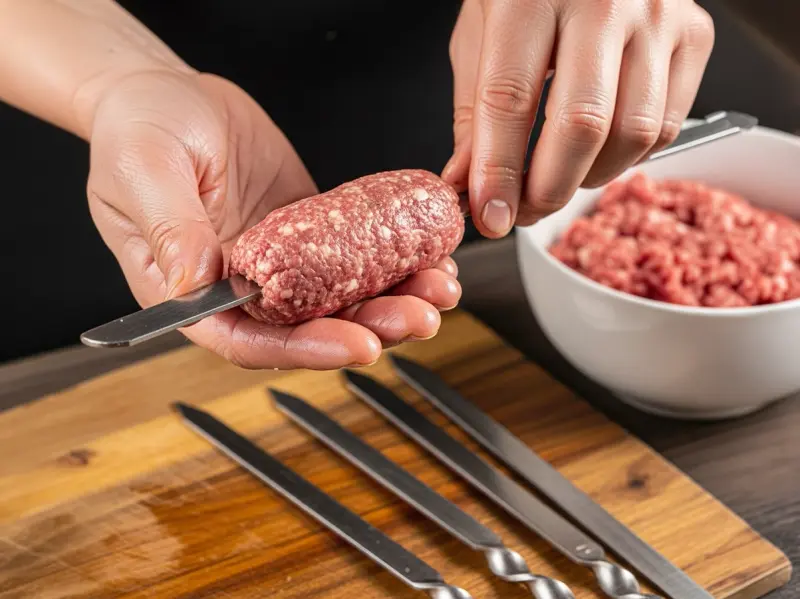
- Divide the chilled meat mixture into 4 equal portions. Wet your hands with water. Press and mold each portion around a wide, flat metal skewer, forming a long, flat kebab about 25 cm long and 2 to 3 cm thick. Pinch ridges along it with your fingers so it grips the skewer.
- Preheat a charcoal grill to medium-high heat. Place the skewers on the hot grill. Cook for 8–12 minutes, turning every 2–3 minutes, until well browned outside and no longer pink in the centre (71 °C on a thermometer).
- Carefully slide the cooked kebabs off the skewers onto warm flatbreads. Serve immediately, garnished with fresh parsley, mint and sumac-dusted onions. Grilled tomatoes and peppers are a traditional accompaniment.
Cooked it? Rate the recipe
FAQ
The main reason is too little fat or too much moisture in the mince. Adana kebab needs 20–25% fat in total, counting the fat in the lamb itself; traditionally part of it is lamb tail fat (kuyruk yağı). If the fat content is lower, the meat won't bind properly. Drain the onion thoroughly after chopping — squeeze it in a towel to remove all juice. Knead the mince vigorously for 5–7 minutes until it becomes sticky and almost paste-like; this develops the myosin proteins that act as natural glue. Chill the mixture for at least 1 hour before shaping so the fat firms up. Hand-chopped or coarsely home-ground shoulder binds better and stays juicier than fine supermarket mince; if mince is all you have, knead it the full 7 minutes and keep it very cold.
Lamb tail fat is ideal — it bastes the meat as it cooks and gives Adana kebab its characteristic richness. The closest substitute is finely grated cold beef suet or veal kidney fat. Regular fatty lamb shoulder (30% fat) ground together works reasonably well too. Avoid pork fat — it changes the flavor profile completely. If none is available, mix 80% lean lamb with 20% cold butter, grated on a box grater: the butter melts similarly and keeps the kebab moist. Skipping fat entirely results in a dry, crumbly kebab that falls apart.
This is a classic sign of overcooked mince or wrong fat-to-lean ratio. Ground meat continues cooking rapidly — Adana kebab needs 8–12 minutes over hot coals, turned every 2–3 minutes. Use an instant-read thermometer: the centre should reach 71 °C; take it off as soon as it does, because every degree above that dries the meat. Also check your fat content — lean mince dries out fast. Another cause is grinding the meat too fine: a medium grind (4–5 mm plate) retains more texture and juice than a fine paste. Finally, resting the kebab for 3–4 minutes off the heat after cooking lets the juices redistribute.
Adana kebab is not marinated in the traditional sense — there is no acidic component like lemon or vinegar. Instead, the spiced mince (pul biber, cumin, salt) needs to rest in the fridge for at least 1 hour; overnight is fine too. This rest time does two things: the salt draws out proteins that tighten the bind, and the spices fully penetrate the meat. The cold also firms the fat, so the meat holds its shape on the skewer over the fire. Cooking fresh, un-rested mince almost always results in kebabs that crack or slide off.
Yes, with good results. Cast iron grill pan: heat until smoking hot, cook 3–4 minutes per side without pressing down, until the centre reaches 71 °C. The key is high heat and no lid — steam destroys the crust. Oven method: preheat to 230 °C (fan), place skewers on a rack over a foil-lined tray, cook 10–12 minutes turning once, then broil 2 minutes for char. Stovetop + broiler combo works best: sear 2 minutes per side in the pan, then finish 3–4 minutes under the broiler at maximum heat. Use flat metal skewers if possible — they conduct heat to the center and help the kebab cook evenly from the inside out.
Keep browsing
More dishes from the Turkish archive — picked by overlap with what you're cooking now.



Recipes by email
One letter a week: a recipe picked for your taste, plus whatever is new on the site. You can stop the letters in one click.
Welcome gift: Sergei's cookbook (e-book).
By signing up for the newsletter you agree to the privacy policy.
Tell us what you like to cook (30 seconds) →
Join the conversation
Comments
No comments yet — be the first!