
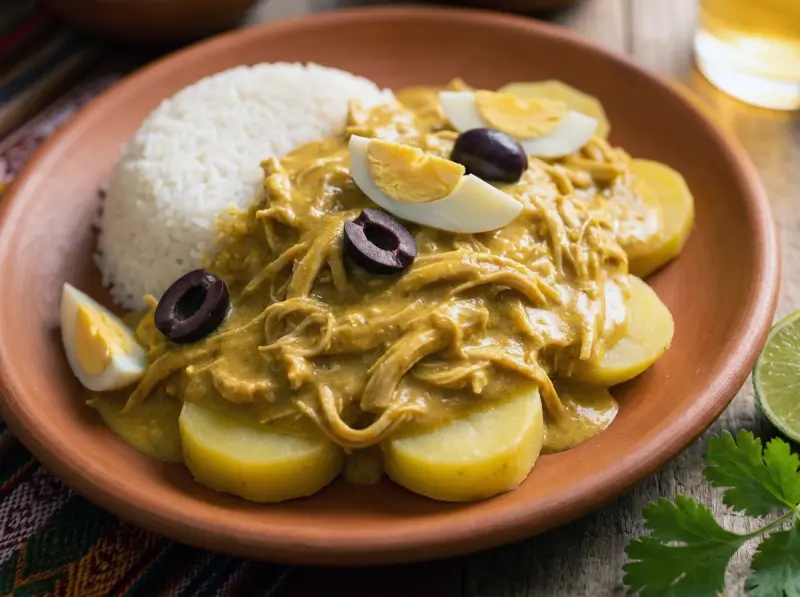
Ají de Gallina (Peruvian Creamy Chicken)
Ají de gallina is one of Peru's most cherished comfort dishes — shredded poached chicken folded into a velvety golden sauce built on ají amarillo, the fruity yellow chili at the heart of Peruvian cooking. Milk-soaked bread and ground walnuts thicken it, while parmesan adds a salty, umami edge. Mildly spicy and rich, it's spooned over rice with boiled yellow potatoes, olives, and hard-boiled egg — a fusion of Spanish and Andean roots.
Ingredients
- 600 gchicken breast
- 4 tbspaji amarillo paste
- 3 sliceswhite bread
- 80 gwalnuts
- 50 gparmesan
- 200 mlevaporated milk
- 1 pcsonion
- 3 clovesgarlic
- 4 pcsyellow potato
- 8 pcsblack olives
- 2 tbspvegetable oil
- to tastesalt and black pepper
Method
- Poach the chicken breast in lightly salted water with a piece of onion until just cooked, about 12–15 minutes. Lift out, cool, and shred by hand into fine strands. Keep the poaching broth.
- Boil the yellow potatoes in their skins until tender, then peel and slice into thick rounds. Hard-boil eggs for garnish if using.
- Tear the bread and soak it in the evaporated milk for a few minutes until soft.
- Blend the soaked bread and milk with the walnuts and parmesan to a smooth, thick paste, loosening with a little broth if needed.
- Finely chop the onion and garlic and soften them in oil over medium heat until golden. Stir in the ají amarillo paste and cook 2–3 minutes to take off its raw edge.
- Pour in the bread-walnut paste and stir over low heat until thick and creamy. Fold in the shredded chicken and enough reserved broth to give a spoonable, saucy consistency. Simmer gently 5–10 minutes.
- Season with salt and pepper. Serve over white rice with the sliced potatoes, and garnish with black olives and hard-boiled egg.
FAQ
Ají amarillo is a bright yellow-orange Peruvian chili with a fruity, almost tropical flavour and mild-to-medium heat — it's the defining ingredient of ají de gallina and much of Peruvian cooking. It's usually sold as a jarred paste in Latin markets or online. If you can't find it, there's no perfect swap, but a blend of a milder yellow chili or habanero (used sparingly) with a little yellow bell pepper for colour gets you closest. The flavour won't be identical, but the dish still works.
Milk-soaked white bread, blended smooth with walnuts, is the traditional thickener and it's what gives ají de gallina its signature velvety, slightly nutty body — quite different from a flour- or cream-only sauce. The bread also carries and softens the chili. Use plain white sandwich bread with the crusts removed for the smoothest result. If you need it gluten-free, a gluten-free white bread or a few soaked crackers can stand in, though the texture shifts slightly.
Yes, and it's naturally a mild dish. Ají amarillo has gentle heat to begin with, and the milk, bread, walnuts, and parmesan all soften it further. To make it milder still, start with half the paste and taste as you go, or scrape out any seeds if using fresh chilies. The creamy base means you can always add more paste for heat but can't easily take it away, so build up gradually.
Traditionally, gallina means hen — an older, tougher stewing bird with deeper flavour, which is what the dish was originally made with and where the name comes from. Ají de pollo uses ordinary young chicken (pollo), which is more tender and quicker to cook, and is what most home cooks and this recipe use today. The sauce and method are the same; only the bird differs. Chicken breast or thigh both work well.
The classic plate is ají de gallina spooned over white rice with slices of boiled yellow potato underneath or alongside, garnished with black olives and wedges of hard-boiled egg. The potato and rice both temper the richness and soak up the sauce. Some cooks add a little chopped parsley for colour. It's a hearty one-plate meal, and the sauce is even better the next day once the flavours have settled.
Keep browsing
More dishes from the Peruvian archive — picked by overlap with what you're cooking now.
Recipes by email
One letter a week: a recipe picked for your taste, plus whatever is new on the site. Unsubscribe in one click.
Welcome gift: Sergei's cookbook (e-book).
By subscribing you agree to the privacy policy.
Tell us what you like to cook (30 seconds) →
Join the conversation
Comments
No comments yet — be the first!