
Homemade Apple Cider
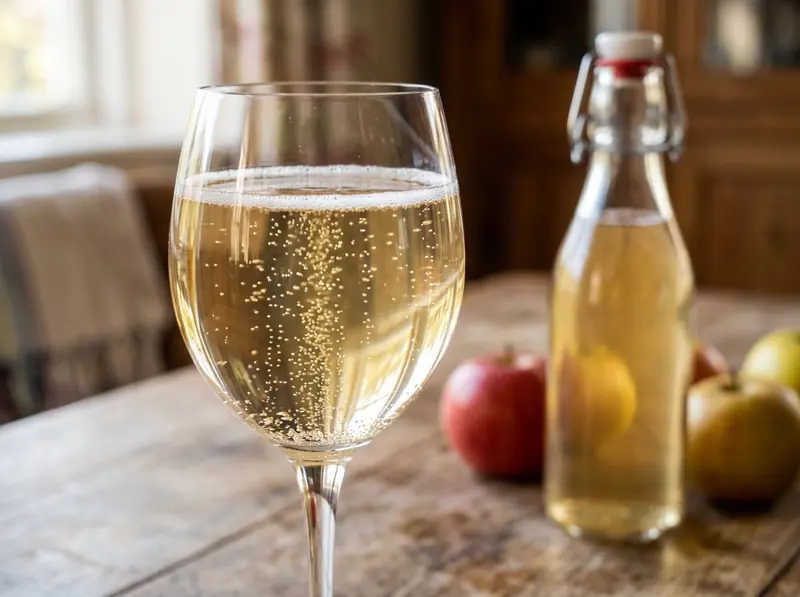
Homemade apple cider here is the alcoholic kind, known as hard cider in the US: a dry, lightly sparkling drink made from apple juice fermented with wine or cider yeast for 1 to 2 weeks, then cleared and bottled. It is not the unfermented "cider" sold as juice in the US. The juice alone gives roughly 5 to 6% alcohol, and the 50 g of sugar per litre in this recipe lifts that to about 8 to 9%, so treat it like wine rather than a soft drink. It comes out drier and sharper than sweet supermarket cider, and its flavour depends on the apples you start with. With shop-bought juice the work itself adds up to about an hour, and pressing your own apples takes at least another hour; the rest is waiting and keeping everything clean.
Ingredients
- 4.5 lapple juice, cloudy and unfiltered, no preservatives (freshly pressed or shop-bought)
- 1 packetcider or wine yeast
- 1 tspyeast nutrient (or the dose on the packet)
- 1 Campden tablet (for unpasteurised juice)
- 225 gsugar (50 g per litre of juice; optional, for a stronger cider)
- 36 gsugar for the bottles (4 g, 1 level tsp, per 500 ml bottle)
Method
- Prepare the juice and the fermenter. Get the equipment together before you start: besides the fermenter you need an airlock, a hydrometer, a siphon tube, a second vessel of 4.5 to 5 litres, bottles made for fizzy drinks and a food-safe sanitiser from a home-brew shop (each is explained in the step where it is used). For 4.5 litres of juice you need roughly 7 to 9 kg of apples and a fruit press or an electric juicer; without either, buy the juice. Wash the apples, cut out any rot and core them, but keep the skins, which carry tannin. For a press, first crush or grate the apples to a coarse pulp, because a press gets very little juice out of whole pieces; a juicer takes them as they are. Then press or juice in batches and strain through cheesecloth. Shop-bought juice should be cloudy and unfiltered; ascorbic acid on the label is fine, but potassium sorbate or sodium benzoate will stop the yeast. Pour the juice into a clean, sanitised fermenter that holds at least 6 litres, so the foam of the first days has room. If the juice is fresh or unpasteurised, crush 1 Campden tablet (the usual dose is 1 tablet per 4.5 litres, a British gallon), stir it in until it dissolves, cover, and leave for 24 hours. The tablet knocks out the wild yeasts and bacteria that come in on the apple skins and would otherwise spoil the cider; the yeast you add would suffer too if it went in sooner. Pasteurised juice needs neither the tablet nor the wait.
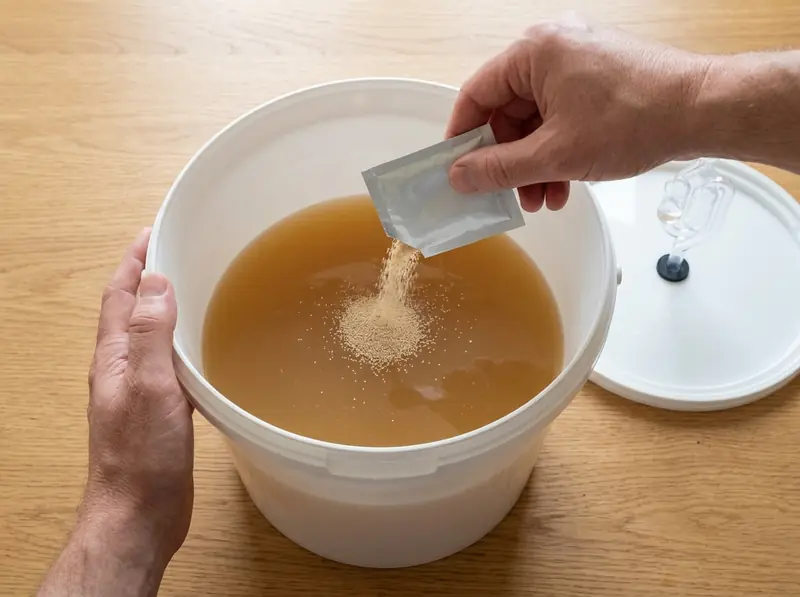
- Sweeten and add the yeast. After the 24 hours, stir 225 g of sugar (50 g per litre for 4.5 litres) into the juice until it dissolves; its only job is to raise the final strength. Leave it out and the juice ferments on its own sugar to the usual 5 to 6%. Check the temperature of the juice: 18 to 22°C is ideal. Sprinkle the dry yeast over the surface and add the yeast nutrient in the dose given on its packet, because apple juice is short on the nitrogen yeast needs. Close the fermenter and fit an airlock, a small plastic valve half-filled with water that sits in the lid or bung: it lets the carbon dioxide out and keeps air and fruit flies from getting in. Within 12 to 24 hours at room temperature the airlock should start to bubble.
- Ferment for 1 to 2 weeks. Keep the fermenter at room temperature (18 to 22°C), out of direct sunlight. The vigorous bubbling of the first few days slows to an occasional bubble. A quiet airlock only means fermentation has slowed, not that it has finished. Check with a hydrometer (a cheap glass float from any home-brew shop). To take a reading, draw off enough cider with a sanitised ladle to fill a tall, narrow glass or measuring cylinder, lower the hydrometer in and let it float freely, then read the scale at eye level, at the bottom of the curve the liquid forms around the stem. Don't pour the sample back; drink it or throw it away. Fermentation is over when the reading stays the same for 3 days in a row, usually at 1.000 or slightly below, and the cider starts to clear. Taste it: it should be dry and slightly tart and smell clean, with no hint of vinegar.
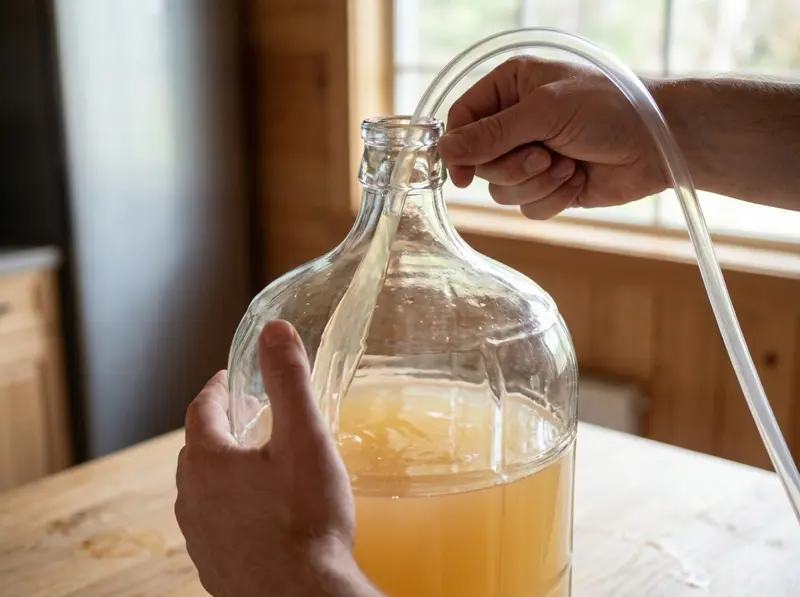
- Rack and clear. Siphon the cider off the sediment into a clean, sanitised second vessel: a siphon is simply a food-grade plastic tube that moves the liquid by gravity when the full fermenter stands higher than the empty vessel. This transfer is called racking. Keep the end of the tube above the sediment and let the cider run down the side of the new vessel without splashing. A demijohn of 4.5 to 5 litres is the right size: the fuller it ends up, the less air is left above the cider. Fit the airlock again and leave the cider to clear for another 3 to 5 days. At this point you can already drink it as still cider: dry, tart and tasting plainly of apple.
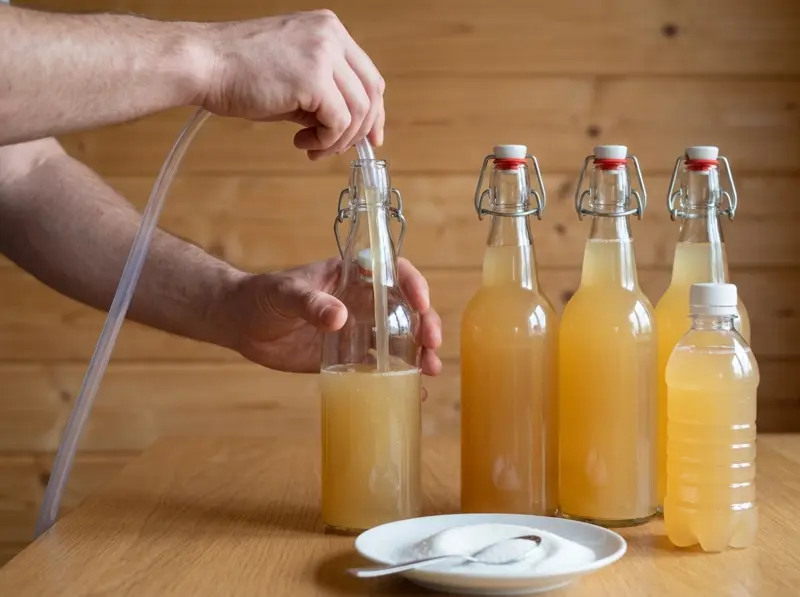
- Bottle for sparkling cider, but only after the hydrometer reading has held steady for 3 days: if sugar is still fermenting, the priming sugar adds to it and the bottles can build enough pressure to burst. Wash and sanitise the bottles, their caps and the siphon tube first. Put exactly 4 g of sugar (1 level teaspoon) into each empty 500 ml bottle, then siphon the cider in without stirring up the sediment, leaving 2 to 3 cm of space under the cap. The yeast still in the cider eats this sugar inside the sealed bottle and makes the bubbles. Use only bottles made for fizzy drinks: swing-top or crown-cap beer bottles, or plastic soda bottles; never jars or wine bottles. Fill a plastic soda bottle as a tester. Keep all the bottles at room temperature, in a closed box or cupboard in case one does burst, and squeeze the tester every day: it usually takes 5 to 7 days, longer in a cool room, and once the tester is firm and hard to squeeze, move every bottle to the fridge. Chill for at least 3 days before opening, and open the first bottle over the sink. Kept cold, the cider stays good for several months, though it does not improve with long ageing.
FAQ
A blend works best: sweet, neutral apples for the base (Golden Delicious, Gala, Fuji), a sharp apple for acidity (Bramley, Granny Smith), an aromatic one such as Cox, and ideally a few crab apples or true cider apples for tannin. A common guideline is 30 to 60% neutral base, 10 to 20% sharp, 10 to 20% aromatic and 5 to 20% tannic fruit. Cider from a single dessert variety is possible but usually tastes flat. With shop-bought juice, mixing 2 or 3 brands gives a noticeably better result.
Cider yeast or wine yeast ferments cleanly and leaves the apple flavour in front. Bread yeast will ferment the juice too, but it tends to leave a yeasty, bready taste and settles poorly, so the cider stays cloudy. For a first batch, use a packet of dry wine or cider yeast. Bread yeast does belong in a short ferment such as bread kvass, which is ready in a day or two.
Wait until the hydrometer reading has stayed the same for 3 days and the cider has cleared, then put exactly 4 g of sugar (1 level teaspoon) into each 500 ml bottle before filling and sealing it. That is 8 g per litre; do not go above 10 g per litre. The yeast left in the cider eats the sugar and produces carbon dioxide (CO₂), which stays dissolved in the sealed bottle. Use strong bottles made for fizzy drinks and fill a plastic soda bottle as a tester: when it is hard to squeeze, move all the bottles to the fridge. Never use ordinary jars or wine bottles, because the pressure can shatter them.
The usual causes are juice with preservatives (potassium sorbate or sodium benzoate stop the yeast), a cold room (fermentation slows as the temperature drops and can stop altogether), dead yeast (stir a little into warm water with a pinch of sugar: it should foam within 10 minutes), or yeast added too soon after the Campden tablet (wait the full 24 hours so the sulphur dioxide can fade). A cider that bubbles slowly in a cool room is often fine, so move it to 18 to 22°C before assuming something is wrong. If you want to watch wild yeast do the work instead, tepache ferments on the yeast living on pineapple skin, which is exactly what the Campden tablet removes here.
Yes, and it works very well. Choose cloudy, unfiltered juice and read the label: it must not contain potassium sorbate or sodium benzoate. Pasteurised juice is fine and does not need a Campden tablet. Clear filtered juice ferments too, but the cider comes out lighter and blander.
Rate this
Recipes by email
One letter a week: a recipe picked for your taste, plus whatever is new on the site. Unsubscribe in one click.
Welcome gift: Sergei's cookbook (e-book).
By subscribing you agree to the privacy policy.
Tell us what you like to cook (30 seconds) →Keep browsing
More dishes from the British archive — picked by overlap with what you're cooking now.
Join the conversation
Comments (1)
I always chill the glasses for homemade apple cider — 15 minutes in the freezer transforms the drinking experience. The frost on the glass keeps everything at the perfect temperature through the last sip.