
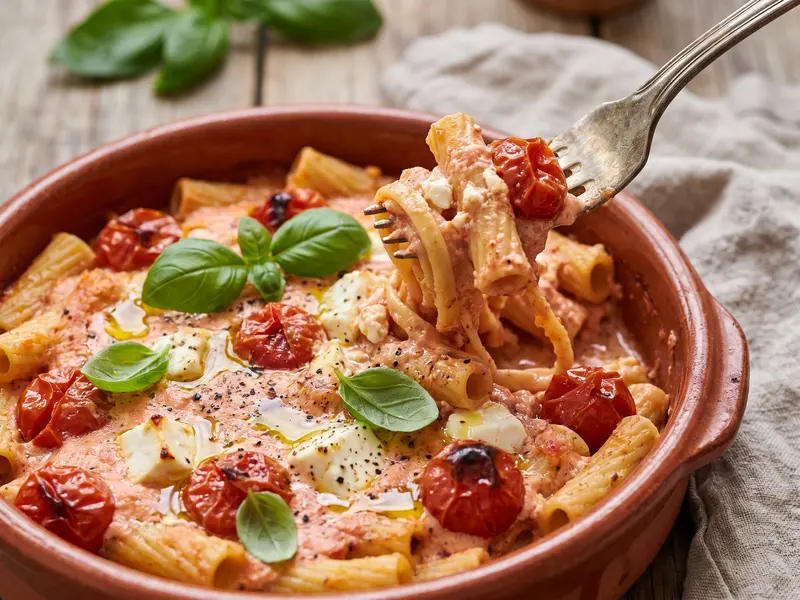
Baked Feta Pasta
A whole block of feta baked in the center of a dish of cherry tomatoes and olive oil until golden and soft, then smashed together with roasted garlic and fresh basil into a creamy, tangy sauce that gets tossed with pasta. This dish went viral in Finland in 2019 under the name uunifetapasta (oven-baked feta pasta), created by food blogger Jenni Häyrinen. It hit TikTok in 2021, and shops in several countries reported selling out of feta. The reason it works is simple: baking concentrates the tomatoes into something sweeter and more intense than fresh, and the feta bakes from a crumbly block into a soft, creamy, salt-forward mass that forms a sauce without any effort. The whole dish requires almost no technique — just one baking dish, one pot for pasta, and about 40 minutes of oven time.
Ingredients
- 300 gpenne rigate, rigatoni, or any short pasta
- 600 gcherry or grape tomatoes
- 200 gblock of feta cheese
- 80 mlextra virgin olive oil
- 4 garlic cloves
- 0.5 tspdried chilli flakes
- 1 tspdried oregano
- 0.5 tspfreshly ground black pepper
- 15 gfresh basil, leaves torn
- 0.5 tspflaky sea salt
Method
- Set up the baking dish. Preheat the oven to 200°C / 400°F. Place the cherry tomatoes in a baking dish that is wide enough to hold everything without too much empty space — roughly 30 × 20 cm. The tomatoes should be snug and crowded; this helps them confit rather than dry out. Add the peeled garlic cloves, chilli flakes, oregano, and black pepper. Pour over about three-quarters of the olive oil and toss everything to coat. Place the block of feta in the center of the tomatoes. Drizzle the remaining olive oil over the feta. Do not add salt at this stage — the feta is very salty and will season everything.
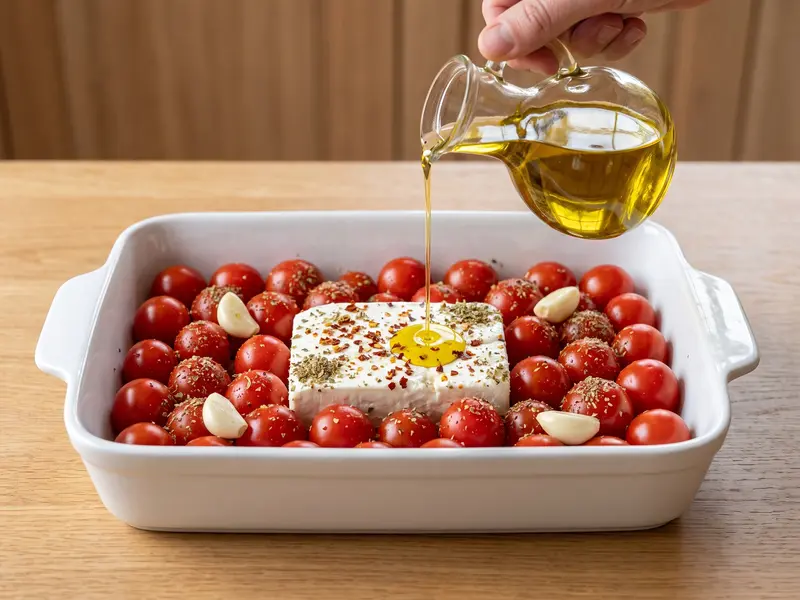
- Bake in two stages. Place in the oven and bake for 30 minutes at 200°C. After 30 minutes, increase the temperature to 220°C / 425°F and bake for a further 10 minutes. This two-stage approach softens the tomatoes fully in the first stage and then concentrates and caramelizes them — along with the feta — in the second stage. The tomatoes should be fully burst, jammy, and starting to brown at the edges. The feta should be golden brown on top and completely soft throughout.
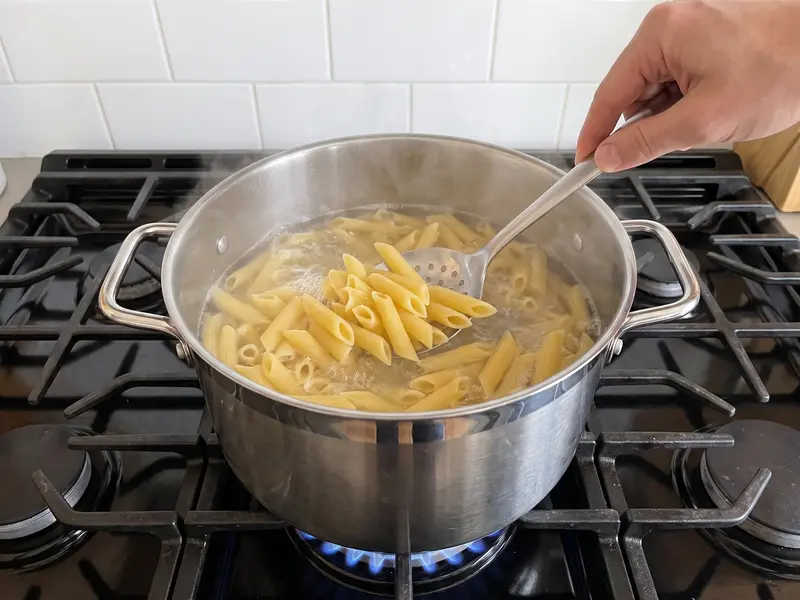
- Cook the pasta. While the feta and tomatoes are in the oven, bring a large pot of salted water (about 10 g salt per litre) to a boil. Cook the pasta until just shy of al dente — 1 to 2 minutes less than the package says. Reserve at least 200 ml of pasta water before draining. The pasta will finish cooking in the sauce when tossed.
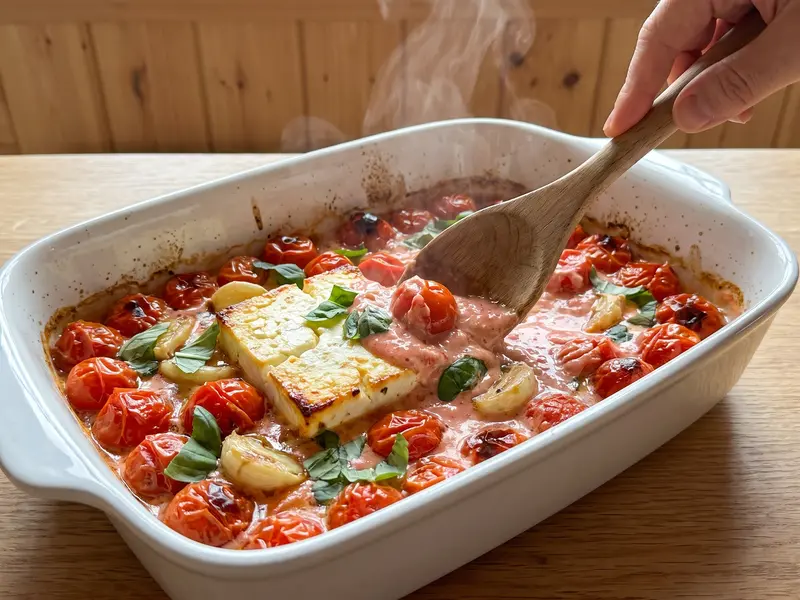
- Make the sauce. Remove the baking dish from the oven. Add the torn basil immediately — the residual heat will wilt it gently without killing the flavor. Using the back of a spoon or a fork, smash the softened garlic into the mixture. Crush and fold the feta into the tomatoes and olive oil until a rough, creamy, orange-pink sauce forms. It will not be completely smooth — some texture is good. Taste before adding salt: the feta almost certainly provides enough. Add a pinch of flaky sea salt only if needed.
- Toss with pasta and serve. Add the drained pasta to the baking dish and toss to coat. If the sauce is too thick or the pasta seems dry, add the reserved pasta water a splash at a time and toss. The pasta water starch will bind the sauce and make it silkier. Serve immediately from the baking dish or divide into bowls. Finish with a few extra basil leaves and, if you like, a little more olive oil. Eat while hot.
FAQ
Short, ridged pasta that can catch and hold the chunky sauce works best. Penne rigate, rigatoni, fusilli, and farfalle (bowties) are all good choices. Rigatoni in particular catches the sauce inside the tubes. Long pasta like spaghetti or linguine works technically but is less satisfying — the sauce drips off rather than being captured. Avoid very small pasta like orzo, which gets lost. Pasta with ridges (rigate) is always preferable to smooth (lisce) when pairing with chunky, oil-based sauces.
The original Finnish recipe (uunifetapasta, 'oven feta pasta') was created by food blogger Jenni Häyrinen in 2019 and went viral in Finland immediately, reportedly causing feta cheese to sell out at Finnish supermarkets. In early 2021 the recipe appeared on TikTok and spread globally, with shops in several countries reporting empty feta shelves. The recipe resonated because it requires minimal cooking skill, almost no active effort, and produces a result that tastes significantly better than its simplicity suggests. It was also highly photogenic — the burst tomatoes and golden feta are visually striking.
You can but the result is different. A block of feta retains moisture as it bakes and softens into a creamy, cohesive mass. Crumbled feta is drier and more processed — it tends to stay crumbly or turn slightly grainy in the oven rather than melting. If you only have crumbled, pile it in a mound in the center of the dish (like a compressed block) and it will work adequately. The sauce will be less smooth but still good.
Several alternatives work well. Roasted red peppers (capsicum), halved, oiled and baked alongside the feta produce a sweeter, milder sauce. Zucchini, cut into chunks, is another option. Olives added in the last 10 minutes add depth. Some versions use roasted garlic as the entire base with just the feta. The key is that whatever you use needs to release some liquid and flavor into the olive oil as it roasts — dry vegetables that do not release moisture will not produce much of a sauce. For a fuller vegetable version of the same idea, try pasta primavera.
The sauce (tomatoes and feta, before pasta) can be made up to 2 days ahead and refrigerated. Reheat in the baking dish in a 180°C oven for 10 minutes, then toss with freshly cooked pasta. The assembled dish (pasta already tossed in) can be refrigerated for up to 3 days. To reheat: add a splash of water, cover with foil, and warm in the oven at 180°C for 15 minutes. The pasta will have softened slightly and absorbed more sauce but the flavor remains good.
Rate this
Recipes by email
One letter a week: a recipe picked for your taste, plus whatever is new on the site. Unsubscribe in one click.
Welcome gift: Sergei's cookbook (e-book).
By subscribing you agree to the privacy policy.
Tell us what you like to cook (30 seconds) →Keep browsing
More dishes from the Finnish archive — picked by overlap with what you're cooking now.

Join the conversation
Comments (1)
Salt your cooking water generously for baked feta pasta — about 1 tablespoon per liter. This is the only chance to season from inside. No amount of sauce compensates for bland, under-seasoned pasta or grains.