
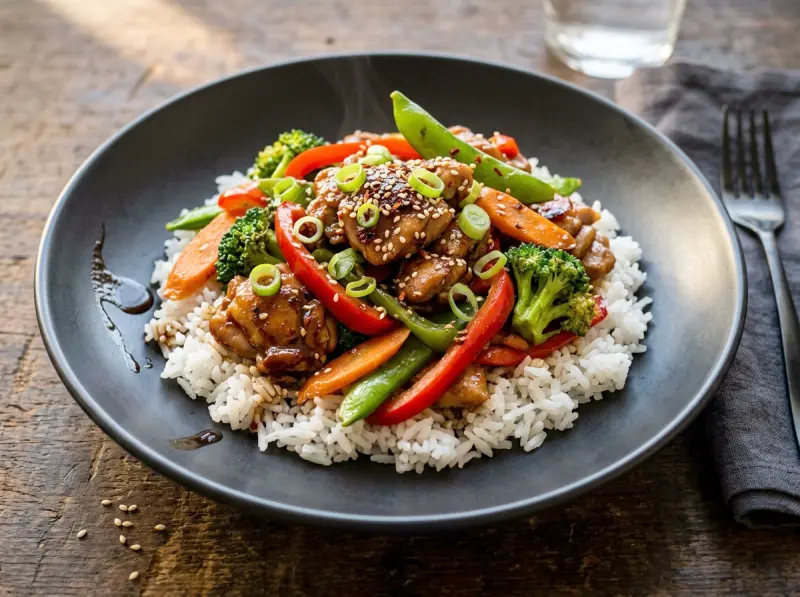
Chicken Stir-Fry with Vegetables
Chicken thighs and whatever vegetables you have, cooked over maximum heat in a soy-sesame-ginger sauce. The fastest way to clear the fridge without the result tasting like leftovers. Done in 20 minutes if the prep is ready.
Ingredients
- 600 gboneless skinless chicken thighs, cut into 2 cm pieces
- 3 tbspvegetable oil, high smoke point
- 1 head broccoli, cut into small florets
- 1 red bell pepper
- 2 medium carrots, thinly sliced on the diagonal
- 100 gsnap peas or green beans
- 4 garlic cloves
- 1 tbspfresh ginger, grated or finely minced
- 3 scallions
- 1 tbspsesame seeds
- 400 gcooked rice or noodles
- 60 mlsoy sauce, low-sodium
- 2 tbspoyster sauce
- 1 tbspsesame oil
- 1 tbsphoney or brown sugar
- 1 tbsprice vinegar
- 1 tspcornstarch, dissolved in 2 tbsp cold water
- 0.5 tspchili flakes
Method
- Mix all sauce ingredients in a small bowl — soy sauce, oyster sauce, sesame oil, honey, rice vinegar, and the cornstarch slurry. Set aside.
- Everything must be prepped and within reach before the heat goes on. Stir-fry moves fast and there's no time to chop once cooking starts.
- Heat a large wok or skillet over the highest heat your stove allows. Add 2 tablespoons of oil. When it shimmers and begins to smoke, add the chicken in a single layer. Do not stir for 2 minutes — let it sear and develop color. Stir and cook another 1–2 minutes until cooked through. Remove to a plate.

- Add the remaining oil to the same wok. Add broccoli and carrots first — the denser vegetables that take longer. Stir-fry 2 minutes. Add the bell pepper and snap peas. Stir-fry another 2 minutes. The vegetables should be bright and crisp-tender, not soft.

- Add garlic, ginger and chili flakes (0.5 tsp) to the vegetables and stir constantly for 30 seconds until fragrant. Return the chicken.
- Give the sauce a stir (the cornstarch settles), then pour it over the chicken and vegetables. Toss everything for 30–60 seconds until the sauce thickens and coats every piece. It should be glossy, not watery.

- Serve immediately over rice or noodles, topped with spring onion and sesame seeds.
FAQ
Almost always a temperature problem. Either the pan wasn't hot enough before the chicken went in, or too much was added at once. When you crowd a hot pan, the temperature plunges and everything starts to release liquid instead of searing. The result is steamed, gray, flavourless meat. Heat the pan until it just starts to smoke, add a thin layer of chicken, and don't touch it for 2 minutes — let the crust form. Work in batches if needed.
Cornstarch is what makes the sauce cling. Dissolve 1 teaspoon of cornstarch in 2 tablespoons of cold water before mixing with the other sauce ingredients — never in hot liquid, it clumps. When you pour the sauce into the hot pan, the heat activates the starch and it thickens into a glossy coating in 30 to 60 seconds. If the sauce is still too thin, let it bubble another 30 seconds. If too thick, add a splash of water. Always add the sauce at the very end, after the chicken and vegetables are already cooked.
Order is critical. First, chicken — sear, cook through, remove to a plate. Second, dense vegetables that take longer (broccoli, carrot, green beans) — 2 minutes. Third, quick vegetables (bell pepper, snap peas, courgette) — 2 minutes. Fourth, garlic and ginger — 30 seconds, just before the sauce. Fifth, return the chicken and add the sauce. Garlic and ginger go in last among the aromatics because they burn fast in a hot pan. If they go in too early, they turn acrid.
You can, with one key rule: add them straight from the freezer into a very hot pan — do not thaw first. The high heat drives off the moisture quickly. Thawed vegetables release their water gradually and cool the pan, which causes steaming. If you must use thawed vegetables, pat them completely dry with paper towel and add in very small amounts. Fresh vegetables generally give better results for stir-fry.
2 to 3 days in the fridge. Reheat in a hot skillet with 1 to 2 tablespoons of water or broth — 2 to 3 minutes, tossing continuously. Don't microwave: the chicken turns rubbery and the vegetables go limp. Freezing stir-fry with vegetables is not recommended — they lose their texture on thawing. If you want to prep ahead, freeze only the sauce and the cooked chicken; add fresh vegetables when you reheat.
Rate this
Recipes by email
One letter a week: a recipe picked for your taste, plus whatever is new on the site. Unsubscribe in one click.
Welcome gift: Sergei's cookbook (e-book).
By subscribing you agree to the privacy policy.
Tell us what you like to cook (30 seconds) →Keep browsing
More dishes from the Chinese archive — picked by overlap with what you're cooking now.

Join the conversation
Comments (1)
An instant-read thermometer eliminates all guesswork with chicken stir-fry with vegetables. Chicken is perfectly done at 74°C in the thickest part. Every degree beyond that moves you further from juicy toward dry.