
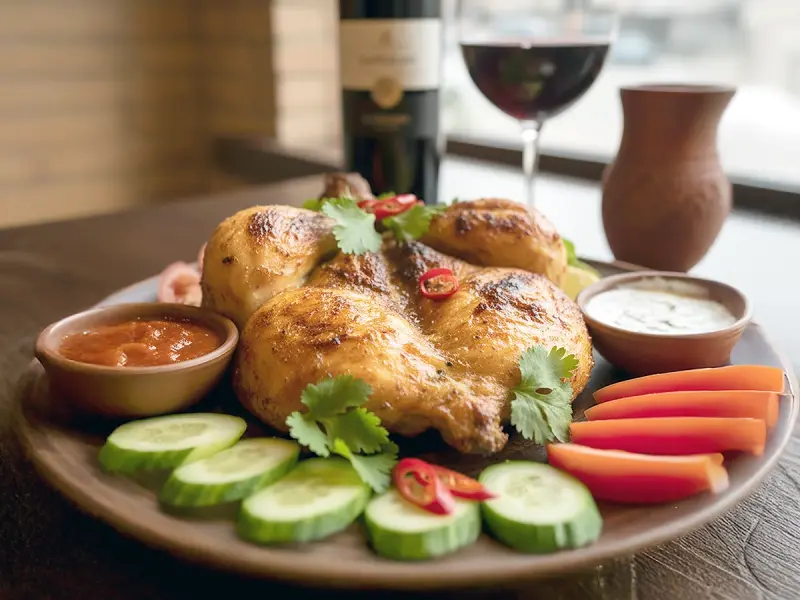
Chicken Tabaka
Georgia's iconic dish: a whole small chicken is butterflied, seasoned with khmeli-suneli, adjika and wine vinegar, then pressed flat and pan-fried under a heavy weight until both sides are deeply golden and crispy. Named after the tapaka — the traditional cast-iron pan with a heavy lid.
Ingredients
- 500 gwhole young chicken
- 2 tbspclarified butter or ghee
- 1 tbspwine vinegar
- 1 tspkhmeli-suneli spice blend
- 1 tspadjika
- 3 piecegarlic cloves
- 1 fresh herbs cilantro or parsley
Method
- Place the chicken breast-side up. Using kitchen scissors or a sharp knife, cut along the backbone and remove it. Open the chicken flat (butterfly). Firmly press down on the breastbone with your palm to flatten to an even 1.5–2 cm thickness.
- Rub the chicken all over with a mixture of salt, black pepper, khmeli-suneli and adjika. Drizzle with wine vinegar. Let marinate 15–20 minutes.

- Heat a large heavy pan — ideally cast iron — with clarified butter over medium heat. Place chicken skin-side down. Cover with a heavy lid or place a weight on top (a pot filled with water works well).
- Cook under pressure for 15–20 minutes until the skin is deeply golden and crispy. Flip and cook another 15–20 minutes on the other side until cooked through.

- For the sauce: finely chop 2–3 garlic cloves, stir together with 2–3 tbsp broth or water, a pinch of salt and fresh cilantro or parsley.
- Serve the chicken whole or cut into portions, drizzled with the garlic sauce.
FAQ
Tough, dry chicken tabaka almost always comes from cooking over heat that's too high for too long, or from skipping the marinating step. The bird should be butterflied and pressed completely flat so it cooks evenly — any uneven thickness means some parts overcook while others are still raw. Marinate the chicken for at least 1 hour (ideally 3–4 hours) in a mixture of garlic, salt, vegetable oil and your choice of spices: the salt draws moisture into the meat and the oil creates a barrier against drying out. Cook on medium heat, not high — you want a steady sizzle, not fierce spitting. The internal temperature of the thickest part should reach 74°C (165°F). Pressing with a heavy lid or a pan weighted with water ensures even contact with the hot surface and prevents curling.
Yes — a dedicated tabaka pan (heavy cast-iron pan with a screw press lid) is traditional but not necessary. Any heavy weight that fits inside the pan works: a smaller heavy frying pan, a pot filled with water, a clean brick wrapped in foil, or a flat heavy lid from another pan. The key is consistent firm pressure across the entire bird — at least 2–3 kg of weight is needed for a 1 kg chicken. If using a regular frying pan as a press, push it down firmly with your hand for the first minute, then let the weight do its job. The weight forces the skin into full contact with the hot pan surface, which is what creates the signature crispy skin.
The classic Georgian marinade is simple: crushed or finely minced garlic (4–6 cloves per bird), salt (1 teaspoon per 500 g of chicken), a few tablespoons of vegetable oil, ground black pepper, and optionally a squeeze of lemon juice or white wine vinegar. Rub the mixture all over the butterflied chicken, under the skin where possible, and into any cuts you make in the thicker parts. For weeknight cooking, 1 hour at room temperature is sufficient. For the best result, marinate overnight in the fridge (up to 12 hours). Bring the chicken to room temperature for 30 minutes before cooking — a cold bird put in a hot pan causes uneven cooking and sticking.
Uncrispy skin on chicken tabaka has a few common causes: the pan wasn't hot enough before the chicken went in, the skin had too much moisture on its surface, or not enough fat was used. Pat the chicken thoroughly dry with paper towels before cooking, especially the skin side — surface moisture creates steam and prevents browning. Heat the pan until it's genuinely hot (a drop of water should evaporate immediately on contact) before adding oil. Use an oil with a high smoke point: sunflower, refined olive or avocado oil. Start skin-side down and don't move or check the chicken for the first 8–10 minutes — lifting it too soon tears the skin before it releases naturally. The weight of the press should be heavy enough to maintain skin contact throughout.
In Georgian tradition, chicken tabaka is most commonly served with tkemali — a tart sauce made from sour plums (cherry plums or green plums), cooked with garlic, coriander, dill, and chilli. It balances the richness of the fried chicken beautifully. Adjika (a spicy walnut-herb paste) is another traditional accompaniment. Simple sides that are classic Georgian pairings include fresh tomato and cucumber salad with herbs, roasted or grilled vegetables, and mchadi (Georgian cornbread). In restaurants, a side of fried potatoes or grilled aubergine with walnut sauce (badrijani nigvzit) are very common. A cold dry white Georgian wine or chilled beer completes the meal.
Rate this
Recipes by email
One letter a week: a recipe picked for your taste, plus whatever is new on the site. Unsubscribe in one click.
Welcome gift: Sergei's cookbook (e-book).
By subscribing you agree to the privacy policy.
Tell us what you like to cook (30 seconds) →Keep browsing
More dishes from the Georgian archive — picked by overlap with what you're cooking now.

Join the conversation
Comments (1)
Salt the whole young chicken at least 30 minutes before cooking chicken tabaka, or right before — never in between. Salt draws moisture to the surface; given 30+ minutes it reabsorbs. At 10 minutes, it's just sitting there making things wet.