
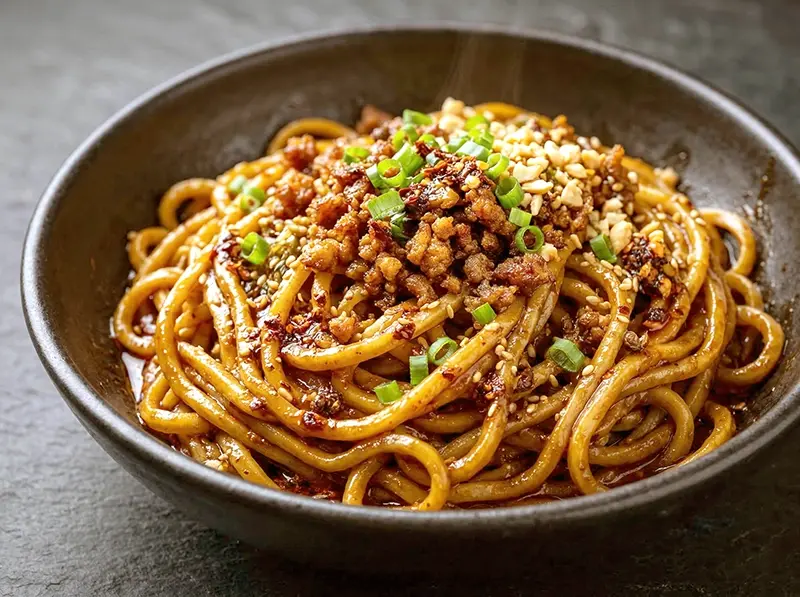
Dan Dan Noodles
Wheat noodles dressed in a sauce built from sesame paste, soy sauce, black vinegar, and chili oil, topped with pork mince cooked until slightly crispy and a scattering of crushed peanuts. This is the street food that gave Sichuan cuisine its international reputation. The heat is real, the numbing tingle from Sichuan pepper is the point, and the sauce comes together in the bowl — not in a pan.
Ingredients
- 400 gwheat noodles
- 300 gground pork
- 1 tbspvegetable oil
- 2 tbspsoy sauce
- 1 tbspShaoxing wine
- 1 tspdark soy sauce
- 4 tbspChinese sesame paste
- 3 tbspchili oil
- 2 tbspsoy sauce
- 1 tbspChinese black vinegar
- 1 tspSichuan peppercorn, toasted and ground
- 1 tspsugar
- 3 garlic cloves
- 180 mlhot noodle cooking water
- 2 tbspcrushed roasted peanuts
- 2 scallion stalks
- 200 gbaby bok choy or spinach
Method
- Cook the pork first: heat oil in a wok or pan over high heat. Add the pork and press into a single layer. Leave untouched 1–2 minutes until the bottom browns and crisps. Then break apart and stir-fry, adding soy sauce, Shaoxing wine, and dark soy sauce. Cook until the liquid evaporates and the pork is deeply brown and slightly crunchy at the edges — about 8 minutes total. Set aside.
- Build the sauce in each serving bowl — not in a pan. Per bowl: 1 tablespoon sesame paste, thinned with a tablespoon of hot water first until smooth. Then add chili oil, soy sauce, black vinegar, ground Sichuan pepper, sugar, and minced garlic. Stir to combine. The sauce should be liquid enough to coat noodles but not watery.
- Cook the noodles according to package directions. Reserve 180 ml of noodle cooking water. In the last 30 seconds, add the bok choy or spinach to the boiling noodle water and blanch briefly. Drain everything.
- Add 2–3 tablespoons of the hot noodle water to each bowl of sauce and stir — this loosens the sesame paste and warms the sauce at the same time. Add the drained noodles and vegetables on top.
- Spoon the crispy pork over the noodles. Scatter with crushed peanuts and green onion. Bring to the table and toss everything together right before eating — the sauce should coat every noodle completely. Adjust chili oil and vinegar at the table.
FAQ
Two things define dan dan noodles as Sichuan rather than generically spicy: the mala profile created by Sichuan peppercorn (numbing tingle alongside heat) and the sesame paste base that gives the sauce its richness and depth. Regular spicy noodles use chili without the numbing element and often lack the sesame layer. Authentic dan dan also uses ya cai — Sichuan preserved mustard greens — in the pork topping, which adds fermented funk. The combination of sesame, chili, vinegar, and Sichuan pepper in those proportions is what makes it distinctly Sichuan.
They taste different. Chinese sesame paste is made from toasted whole sesame seeds and has a much darker, more intense, slightly bitter flavor. Tahini uses raw or lightly toasted hulled seeds and is lighter and more neutral. Tahini works as a substitute and produces a good bowl, but the flavor is milder. To compensate: use slightly more tahini (by 30%), add a teaspoon of toasted sesame oil, and increase the chili oil. Peanut butter is a rougher substitute but works in a pinch with similar adjustments.
The crispy, slightly dry pork is a textural element, not a mistake. Normal browning gives you soft mince that blends into the sauce. In dan dan noodles the pork sits on top and should offer a contrasting crunch with each bite. To achieve this: cook over high heat without stirring for the first 2 minutes, let the soy sauce evaporate fully rather than leaving it wet, and cook until the edges look almost overdone. It should be slightly crunchy, not soft. This takes around 8 minutes total.
Traditional Sichuan dan dan is quite spicy — typically 3–4 tablespoons of chili oil per portion, which is substantial. The home version can be adjusted freely. Start with 1 tablespoon of chili oil and serve extra on the side for those who want more. The Sichuan peppercorn creates a numbing sensation independent of heat, so you can reduce the chili without losing the mala character. The sesame paste also mellows the heat considerably compared to versions without it.
Any medium-thickness wheat noodle works. Chinese wheat noodles labeled 'noodles for stir-fry' or simply 'wheat noodles' are ideal. Fresh or dried are both good — dried are slightly less starchy after cooking, which some people prefer with this sauce. In a pinch: Italian spaghetti or spaghettini cut in half, udon noodles, or ramen noodles. Avoid very thick noodles (too chewy) and rice noodles (the sauce doesn't cling the same way). Whatever you use, cook al dente — the noodles will soften slightly in the sauce.
Rate this
Recipes by email
One letter a week: a recipe picked for your taste, plus whatever is new on the site. Unsubscribe in one click.
Welcome gift: Sergei's cookbook (e-book).
By subscribing you agree to the privacy policy.
Tell us what you like to cook (30 seconds) →Keep browsing
More dishes from the Chinese archive — picked by overlap with what you're cooking now.

Join the conversation
Comments (2)
担担面的芝麻酱要用好的,便宜的花生酱替代不了。面条煮到刚好有嚼劲最好吃
Finish cooking the wheat noodles in the sauce, not in the water. Those last 2 minutes of simmering together create a bond between grain and sauce that plating separately never achieves.