
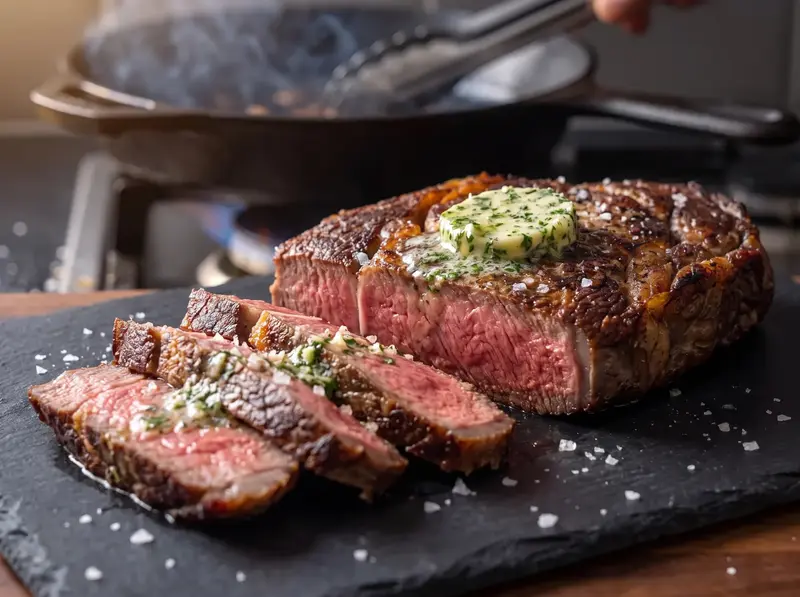
Reverse-Sear Steak (Oven and Cast Iron)
Reverse-sear steak is a thick ribeye or strip steak that is first brought slowly in a 120°C oven to just below the target temperature, then seared in a very hot cast-iron skillet. Because the whole steak is already almost at temperature when it meets the pan, the sear only builds the crust and does not overcook the meat beneath it. The result is even pink from edge to edge with a dark crust and no wide gray band. You need a thermometer, and the dry brine takes at least an hour before you start.
Ingredients
- 2 ribeye or New York strip steaks, 3.5–4 cm thick, 350–400 g each
- 2 tspcoarse kosher salt or flaky sea salt
- 1 tspfreshly cracked black pepper
- 2 tbspneutral oil with high smoke point
- 60 gcold unsalted butter
- 4 garlic cloves, unpeeled and lightly crushed
- 4 sprigs of fresh thyme or rosemary
Method
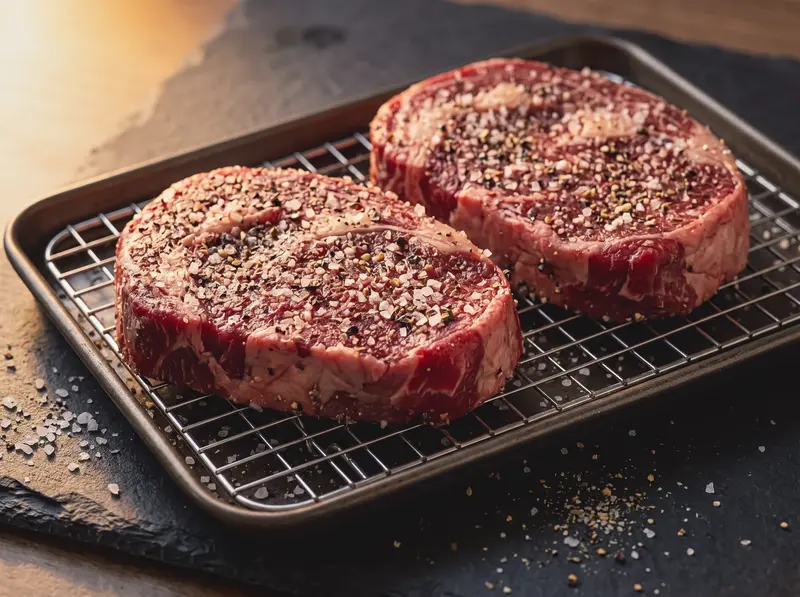
- Dry brine 1 to 24 hours ahead. Pat the steaks completely dry with paper towels. Season all surfaces generously with coarse salt and cracked pepper. Place on a wire rack set over a baking sheet and refrigerate uncovered. The minimum is 1 hour; overnight is better. The salt seasons the meat, and the uncovered rest dries the surface, so the crust starts forming the moment the steak hits the pan instead of after the surface moisture has steamed off.
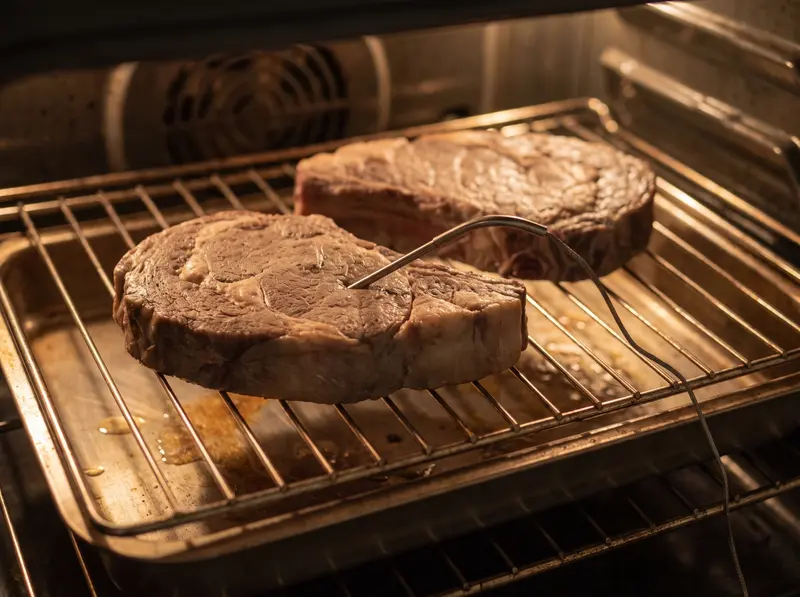
- Slow cook to 10°C below target. Remove the steaks from the refrigerator 30 minutes before cooking. Preheat the oven to 120°C (250°F). Place the steaks on the wire rack and cook until a meat thermometer in the thickest part reads 10°C below your target: for medium-rare (54°C final), pull at 44°C; for medium (60°C final), pull at 50°C. This takes 45 to 75 minutes depending on thickness. At this low heat the steak warms evenly from edge to center, so there is no gray band yet.
- Rest briefly before the sear. Remove the steaks from the oven. Pat the surface dry once more with paper towels, because any moisture will steam instead of sear. Let the steaks rest on the rack for 10 minutes, and in the last 5 minutes put the cast-iron skillet on the highest heat.
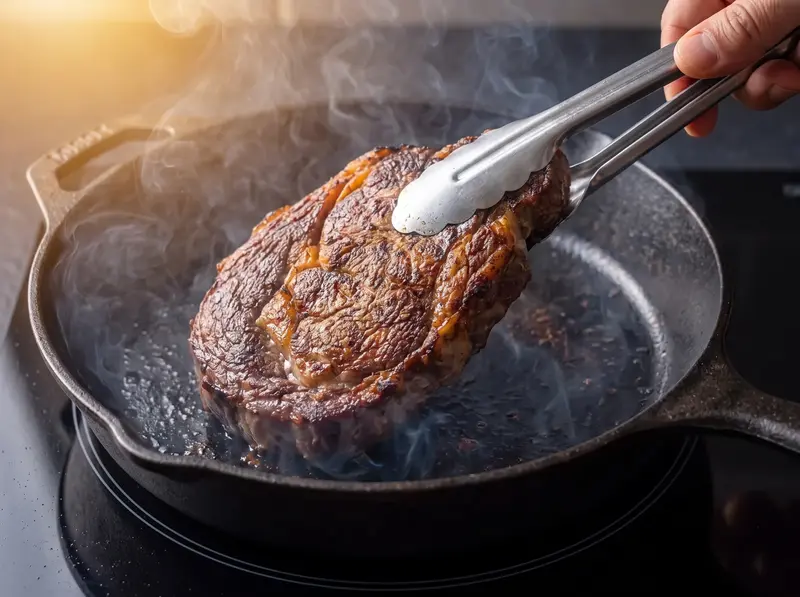
- Sear at maximum heat. Once the skillet is smoking, add the oil and lay the steaks in it. Sear for 60 to 90 seconds per side, then hold each edge and the fat cap against the pan for about 30 seconds. With 30 seconds left on the final side, add the cold butter, garlic and thyme. Tilt the pan and baste the steaks continuously with the foaming butter.
- Check the temperature and rest. Pull the steaks when the thermometer reads 2°C below the final target; for medium-rare, pull at 52°C, and it will reach 54°C while resting. Rest on the wire rack for 5 minutes, not on a cutting board where the juices pool. Slice against the grain, finish with a pinch of flaky salt and serve on warm plates.
FAQ
A reverse-sear steak is cooked in the opposite order: first slowly at 120°C in the oven, then briefly in a very hot pan. The gray ring under the crust forms because of the temperature gap between the surface and the center. When a cold steak goes straight into a hot pan, the outer 5–10 mm passes the target temperature long before the center warms up, and that overheated layer turns gray and dry. In the reverse sear the whole steak is already near 44–50°C when it meets the pan, so the 2–3 minute sear only browns the surface. The Maillard browning itself has nothing to do with the gray band: it happens only on the surface in both methods.
Final temperatures after the rest are: rare 49–52°C, medium-rare 54–57°C, medium 60–63°C, medium-well 65–68°C and well-done from 71°C. This recipe aims for 54°C. Take the steak out of the oven about 10°C below the final number, for example 44°C for medium-rare. After the sear, pull it 2°C below the target, so at 52°C for medium-rare, and the rest brings it up the last two degrees.
No, the method only makes sense for steaks at least 3 cm thick. A thin steak reaches the target temperature in the oven so quickly that you cannot stop it in time, and the low-heat phase gains you nothing. For steaks under 2.5 cm, sear them hard in a smoking skillet for 2 to 3 minutes per side and rest briefly. If you want steak cut into pieces rather than a whole thick cut, try the steak and potato skillet.
Ribeye is the best choice, because its fat cap renders slowly in the oven and keeps the meat juicy. New York strip is firmer and beefier and forms an excellent crust. T-bone and porterhouse work well, and a bone-in tomahawk needs about 45 to 60 minutes in the oven. Filet mignon gives the most even color but has little fat, so baste it generously with butter. Avoid lean cuts such as eye of round or top round, which dry out.
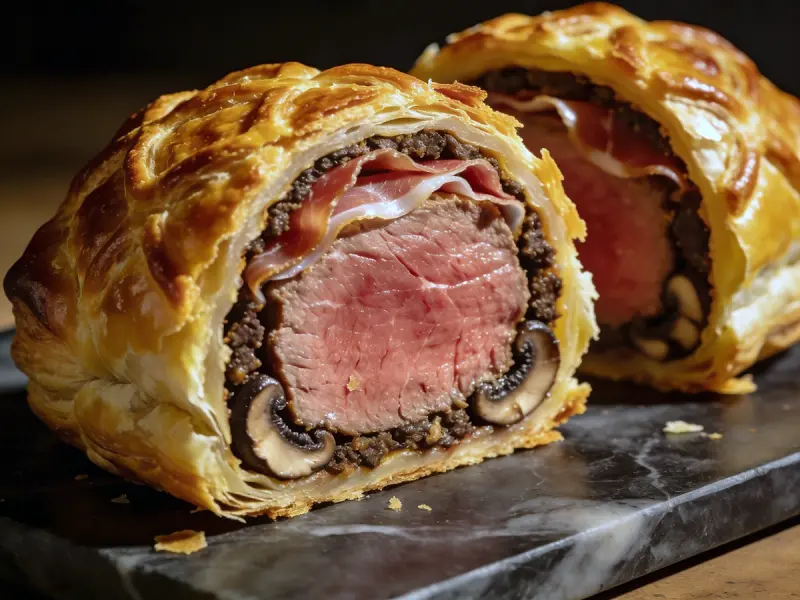
Yes, because the whole method is built on taking the steak out at a specific internal temperature. Time depends on thickness, and color and touch are hard to judge without practice. The difference between 52°C and 57°C is the difference between medium-rare and medium. An instant-read digital thermometer costs little and works for every cut. If you want a fancier steak dinner afterwards, compare it with the beef Wellington.
Rate this
Recipes by email
One letter a week: a recipe picked for your taste, plus whatever is new on the site. Unsubscribe in one click.
Welcome gift: Sergei's cookbook (e-book).
By subscribing you agree to the privacy policy.
Tell us what you like to cook (30 seconds) →Keep browsing
More dishes from the American archive — picked by overlap with what you're cooking now.


Join the conversation
Comments
No comments yet — be the first!