
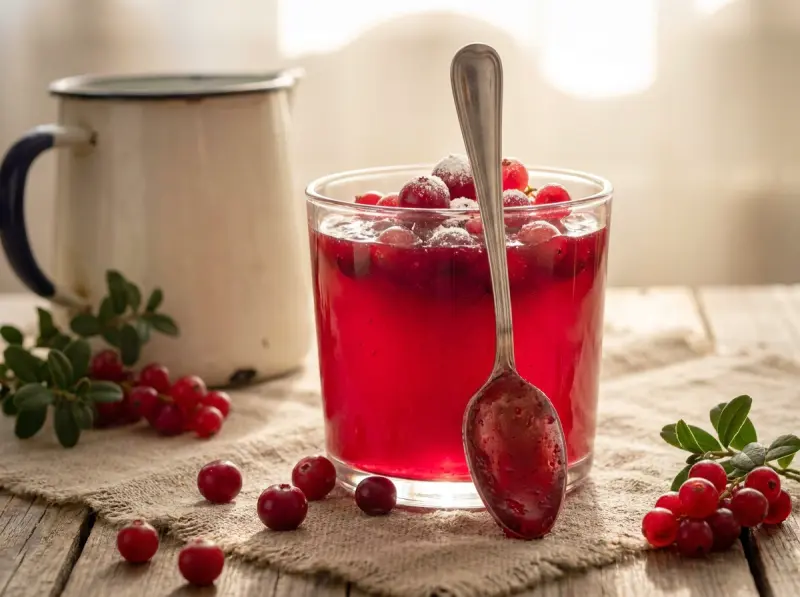
Kissel (Russian Berry Kissel)
Kissel is a classic Russian berry dessert-drink thickened with potato starch. Tart cranberries and red currants are simmered into a bright ruby juice, sweetened, then set to a glossy, spoonable consistency with a starch slurry. How much starch you add decides whether it's a warm sippable drink or a firm dessert you eat with a spoon. It's naturally vegan and gluten-free.
Ingredients
- 250 gcranberries
- 150 gred currants
- 150 gsugar
- 1000 mlwater
- 60 gpotato starch
Method
- Rinse the cranberries and red currants. Crush them lightly and press out the raw juice through a sieve; set the juice aside to keep its fresh flavor and vitamins.
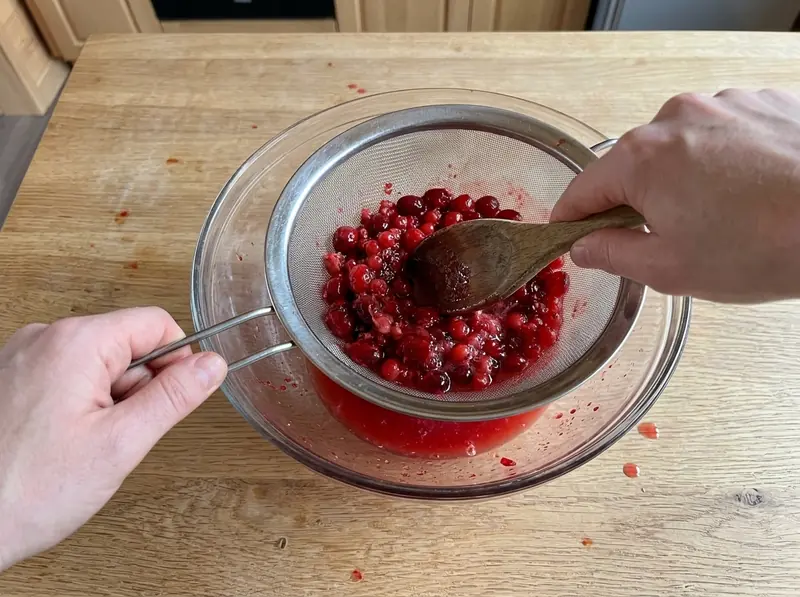
- Put the pressed pulp in a pot with the water, bring to a boil, and simmer 5–10 minutes. Strain out and discard the pulp, returning the bright liquid to the pot.
- Add the sugar to the liquid and bring back to a boil, stirring until it dissolves.
- Meanwhile, stir the potato starch into about 150 ml of cold water until completely smooth, with no lumps.
- Pour the starch slurry into the boiling juice in a thin stream, stirring constantly, ideally near the edge of the pot so it disperses evenly.
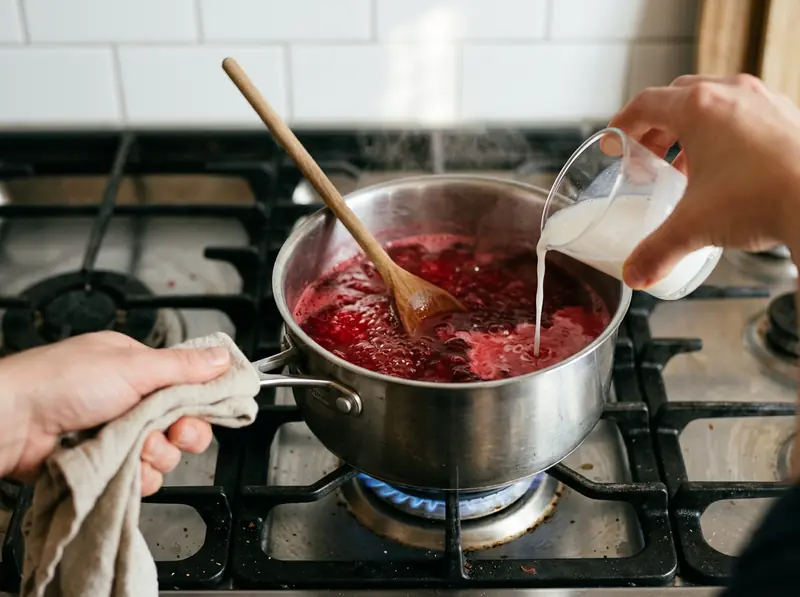
- As soon as it returns to a boil and thickens, cook just 1–2 minutes more, then take off the heat. Long boiling breaks the starch down and thins the kissel.
- Stir the reserved raw juice back in. Serve warm or chilled; dust the surface with a little sugar to stop a skin forming.
FAQ
The starch is what controls the texture. As a guide, per litre of liquid: about 20 g of potato starch gives a thin, sippable drink, 45–55 g gives a medium kissel, and 75–90 g gives a firm dessert you can turn out of a mould. This recipe puts 60 g into roughly 1.15 litres, about 52 g per litre, so it comes out medium: pourable while warm and thick enough to eat with a spoon once chilled. For a firm dessert that holds its shape, use 80–90 g of starch per litre. Adjust up or down to taste, remembering that more starch also makes it taste less sweet.
Potato starch sets clear and glossy and keeps the bright ruby color of the berries, which is why it's traditional for fruit kissel. Cornstarch works but turns the mixture cloudy and slightly milky, dulling the color, so it's better kept for milk-based kissel. Potato starch also thickens at a lower temperature and gives that characteristic smooth, slightly jelly-like texture. Whichever you use, slake it in cold water first.
Lumps come from adding dry starch straight to hot liquid — always mix it into cold water first until smooth, then pour it in slowly while stirring. Too-thin kissel usually means either not enough starch or over-boiling: potato starch loses its thickening power if cooked hard for more than a couple of minutes, so stop as soon as it thickens. Stirring near the edge of the pot as you pour helps it set evenly.
Yes — kissel works with almost any tart fruit: cherries, blackcurrants, raspberries, blueberries, plums, or a mix, and also with rhubarb, dried fruit, or even jam let down with water. Frozen berries work well; thaw them first if you want to press out the raw juice in step 1. Sweeten to taste depending on the fruit's acidity. Very sweet fruit may need a squeeze of lemon to keep the bright, tangy character that defines a good kissel.
A skin forms as kissel cools; dust the surface with a thin layer of sugar or lay cling film directly on top to prevent it. Store it covered in the fridge for up to 3 days; it thickens further as it chills, so loosen a thick one with a little water or juice if needed. It's served warm, at room temperature, or cold. Thick kissel can be set in moulds and turned out like a jelly. It also goes well next to syrniki at breakfast.
Keep browsing
More dishes from the Russian archive — picked by overlap with what you're cooking now.



Recipes by email
One letter a week: a recipe picked for your taste, plus whatever is new on the site. Unsubscribe in one click.
Welcome gift: Sergei's cookbook (e-book).
By subscribing you agree to the privacy policy.
Tell us what you like to cook (30 seconds) →
Join the conversation
Comments
No comments yet — be the first!