
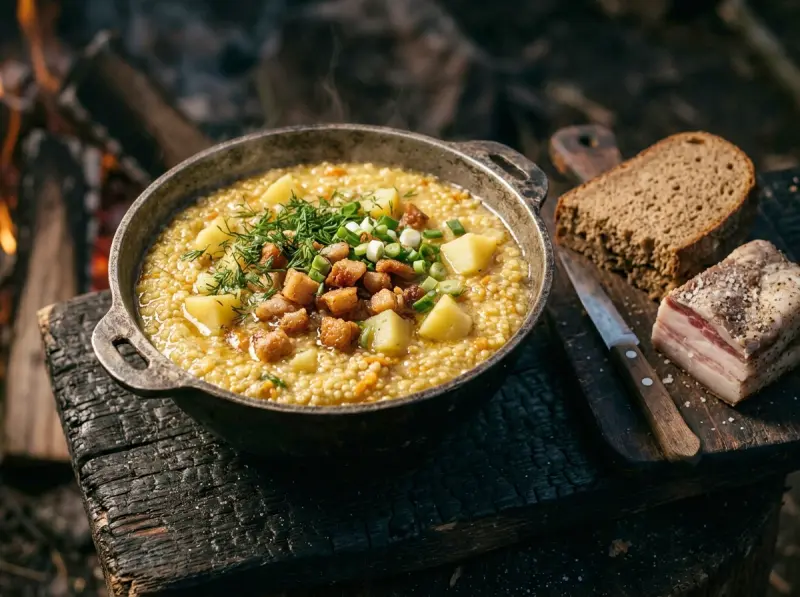
Kulish
A hearty Ukrainian Cossack soup of millet cooked with salo and onion, somewhere between a soup and a porridge. Potatoes, carrot, and herbs round it out; rendered salo and golden onion give it its deep, smoky-savoury character. It is served hot with dill and cracklings.
Ingredients
- 120 gsalo
- 200 gmillet
- 400 gpotatoes
- 150 gonion
- 100 gcarrot
- 2000 mlwater
- 2 wholebay leaf
- 3 tbspfresh dill
- 2 tbspgreen onion
- 2 clovesgarlic
- 1.5 tspsalt
- 0.5 tspblack pepper
Method
- Cut the salo into small cubes and render it in a dry pot over medium heat until the fat runs and the cracklings turn golden. Lift out a few cracklings to garnish, leaving the fat in the pot.
- Fry the chopped onion and grated carrot in the rendered fat until golden, about 6 minutes.
- Rinse the millet until the water runs clear to remove its bitterness.
- Pour in the water, add the cubed potatoes and bay leaves, and bring to a boil. Simmer 7 minutes.
- Add the millet and the salt, and simmer 15 to 20 minutes, stirring now and then, until the millet is soft and the kulish is thick and creamy. Add more water for a soupier texture.
- Stir in the black pepper and crushed garlic, and remove the bay leaves. Take off the heat.
- Serve hot, scattered with dill, green onion, and the reserved cracklings.
FAQ
It is somewhere between: a loose millet porridge made with salo. Thicker and it is almost a porridge (kuleba); thinner and it is a soup. You control the texture with water.
Smoked bacon or pork belly, which makes it smokier. For a lean version, vegetable oil and fried onion, but without salo the character is thinner.
Unrinsed grain turns bitter. Rinse it until the water runs clear, or scald it with boiling water before adding.
Yes: meat or fish broth makes it heartier and more festive. By tradition it is a field dish made with water, and still tasty thanks to the salo.
Some village versions stir in a beaten egg at the end, making the soup denser and more filling. Not essential, but authentic.
Keep browsing
More dishes from the Ukrainian archive — picked by overlap with what you're cooking now.
Recipes by email
One letter a week: a recipe picked for your taste, plus whatever is new on the site. Unsubscribe in one click.
Welcome gift: Sergei's cookbook (e-book).
By subscribing you agree to the privacy policy.
Tell us what you like to cook (30 seconds) →
Join the conversation
Comments
No comments yet — be the first!