
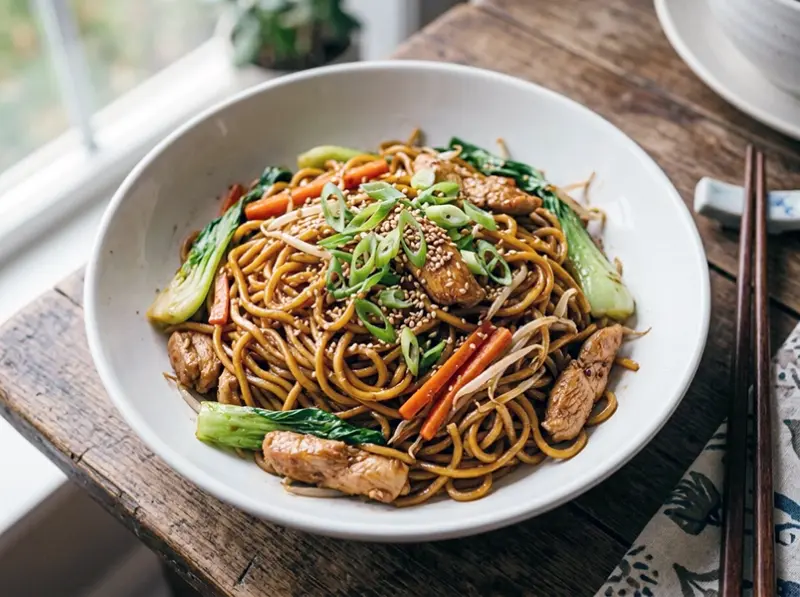
Lo Mein
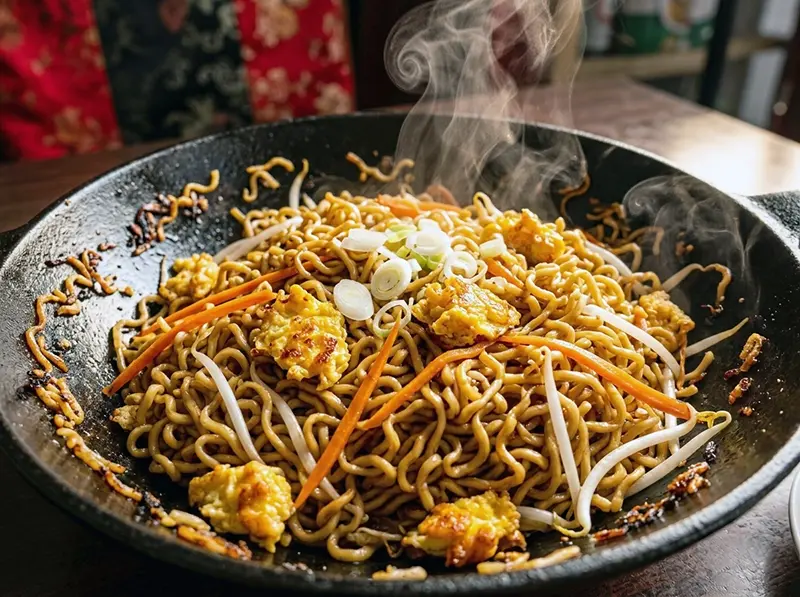
Soft egg noodles stir-fried with vegetables and protein in a glossy, savory sauce built on oyster sauce, light and dark soy sauce, Shaoxing wine, and sesame oil. Lo mein (捞面) translates from Cantonese as 'stirred noodles' — the name describes the cooking method, a scooping, tossing motion that coats every strand. Unlike chow mein, where the noodles are fried until crispy, lo mein noodles stay soft and slippery, coated in a thick, glossy sauce. The dark soy sauce is the detail that gives the dish its characteristic deep mahogany color; without it the dish looks pale. The sauce is premixed before the wok goes on — lo mein moves fast.
Ingredients
- 300 gfresh lo mein or egg noodles
- 200 gprotein: chicken breast, shrimp, or firm tofu
- 2 tbspoyster sauce
- 2 tbsplight soy sauce
- 2 tspdark soy sauce
- 1 tbspShaoxing rice wine
- 2 tspsesame oil
- 1 tspsugar
- 2 tspcornflour: 1 tsp for the chicken, 1 tsp dissolved in 2 tbsp water for the sauce
- 2 tbspneutral oil
- 3 garlic cloves
- 1 tspfresh ginger
- 150 gvegetables: cabbage, carrot, bok choy, bell pepper, bean sprouts
- 3 scallions, whites and greens separated
Method
- Prepare the protein and mix the sauce. For chicken: slice it thinly against the grain and toss with 1 tsp of the light soy sauce, 1 tsp cornflour and 1 tsp water. Let sit 10 to 15 minutes — this velveting technique keeps the meat silky and tender in the wok. Shrimp and tofu skip the velveting: pat the shrimp dry, and press and cube the tofu. Mince the garlic and ginger. Mix the full sauce in a bowl: oyster sauce, the rest of the light soy sauce, dark soy sauce, Shaoxing wine, 1 tsp sesame oil, sugar, and a slurry of 1 tsp cornflour in 2 tbsp water. Stir until combined. Taste it — the sauce should be deeply savory and slightly sweet. Everything is premixed because once the wok goes on, there is no time to measure.
- Prepare the noodles. Cook fresh noodles in boiling unsalted water as the packet says and stop while they are still slightly firm in the middle: they finish cooking in the wok. If you use dried noodles, take 150 g instead of the 300 g fresh and cook them 1 minute less than the package says. Drain thoroughly. Immediately toss the hot noodles with 1 teaspoon of sesame oil — this coats each strand and prevents them from sticking together while you finish cooking everything else. Do not rinse them in cold water; they will lose the surface starch that helps the sauce cling. If they cool and clump before you are ready, a quick rinse under warm water will loosen them.
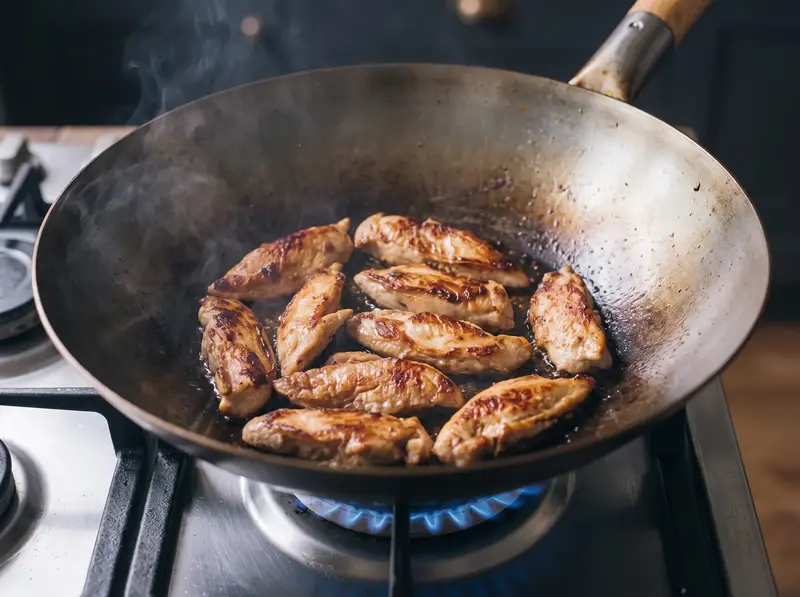
- Sear the protein. Heat 1.5 tablespoons of neutral oil in a wok over high heat until just smoking. Add the protein in a single layer. Do not move it for the first 30 to 45 seconds — let it sear and pick up color on the first side. Flip and cook 2 to 3 minutes more over high heat, until the chicken is white all the way through, with no pink when you cut the thickest slice (74°C). Shrimp need about 1 minute per side, until pink outside and opaque white through the middle; tofu needs 2 to 3 minutes until golden. Remove from the wok and set aside. Keeping the wok hot, add the remaining oil. Add the scallion whites, garlic, and ginger and stir for 20 seconds until fragrant.
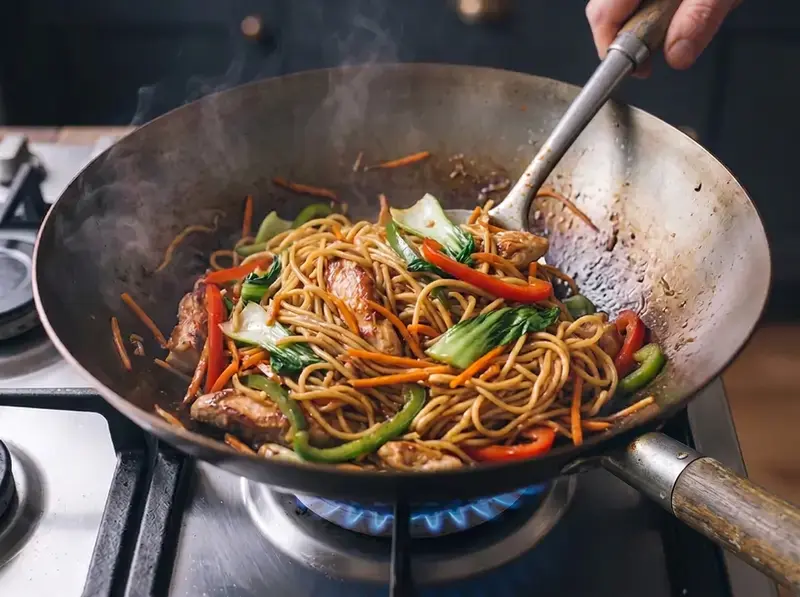
- Stir-fry the vegetables and add noodles. Add the harder vegetables first (carrot, bell pepper, bok choy stalks) and stir-fry 2 minutes. Add softer vegetables (cabbage, bok choy leaves, and bean sprouts if using) and stir-fry 1 minute more. Add the noodles to the wok. Add the sauce evenly over everything. Toss and fold using a scooping motion — lifting from the bottom and turning over — for 1 to 2 minutes over high heat, until the sauce is evenly distributed and the noodles are glossy and coated. Scrape the bottom of the wok frequently to prevent sticking.
- Finish and serve. Return the protein to the wok. Add the scallion greens. Give one final toss — 30 seconds — so everything is mixed and hot through. Taste and adjust: more oyster sauce for depth, soy for salt, sugar for sweetness. Serve immediately in bowls. Lo mein is best eaten hot, directly from the wok; as it sits, the noodles continue absorbing the sauce.
FAQ
Lo mein (stirred noodles) and chow mein (fried noodles) use the same type of egg noodles but cooked differently. In lo mein, the noodles are boiled until just tender and then tossed in sauce in the wok — they stay soft and slippery. In chow mein, the noodles are pan-fried until some are crispy before being tossed with sauce — they have a contrast of crispy and chewy textures. American Chinese restaurant chow mein is sometimes served with crispy deep-fried noodles on top, which is a further American adaptation. For another everyday wok noodle dish, try egg fried noodles.
Yes, spaghetti works surprisingly well. Use 150 g dried spaghetti in place of the 300 g fresh noodles. Cook it 1 to 2 minutes less than the package instructs, rinse briefly in cold water to stop the cooking, drain well, and toss with a little oil before stir-frying. Rinsing is fine for spaghetti, which boils for several minutes and would keep softening, but not for fresh egg noodles, which cook very quickly and need their surface starch to hold the sauce. The flavor is slightly different because egg noodles have more egg richness, but the result is very good. Other acceptable substitutes: yakisoba noodles (Japanese, a similar egg-wheat noodle), udon (thicker, chewier), or dried Chinese egg noodles.
Almost any vegetable works — lo mein is one of the most flexible Chinese dishes. Reliable classics: bok choy (add stalks first, leaves last), julienned carrot and bell pepper (add early for crunch), cabbage (napa or regular, add in the middle), bean sprouts (add with the cabbage so they cook through). Mushrooms — shiitake, oyster, or button — add meaty depth. Snap peas and snow peas need only 1 minute. Avoid overly watery vegetables (tomato, cucumber) that will release liquid and thin the sauce. The key is staged cooking: harder vegetables first, softer ones later. The same staged cooking works in chicken stir-fry with vegetables.
Shaoxing wine is a Chinese fermented rice wine with an earthy, slightly sweet flavor. It adds a layer of complexity to stir-fry dishes that is difficult to replicate. Best substitutes in order: dry sherry (closest in flavor), mirin (sweeter, Japanese), sake (Japanese rice wine, lighter). If avoiding alcohol: use low-sodium chicken stock in equal quantity — the sauce will be slightly less complex but still good. Avoid standard white wine or vodka — their flavor profiles are wrong for Chinese cooking.
Two main causes. First: the wok or pan was not hot enough — lo mein requires genuinely high heat. A pan that is only warm will steam the noodles rather than fry them, causing them to stick. Second: the sauce was not enough for the amount of noodles. Noodles absorb sauce rapidly as they cook; if the sauce is too little or the noodles too many, they will dry out. Fix: add a splash of hot water or chicken stock, 1 to 2 tablespoons at a time, while tossing. The starch in the noodles will bind it into a glaze quickly.
Rate this
Recipes by email
One letter a week: a recipe picked for your taste, plus whatever is new on the site. Unsubscribe in one click.
Welcome gift: Sergei's cookbook (e-book).
By subscribing you agree to the privacy policy.
Tell us what you like to cook (30 seconds) →Keep browsing
More dishes from the Chinese archive — picked by overlap with what you're cooking now.
Join the conversation
Comments (1)
Salt your cooking water generously for lo mein — about 1 tablespoon per liter. This is the only chance to season from inside. No amount of sauce compensates for bland, under-seasoned pasta or grains.