
Mole Poblano (Mexican Chicken in Chocolate Chili Sauce)
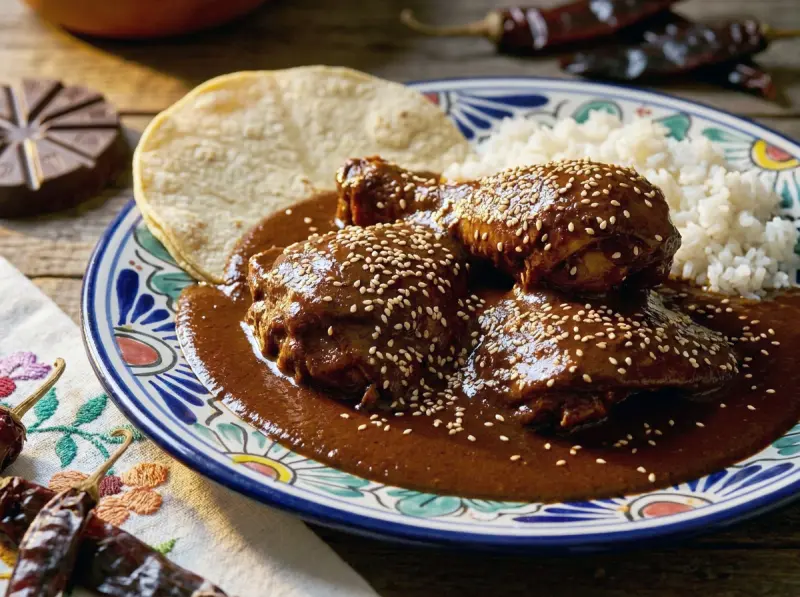
Mole poblano is Mexico's most celebrated sauce — a deep, dark, layered blend of dried chiles, toasted nuts and seeds, dried fruit, spices, and a little Mexican chocolate, ladled over tender chicken. Tied to Puebla, where legend places its birth in a convent kitchen, it's famously complex, with well over a dozen ingredients ground and simmered into a glossy, bittersweet-spicy sauce. It doesn't taste of chocolate; the cacao just deepens the whole into something rich and unforgettable. The dried chiles also soak for 15–20 minutes while you fry the nuts.
Ingredients
- 1200 gchicken
- 3 pcsancho chiles
- 4 pcspasilla chiles
- 60 gmexican chocolate
- 60 galmonds
- 40 gsesame seeds
- 50 graisins
- 1 pcscorn tortilla
- 2 pcstomato
- 1 stickcinnamon
- 4 tbspvegetable oil or lard
- to tastesalt
- to tastesugar
- 3 pcsmulato chiles
- 0.5 small white onion, roughly chopped
- 3 clovesgarlic
- 4 whole cloves
- 0.5 tspblack peppercorns
- 0.125 tspanise seeds
Method
- Put the chicken pieces in a pot, cover with cold salted water and bring to a simmer, skimming off the foam. Simmer gently for 25–30 minutes, until the thickest piece reads 74°C (165°F) next to the bone and the juices run clear. Leave the chicken in its broth off the heat and ladle out broth for the sauce as you need it.
- Stem and seed the dried chiles. Toast them in a dry pan for about 30 seconds a side until fragrant — don't scorch them or the mole turns bitter — then soak in hot water for 15–20 minutes until soft.
- In 2 tablespoons of the oil, fry the almonds, sesame seeds (reserving some for garnish), raisins, and torn tortilla until golden and fragrant. Add the onion and garlic and cook until soft, then add the tomatoes and warm through.
- Blend the soaked chiles with the fried nuts, seeds, raisins, tortilla, onion, garlic and tomatoes, plus the cinnamon, whole cloves, peppercorns, anise and enough broth to make a smooth paste. Work in batches and pass each through a sieve for a silky sauce.
- Heat the remaining 2 tablespoons of oil in a heavy pot and pour in the strained mole base — it will splatter. Fry it, stirring constantly, for about 15 minutes so the flavours deepen.
- Stir in the Mexican chocolate and 2–3 cups of broth. Simmer gently, stirring often, 30–45 minutes until the sauce is glossy, thick enough to coat a spoon, and forms slow ribbons. Season with salt and a little sugar to balance.
- Add the chicken to the sauce and simmer gently for 5–10 minutes, until it is hot right through. Serve it in the sauce, or lift the pieces onto plates and ladle the mole over. Scatter with the reserved sesame seeds and serve with rice and warm tortillas.
FAQ
No — this surprises many people. The Mexican chocolate is used in a small amount as a seasoning, not a sweetener, and it works alongside the chiles, nuts, and spices rather than standing out. Its role is to deepen and round the sauce, adding body and a faint bitterness that balances the chiles and dried fruit. A well-made mole tastes rich, earthy, and complex, with medium heat (not hot) and a whisper of sweetness — not like a chocolate dessert.
The backbone of mole poblano is a blend of dried chiles — most commonly ancho (sweet, fruity), pasilla (dark, raisiny), and often mulato or a little chipotle for smoke and heat. Each brings a different note, so a mix matters more than any single one. If you can only find one or two types, ancho alone still gives a good base. Find them in Latin markets or online. Toast them gently and don't let them burn, or the whole sauce turns bitter. Dried chiles are also the base of salsa macha.
Its reputation comes from the sheer number of ingredients — often twenty or more — and the many steps: toasting chiles, frying nuts, seeds, fruit and tortilla separately, blending, sieving, and a long simmer. Each element is prepared to build layers of flavour. None of the steps is hard on its own; it's the time and the number of components that make it a labour of love. Many cooks make a big batch and freeze it, since it keeps and improves.
Mole is a whole family of Mexican sauces, not one recipe. Mole poblano, from Puebla, is the famous dark, chocolate-tinged version. Oaxaca is known for its 'seven moles', including the very dark mole negro and the bright green mole verde made with herbs and pumpkin seeds. Others include mole amarillo, coloradito, and manchamanteles. They share the idea of a complex ground sauce but differ widely in chiles, colour, and flavour.
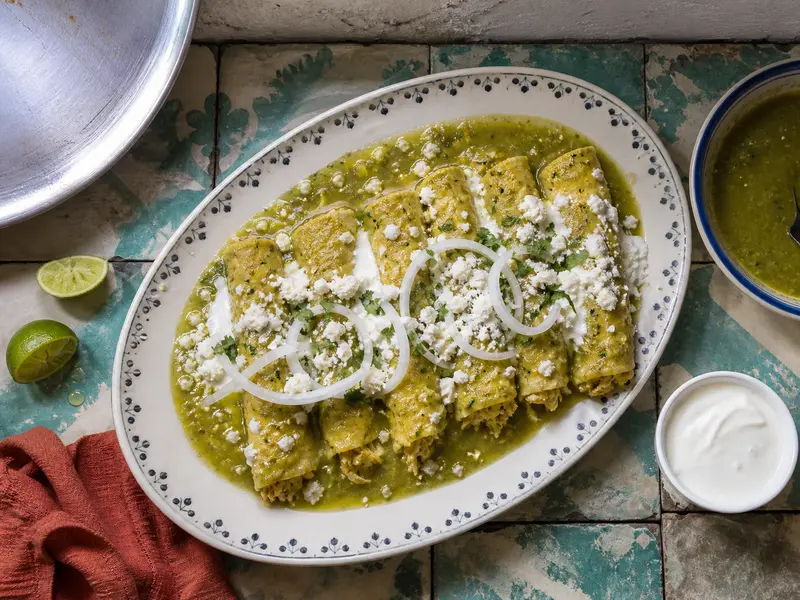
Mole poblano is classically served over poached or roasted chicken or turkey, with rice and warm tortillas, and showered with toasted sesame seeds. Leftover sauce is delicious in enmoladas (tortillas dipped in mole and filled with chicken) or over eggs. It freezes very well — make a large batch, cool, and freeze in portions for up to three months. The flavour deepens after a day, so it's a great make-ahead sauce. For tortillas rolled around chicken in a green salsa instead, see enchiladas verdes.
Keep browsing
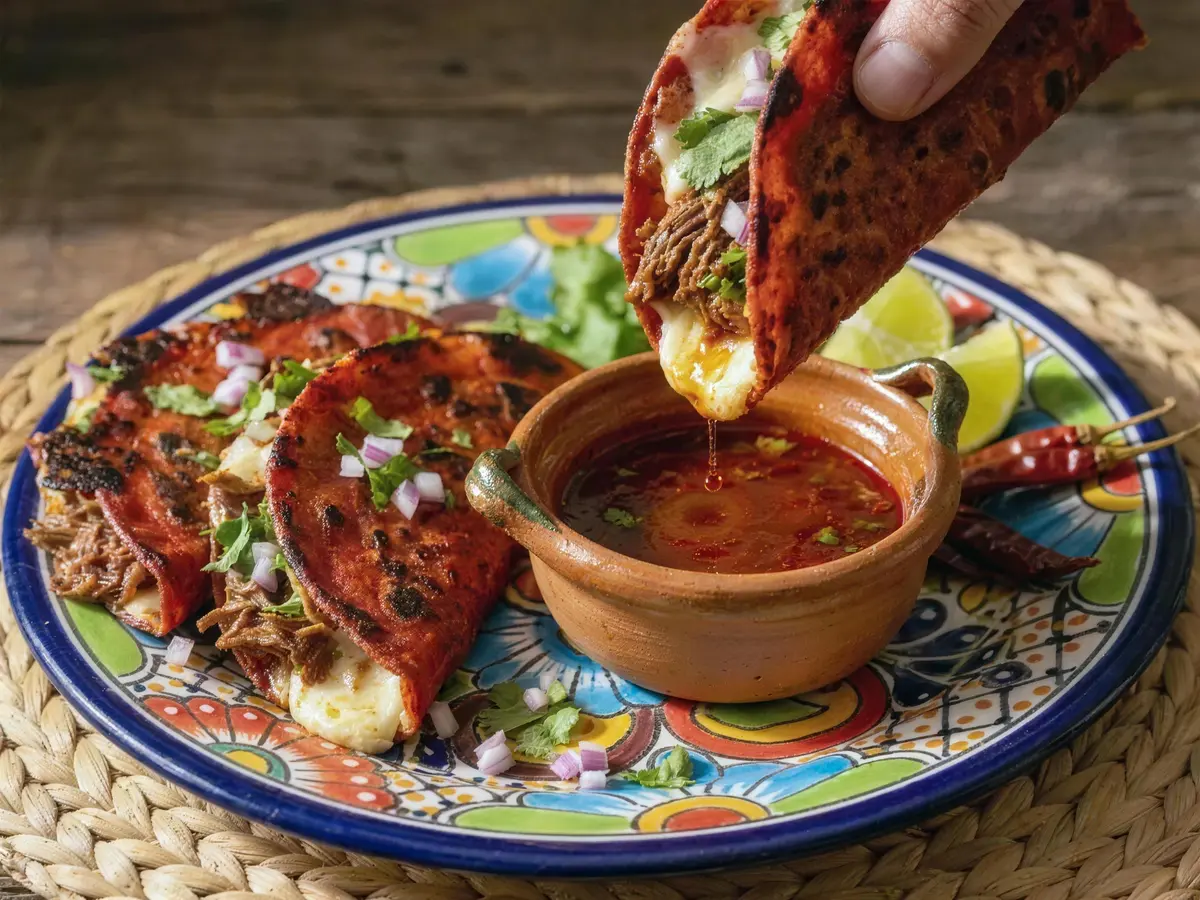
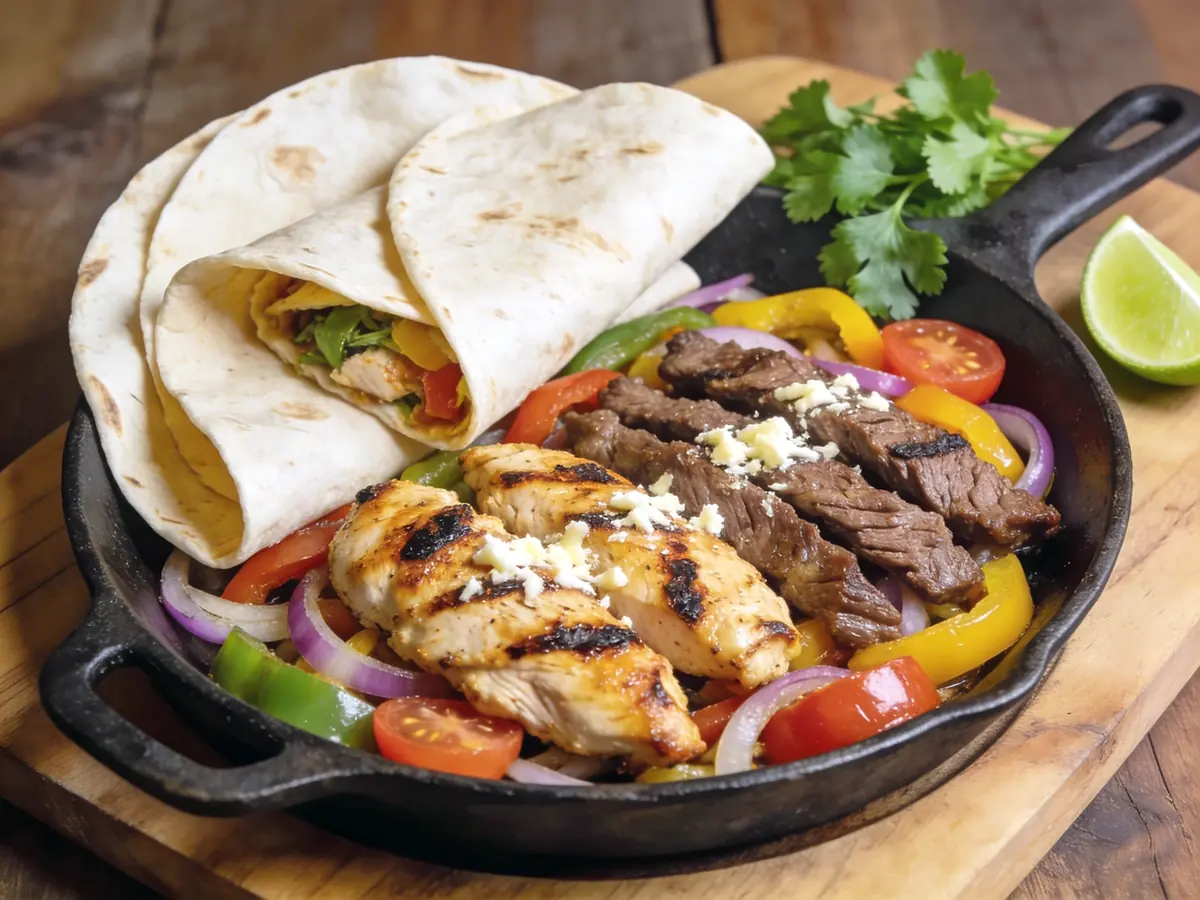
More dishes from the Mexican archive — picked by overlap with what you're cooking now.
Recipes by email
One letter a week: a recipe picked for your taste, plus whatever is new on the site. Unsubscribe in one click.
Welcome gift: Sergei's cookbook (e-book).
By subscribing you agree to the privacy policy.
Tell us what you like to cook (30 seconds) →
Join the conversation
Comments
No comments yet — be the first!