
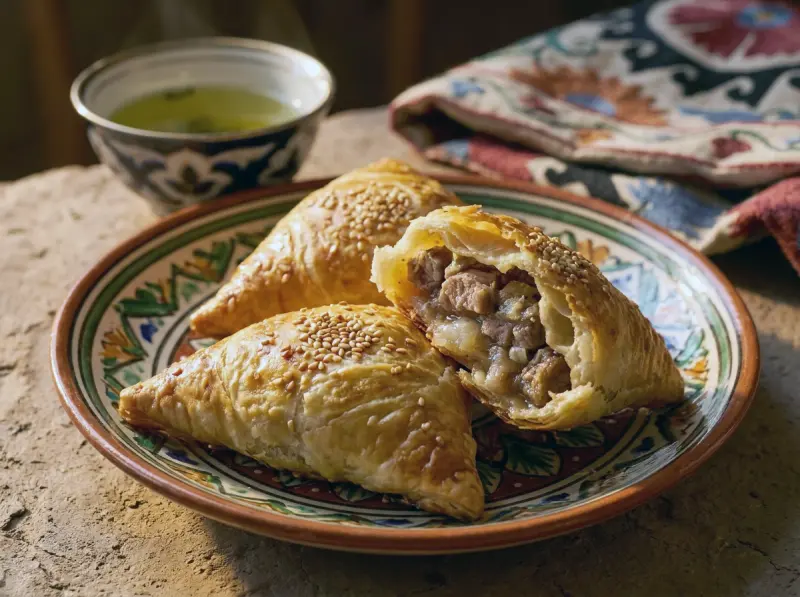
Samsa (Uzbek Lamb Pastries)
Samsa are Uzbek baked pastries with a crisp, layered dough and a juicy filling of hand-chopped lamb and onion. The layering is built by rolling butter into thin sheets of dough, which creates flaky, oven-crisped pastry without a drop of yeast. The golden rule: chop the meat with a knife, never mince it, and use as much onion as meat. The dough rests for 30 minutes and the buttered roll chills for at least an hour before shaping.
Ingredients
- 500 glamb
- 500 gonion
- 60 gbutter
- 1 tspcumin
- 0.5 tspblack pepper
- 500 gflour
- 200 mlwater
- 1 egg
- 1 tbspsesame seeds
- 2 tspsalt
Method
- Make the dough: mix flour and 1 tsp salt, add the water gradually and knead until smooth. It should be firm, not soft. Cover and rest 30 minutes.
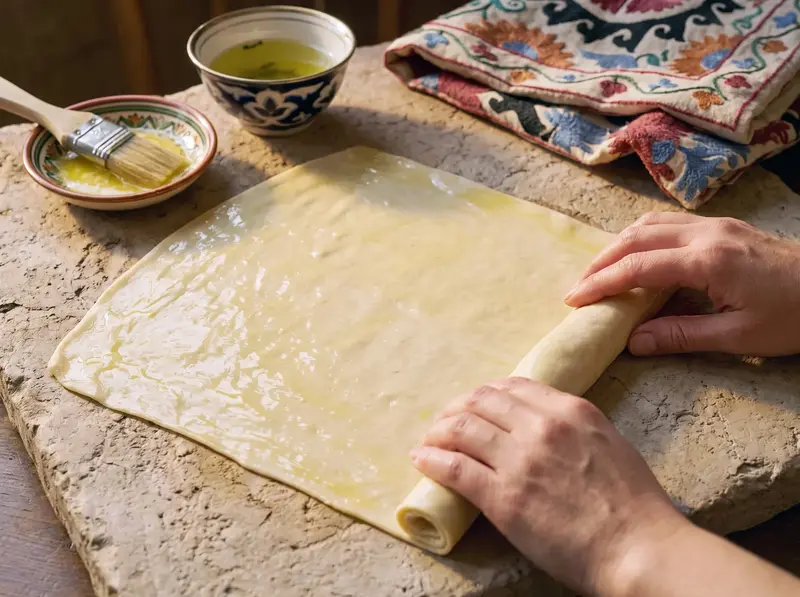
- Roll the dough into a very thin rectangle, brush generously with melted butter, roll it up into a log, and refrigerate at least 1 hour. Chilling locks in the layers.
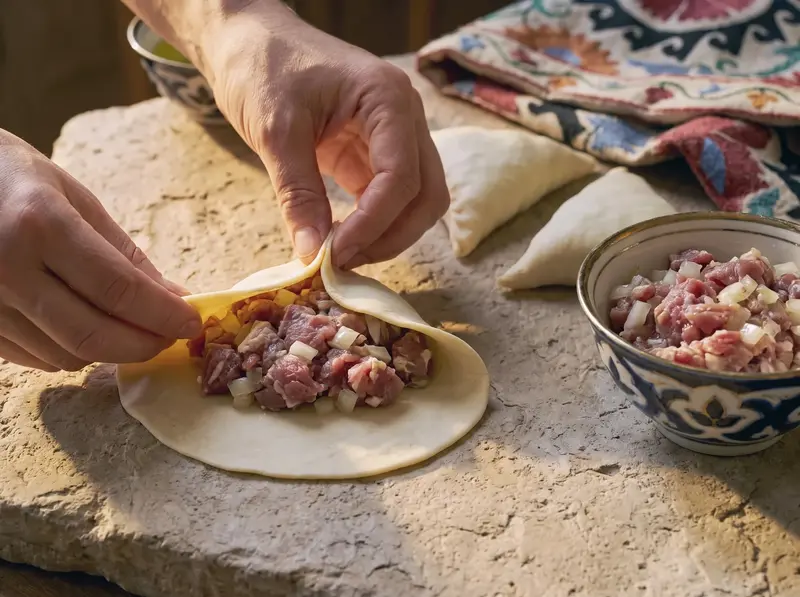
- Make the filling: dice the lamb (shoulder or leg with some fat) finely with a knife — never put it through a mincer. Dice the onion equally fine. Mix with cumin, pepper, and 1 tsp salt. Raw filling is traditional; it steams juicy inside the pastry.
- Cut the log into 12 equal pieces — with a log about 24 cm long, each is about 2 cm thick. Stand each piece on its cut side, and roll out into a circle about 3 mm thick. Roll the edges thinner than the centre.
- Place about 80 g of filling in the centre of each round — two heaped tablespoons — pull up three sides to form a triangle, and pinch the seams firmly shut so no juice leaks out.
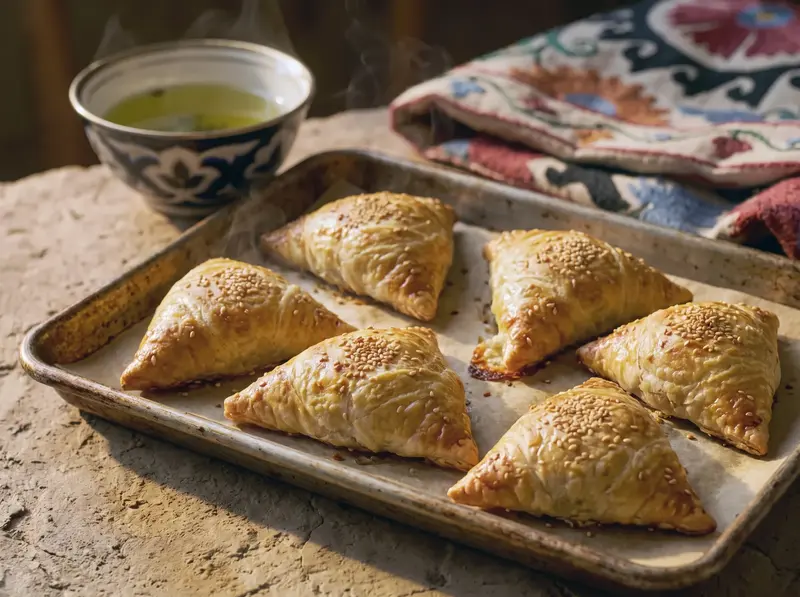
- Place seam-side down on a lined tray. Brush with beaten egg and scatter sesame seeds over.
- Bake in an oven preheated to 200°C for 35–40 minutes until the pastry is deep golden. Cut one samsa open to check: the meat should have no pink left and the juices should run clear (71°C in the centre if you have a thermometer). Serve hot.
FAQ
Minced meat loses its fibrous texture and compacts into a dense, dry lump as it bakes. Hand-chopped lamb stays in small pieces that keep their juices and stay tender. The onion mixes between the meat cubes and releases moisture, keeping the filling succulent. A good sharp knife and a 5–10 minute chop are all it takes; aim for cubes no bigger than 0.5 cm.
This is traditional and practical: raw meat and onion steam inside the sealed pastry, producing their own broth that soaks back into the filling. Pre-cooking would drive off that moisture and the result is a drier interior. The high oven temperature (200°C) is enough to cook the lamb through in 35–40 minutes. Check one samsa by cutting it open — the filling should be cooked through, not pink.
Three things: roll the dough very thin before buttering, chill the roll for at least an hour (overnight is better), and bake at a high temperature. The butter between the layers steams on contact with the hot oven and puffs each layer apart. Don't skip the resting time and don't hurry the bake. A convection setting helps crisp the outside faster.
Yes — it gives a flakier, fattier result than the homemade layered dough, which is crisper and less rich. Commercial puff works well when you're short on time: thaw, cut into squares, fill, and fold into triangles. The texture will be different — more flaky than crunchy. Use the same raw lamb-and-onion filling; the method and baking temperature stay the same.
Pumpkin with onion and butter is a popular vegetarian filling; potato with butter and herbs is another classic. Chicken thigh, roughly chopped, works very well with the same spices. In Uzbekistan samsa are also filled with spring greens in season (kuk-samsa). Whatever you use, the filling should be raw or barely cooked, seasoned well, and not too wet or it softens the pastry.
Rate this
Recipes by email
One letter a week: a recipe picked for your taste, plus whatever is new on the site. Unsubscribe in one click.
Welcome gift: Sergei's cookbook (e-book).
By subscribing you agree to the privacy policy.
Tell us what you like to cook (30 seconds) →Keep browsing
More dishes from the Uzbek archive — picked by overlap with what you're cooking now.
Join the conversation
Comments
No comments yet — be the first!