
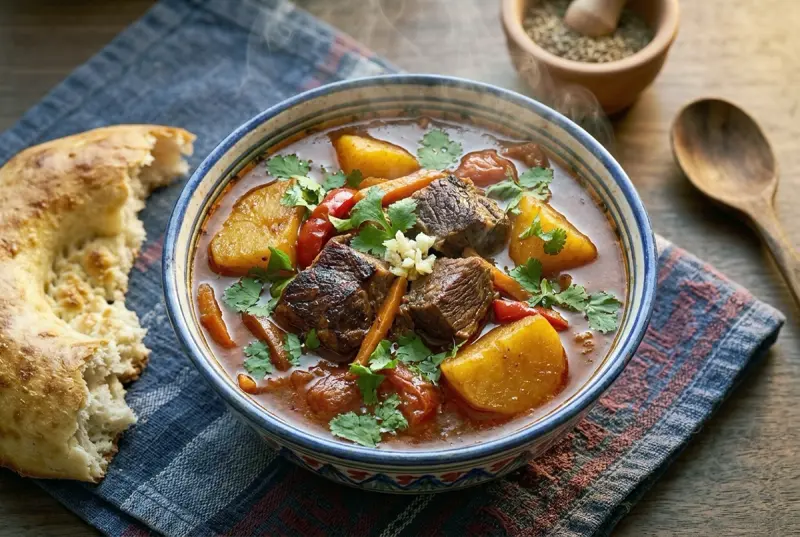
Uzbek Kavardak (Lamb and Potato Stew with Cumin)
Uzbek kavardak is a hearty stew of lamb, potatoes, and seasonal vegetables, slow-cooked in a kazan with cumin, coriander, and fresh tomatoes. The name comes from the Uzbek qovurdoq, meaning fried or braised meat, from qovurmoq, "to fry" — the popular idea that it means "mess" or "chaos" is a mix-up with an unrelated Russian word that sounds the same. Key technique: lamb is seared in smoking-hot oil until a deep crust forms, vegetables are layered in stages, and everything braises under a tight lid until the potatoes have soaked up the meat juices. Serves six, served in deep bowls with fresh cilantro and crushed garlic on top, alongside flatbread. Forgiving on ingredients, strict on technique.
Ingredients
- 700 glamb shoulder
- 700 gpotatoes
- 250 gyellow onion
- 200 gcarrots
- 1 piecered bell pepper
- 300 gtomatoes
- 4 clovesgarlic cloves
- 60 mlvegetable oil
- 1 tspcumin seeds
- 1 tspground coriander
- 0.5 tspblack pepper
- 2 piecebay leaves
- 1 tspsalt
- 400 mlwater
- 20 gfresh cilantro for serving
Method
- Cut the lamb shoulder into 3 cm cubes, trimming heavy gristle but leaving the fat — fat carries the flavour. Pat the pieces dry with paper towels: wet meat steams instead of searing. Slice the onion into half-rings about 5 mm thick, cut the carrots into thick matchsticks, the bell pepper into wide strips, and the tomatoes into eighths. Peel the potatoes and cut into large chunks the size of half an apricot — small pieces fall apart in the long simmer.
- Heat the oil in a kazan or heavy cast-iron Dutch oven over high heat until it shimmers and a faint haze rises from the surface — this is non-negotiable. If the oil is merely warm, the lamb will release its juices and boil rather than sear, and you will get stewed grey meat with no depth of flavour. Lay the lamb in a single layer, leave it untouched for 2 to 3 minutes so a dark crust can form, then turn the pieces and brown the other sides for another 5 to 6 minutes total.

- Add the onion to the lamb and stir. Cook for 5 to 7 minutes until the onion turns translucent and picks up colour around the edges from the meat juices. Add the carrots and bell pepper and stir for another 3 to 4 minutes. The pan should look glossy and the vegetables should be wilted but still firm.
- Crush the cumin seeds between your palms or in a mortar to release their oils — pre-ground cumin loses aroma fast. Add cumin, ground coriander, black pepper, and bay leaves to the pot. Stir for 30 seconds until the spices smell toasted. Add the tomatoes, salt, and water. The liquid should come about halfway up the meat, not cover it — kavardak is a thick stew, not a soup.

- Bring to a simmer, cover tightly, and reduce the heat to the lowest setting. Cook 30 to 40 minutes — the lamb should be just shy of tender. Check once or twice and add a splash of water if the bottom looks dry, but do not stir aggressively or the vegetables will collapse.
- Add the potatoes, nestling them among the meat and into the broth so they are partly submerged. Cover again and cook for another 25 to 30 minutes on low heat, until the potatoes are fork-tender, the lamb pierces easily and pulls apart with slight pressure, and everything has absorbed the colour and flavour of the broth. The total braising time depends on the cut of lamb — older shoulder may need an extra 15 minutes.

- Turn off the heat, leave the lid on, and let the stew rest for 10 minutes. This is when the flavours settle and the broth thickens. Meanwhile, finely chop the cilantro and crush the garlic cloves through a press. Serve the kavardak in deep bowls, ladling broth over each portion. Top each bowl with a pinch of crushed raw garlic and a generous handful of cilantro — these go in at the table, never in the pot, or they lose their punch. Pass flatbread alongside.
FAQ
The main culprit is oil that was not hot enough at the start, or skipping the sear and going straight to braising. Uzbek kavardak is built on a dark crust — the oil must be smoking before the meat hits the pan, and the cubes should sit untouched in a single layer for 2 to 3 minutes so a crust forms. Adding salt too early is the second mistake: it pulls moisture out before the surface can brown. The third is the wrong cut — use shoulder, neck, or shank with connective tissue, not loin or leg, which dry out within 40 minutes. If the meat is already tough, cover and braise on the lowest heat for another 30 to 40 minutes; the collagen will eventually break down.
Beef shoulder, neck, or shank is the closest swap and works the same way; reduce the braising time by 10 to 15 minutes since beef is slightly less collagen-rich than tough lamb cuts. Pork is acceptable but cut the oil in half — the meat releases more fat than lamb — and the result will taste less Central Asian. Chicken does not work for this dish: kavardak needs collagen-rich meat and long simmering, breast goes dry, and even thigh produces a flat-tasting stew. Best compromise without lamb: beef shank plus 50 g of beef tallow or rendered lamb fat for aroma. Cumin stays mandatory regardless — it is the spice that makes the dish Uzbek.
In a sealed container in the fridge, kavardak keeps for 3 to 4 days, and the flavour actually deepens overnight as the spices integrate and the broth thickens around the potatoes. Freezing works for the meat and broth but not the potatoes — they turn mealy and crumble after thawing, so freeze the meat with sauce separately (up to 2 months) and boil fresh potatoes when you reheat. Reheat on the stovetop over low heat with a splash of water; microwaving makes the lamb rubbery. Do not reheat twice — the fats oxidize and develop an off taste.
All four are Uzbek meat-and-vegetable preparations cooked in a kazan, but the technique differs sharply. Kavardak is a stew where the meat is seared first and vegetables go in stages with tomato; the meat picks up a deep crust and potatoes are mandatory. Dimlama is a layered braise with no stirring: meat on the bottom, vegetables stacked in layers (potatoes, carrots, peppers, tomatoes, with cabbage on top as a lid), cooked in its own juices for 1.5 to 2 hours. Basma is essentially dimlama with more vegetables and always includes cabbage. Shurpa is a clear-broth soup of lamb and large-cut vegetables with no searing. Kavardak is the most improvisational of the four, built to use up whatever vegetables are in the house alongside the meat — its name actually comes from the Uzbek qovurdoq, "fried meat," not from any word for chaos, despite how often that mix-up gets repeated.
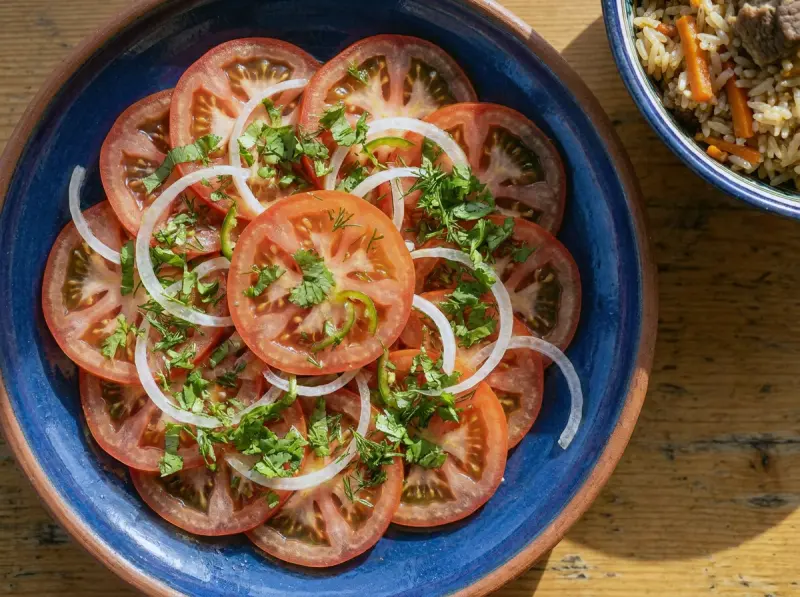
Potatoes are already in the dish, so no separate side is needed. The traditional serving is in deep bowls (not flat plates) with broth ladled over each portion — finish at the table with a pinch of crushed raw garlic and a generous handful of fresh cilantro per bowl, never in the pot. Bread should be Uzbek tandyr non or any flat country bread; sliced sandwich bread breaks the texture. To drink: hot green tea without sugar (the Central Asian default) or ayran for a cooling balance, or a light dry red with the lamb. As a starter before the kavardak, serve the Uzbek tomato-onion-chili salad called achichuk, or pickled onions with sumac — the acidity cuts the richness.
Rate this
Recipes by email
One letter a week: a recipe picked for your taste, plus whatever is new on the site. Unsubscribe in one click.
Welcome gift: Sergei's cookbook (e-book).
By subscribing you agree to the privacy policy.
Tell us what you like to cook (30 seconds) →Keep browsing
More dishes from the Uzbek archive — picked by overlap with what you're cooking now.


Join the conversation
Comments
No comments yet — be the first!