


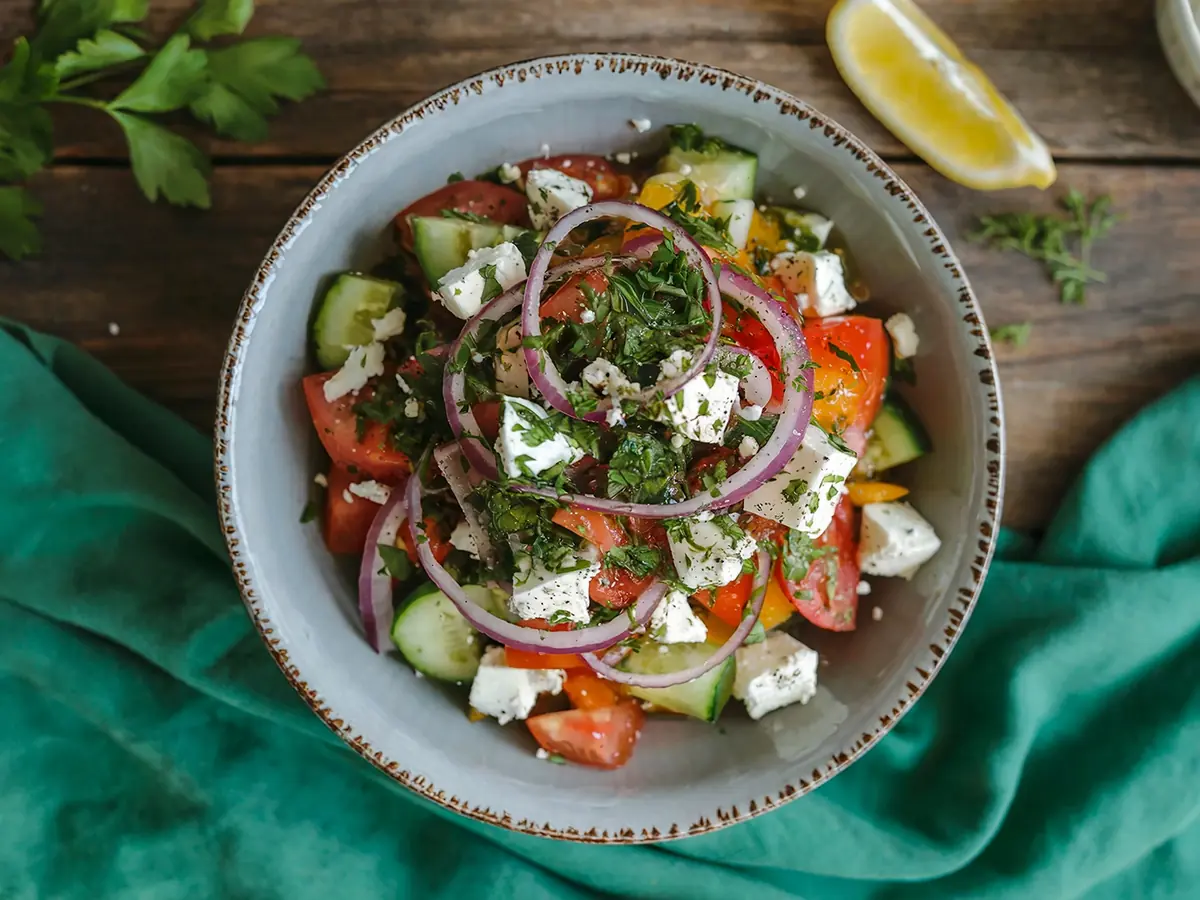
Shopsky Salad
Chunky tomatoes, cucumbers, peppers, and onion topped with a thick layer of grated sirene cheese — Bulgaria's answer to the Greek salad. No lettuce, no fuss, just peak-season vegetables and salty white cheese.
Ingredients
- 4 ripe tomatoes
- 1 long cucumber
- 1 sweet bell pepper
- 1 red onion
- 200 gsirene or feta cheese
- 1 bunchfresh parsley
- 2 tbspsunflower oil (or olive oil)
- 2 tbspwine vinegar
- to tastesalt and black pepper
Method
- In a large bowl, combine the chopped tomatoes, cucumbers, bell pepper and onion.
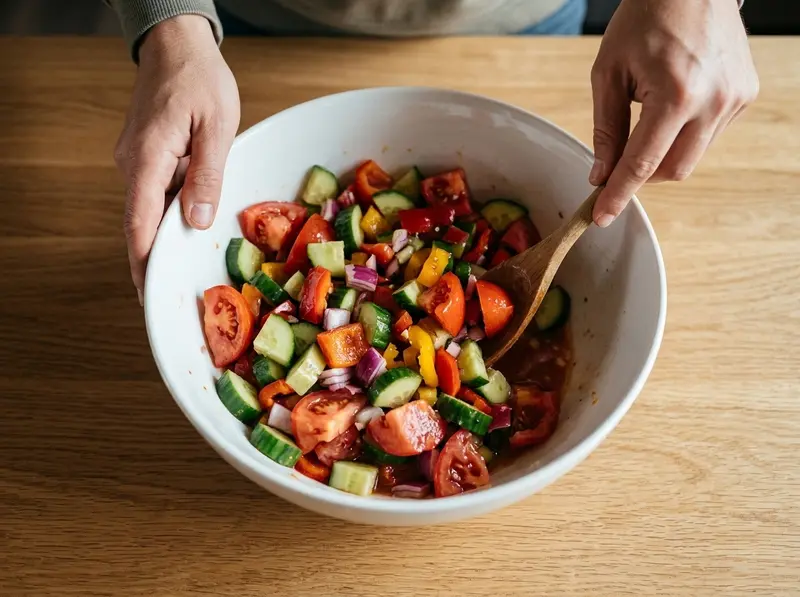
- Add the chopped parsley. Keep the cheese aside for now, because it goes on last.
- Season with salt and black pepper, then drizzle with the sunflower oil and wine vinegar. Stir gently so the tomatoes don't break up.
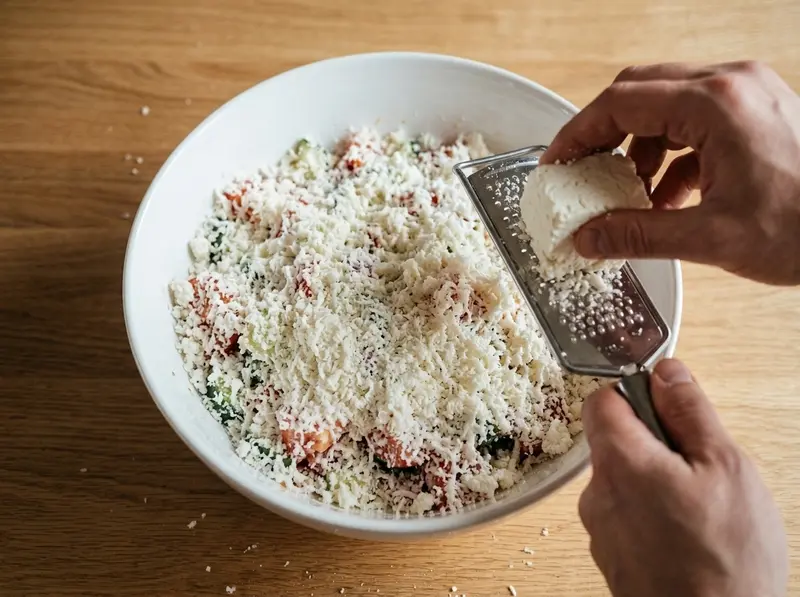
- Heap the salad on a serving dish or individual plates. Grate the cheese over the top in a thick layer that hides the vegetables like snow, and don't stir it in.
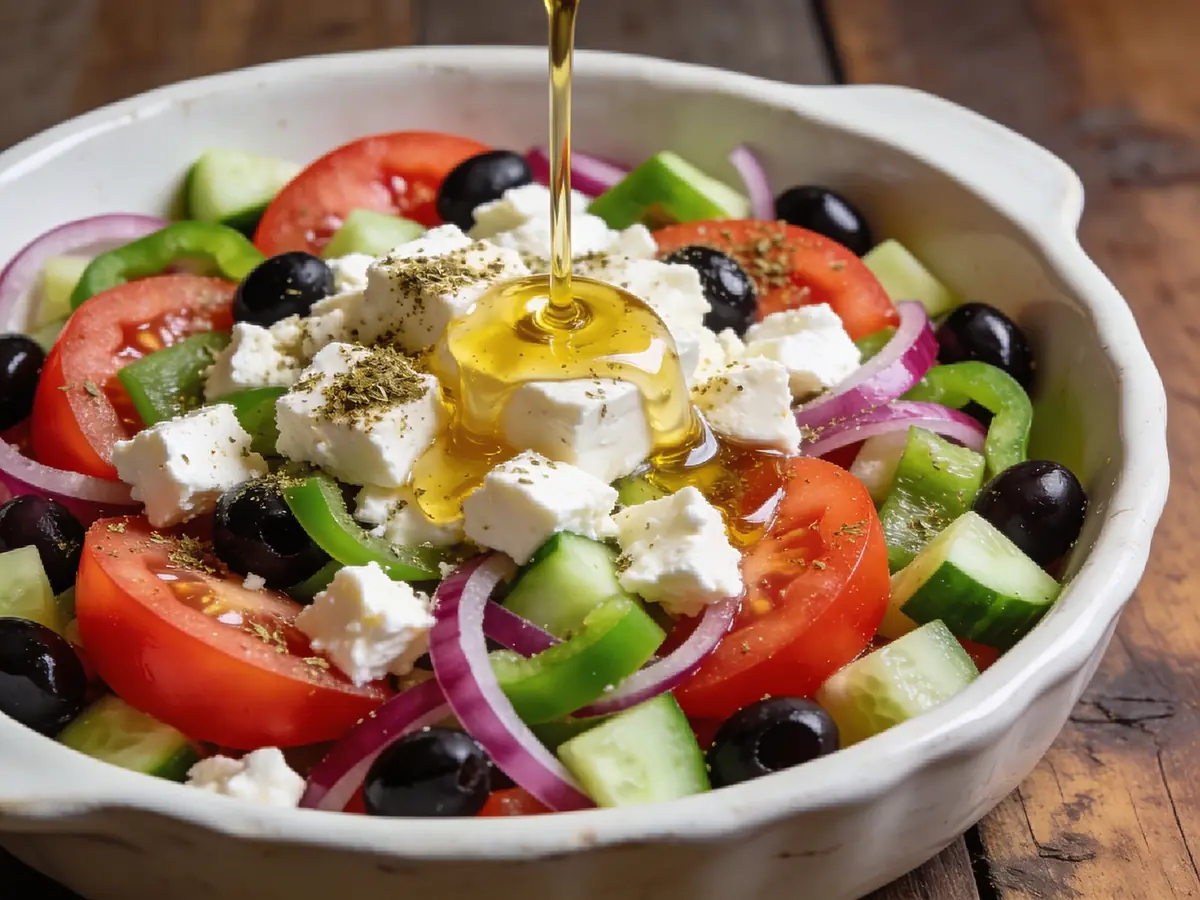
- Top with a black olive or a sprig of parsley if you like, and serve right away, while the vegetables are still crisp.
Cooked it? Rate the recipe
FAQ
Shopska salad is a Bulgarian national dish with a very specific composition: diced fresh tomatoes, cucumbers, and green or roasted red peppers, topped with grated Bulgarian white brine cheese (sirene) that completely covers the surface like a snow cap. What sets it apart from a generic Greek-style salad is the pepper, which is essential (roasted or fresh green), and the cheese, grated rather than cubed or crumbled so that it covers the entire top like a thick layer of snow. The dressing also differs: Bulgarian recipes usually call for sunflower oil, with a little wine vinegar if you want it. Olive oil is an accepted alternative. Olives don't go into the salad itself, though a black olive or a sprig of parsley often sits on top of the cheese as a garnish. Red onion is optional but common. The vegetables must be fresh, ripe, and in season.
Bulgarian sirene is a semi-hard, slightly crumbly white brine cheese made from sheep's or cow's milk with a sharp, salty, tangy flavor. The closest widely available substitute is Greek feta — however, use firm, block feta (not pre-crumbled), and grate it coarsely on a box grater rather than crumbling it, as the grated texture is traditional in Shopska. If you cannot find either, other good white brine cheeses work well: Turkish beyaz peynir, Middle Eastern akkawi, or a firm ricotta salata. The key requirement is that the cheese is salty, slightly tangy, and firm enough to grate. Avoid soft cheeses like ricotta or mozzarella — they lack the sharpness and cannot be grated into the characteristic snow-like layer.
The classic and most common cut for Shopska salad is medium dice — roughly 1–1.5 cm cubes for tomatoes and cucumbers. This gives the salad a chunky, rustic texture where each piece has presence and you can distinguish each vegetable. The pepper is usually cut into slightly smaller pieces or thin strips. The key principle is that all vegetables should be cut to a similar size so each forkful contains a balanced mix. Avoid cutting the tomatoes too small — they become mushy and release too much juice. Do not peel the cucumber unless the skin is very thick or waxy; in traditional Bulgarian preparation, the skin is left on for texture and color. The onion, if used, is cut into thin half-rings and ideally soaked in cold water for 10 minutes to remove the harshness.
Shopska salad takes only oil and a little vinegar, with no mayonnaise, cream, or yogurt. The generous layer of grated cheese already brings creamy, salty richness, and a heavier dressing would make the salad greasy instead of fresh. For this recipe that means 2 tablespoons of sunflower oil and 2 tablespoons of wine vinegar for the whole salad, which serves four, plus salt and pepper. Sunflower is the usual Bulgarian oil; olive oil works too, but the salad will taste different. The vinegar is optional. It brightens the vegetables and leaves a little liquid at the bottom of the bowl for mopping up with bread. The dressing only has to season the vegetables, since the cheese goes on afterward.
Shopska salad releases liquid quickly once the dressing and salt make contact with the vegetables, so it is ideally assembled just before serving. If you need to prepare ahead, keep all components completely separate: store the cut vegetables (tomatoes, cucumbers, peppers) in one container, grate the cheese and refrigerate separately, and keep the dressing in a small jar. Combine everything at the table just before eating. If the salad has been sitting for more than 20–30 minutes, drain the accumulated liquid from the bottom before serving — it makes the presentation neater and the texture better. The vegetables themselves can be cut up to 2 hours in advance and kept chilled, but add the cheese and dressing only at the last moment. Never dress the salad and then refrigerate it — the vegetables will become soggy and the cheese will absorb excess moisture.
Keep browsing
More dishes from the Bulgarian archive — picked by overlap with what you're cooking now.


Recipes by email
One letter a week: a recipe picked for your taste, plus whatever is new on the site. You can stop the letters in one click.
Welcome gift: Sergei's cookbook (e-book).
By signing up for the newsletter you agree to the privacy policy.
Tell us what you like to cook (30 seconds) →
Join the conversation
Comments
No comments yet — be the first!