
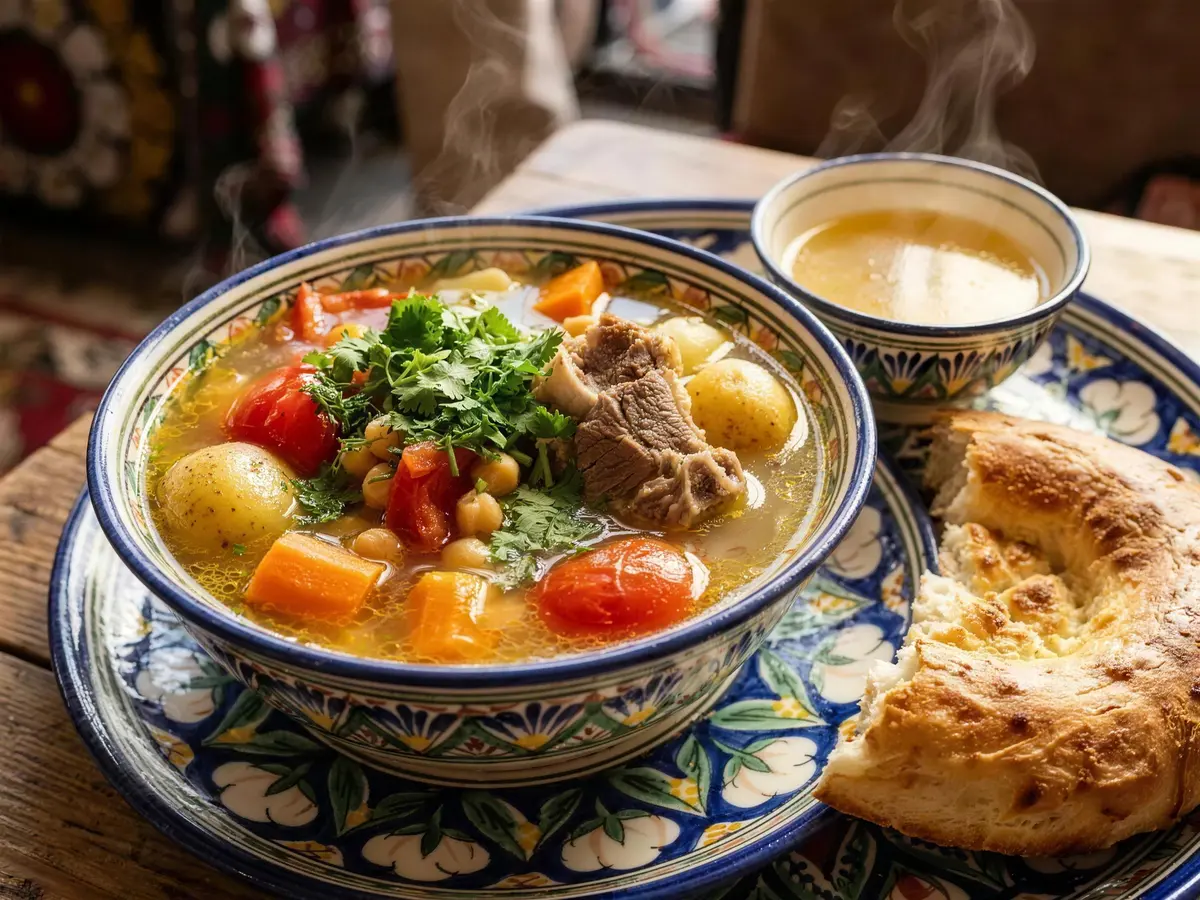
Shurpa
A slow-simmered Uzbek lamb soup of bone-in lamb, chickpeas, and large chunks of vegetables in a clear, fragrant broth. The chickpeas need soaking in cold water for 6 to 8 hours before you start cooking, so plan ahead. Seasoned with cumin and coriander, it is served with plenty of cilantro and flatbread, the broth often drunk alongside the meat and vegetables.
Ingredients
- 800 glamb on the bone
- 3000 mlwater
- 150 gchickpeas
- 500 gpotatoes
- 200 gcarrots
- 200 gonion
- 1 bell pepper
- 200 gtomatoes
- 1 tspcumin
- 1 tspground coriander
- 2 bay leaves
- 4 tbspfresh cilantro
- 2 tspsalt
- 0.5 tspblack peppercorns
Method
- Soak the chickpeas in plenty of cold water for 6 to 8 hours or overnight, then drain.
- Put the lamb on the bone in a large pot with the water, bring to a boil, and skim off the foam carefully for the first 15 to 20 minutes. Add the peppercorns, bay leaves, and the drained chickpeas.
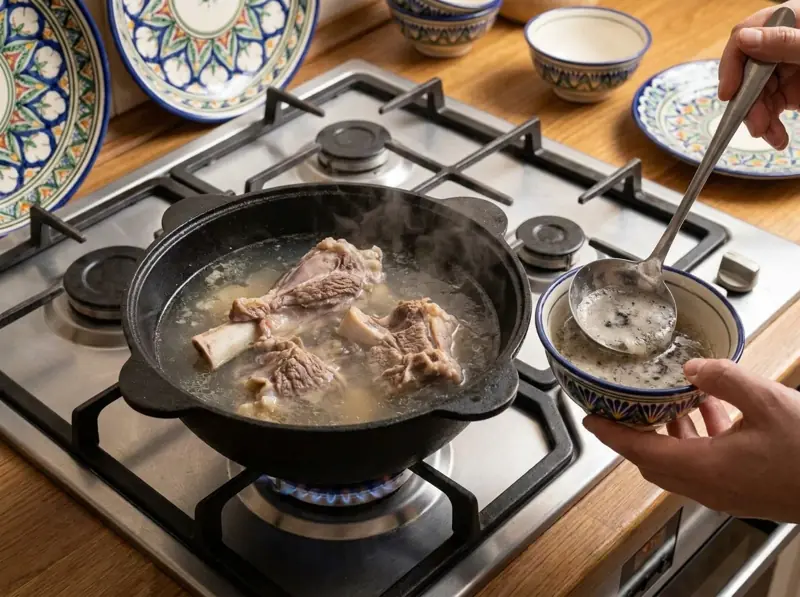
- Simmer gently, partly covered, for about 1 hour, until the lamb and chickpeas are tender.
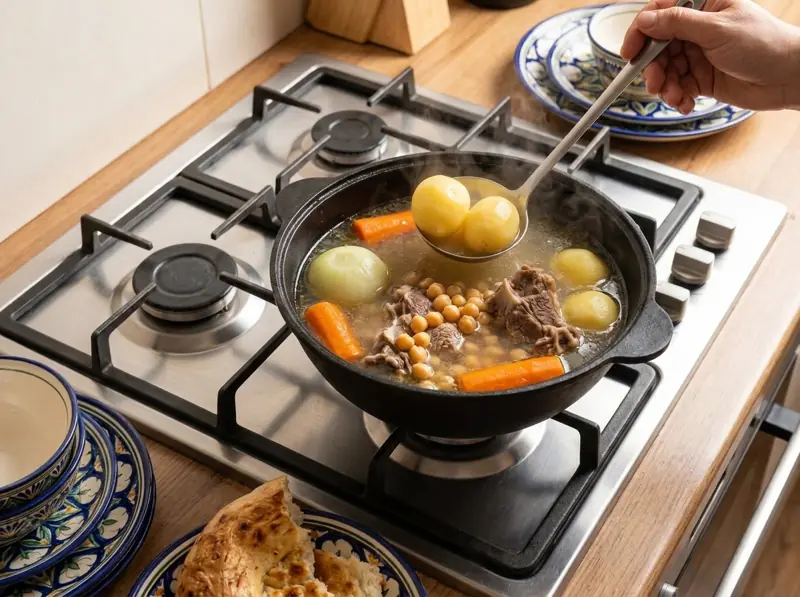
- Cut the carrots into thick chunks and the onion into wedges; add them and simmer 15 minutes.
- Cut the potatoes into large pieces (whole if small, halved if medium) and add with the salt and cumin. Simmer 15 minutes.
- Cut the bell pepper and tomatoes into big pieces, add them with the ground coriander, and simmer 10 minutes more, until everything is tender but holding its shape.
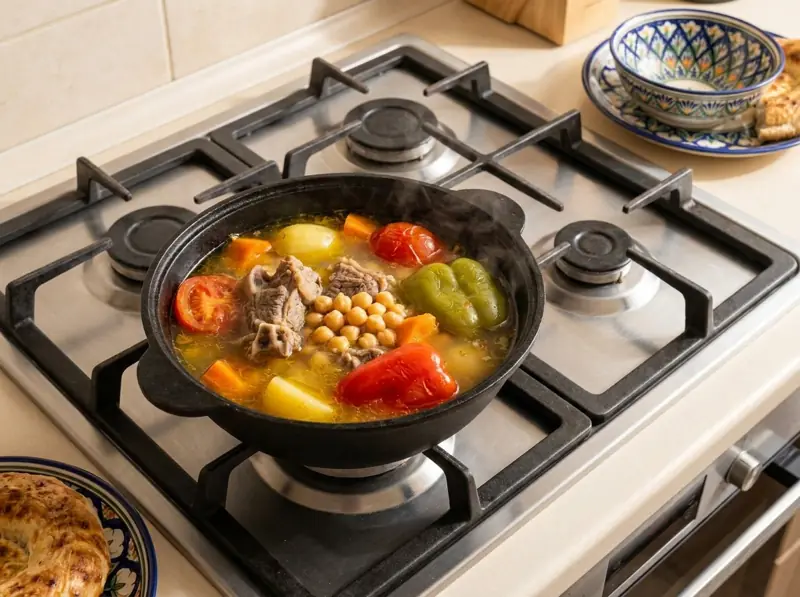
- Take off the heat and rest 10 minutes. Serve hot with lots of chopped cilantro, with the broth alongside the meat and vegetables.
FAQ
Kaynatma is the version where lamb, chickpeas and vegetables go straight into the pot and simmer gently together, giving a clear, light broth. Kovurma sears the meat and vegetables in fat first, then adds the water, so the finished soup turns out richer, darker and more fatty. This recipe follows the kaynatma method. Both approaches are traditional — the choice mostly comes down to how rich you want the broth to taste.
Shurpa is meant to be a soup of chunks: the lamb and vegetables are eaten with a fork like a main course, and the broth is drunk on the side or afterward. Carrots, potatoes and peppers go in whole or halved rather than diced, which is why they need the staggered simmering times in the recipe to become tender without falling apart. Cutting everything small turns the dish into an ordinary vegetable soup and strips it of the presentation that defines shurpa. The large cut is also practical — it lets each vegetable finish cooking at the right point in the simmer instead of turning to mush.
Chickpeas are optional, but the version made with them, nohat shurpa, is a well-known variety. They add heartiness and a slightly creamy texture to the broth once they soften. If you use them, soak the chickpeas in cold water for 6 to 8 hours or overnight first — unsoaked chickpeas will not be tender by the time the lamb is done. Without chickpeas, simply skip that step and continue the recipe as written; the simmer times for the meat and vegetables stay the same.
The classic version uses lamb, but beef on the bone works well too and gives a similarly rich broth from the bone and marrow. A chicken version exists and cooks faster since chicken becomes tender well before an hour of simmering, so add the vegetables earlier than the lamb version calls for. Whatever meat you choose, keep it on the bone and keep the vegetables in large pieces — that is what makes the soup shurpa rather than an ordinary meat and vegetable soup.
Shurpa is traditionally served with flatbread — non or lavash — and a generous scattering of fresh herbs, most often cilantro, over the top. In many households the broth is served on its own in a small bowl, called a piala, and drunk first or alongside, while the meat and vegetables are eaten from a plate like a main course. A simple sliced-onion or tomato salad on the side cuts through the richness of the lamb broth nicely. If you like heat, offer chili paste or fresh chili separately so everyone can add as much as they want.
Keep browsing
More dishes from the Uzbek archive — picked by overlap with what you're cooking now.
Recipes by email
One letter a week: a recipe picked for your taste, plus whatever is new on the site. Unsubscribe in one click.
Welcome gift: Sergei's cookbook (e-book).
By subscribing you agree to the privacy policy.
Tell us what you like to cook (30 seconds) →
Join the conversation
Comments
No comments yet — be the first!