Roast the beets in foil in advance (180–190 °C, 40–70 min) — this is the single most important step. Roasted beets give a deep, sweet, caramelised flavour and hold their vivid colour without a ton of acid. If you want a borscht that looks and smells "wow", start here.
Braise the beets separately and add them last, 7–12 minutes before the end. This is the direct guarantee of a ruby colour and proper texture instead of a murky mush. When beets cook with everything else for a long time, the colour turns dull and the flavour goes flat. Separate braising (with tomato and acid) plus late addition — that is classic restaurant technique.
Let the borscht rest at least 4–6 hours, ideally overnight in the fridge. This is the step that turns "just borscht" into "really good borscht". The acidity softens, all the flavours merge into one bouquet, the colour deepens. Almost every chef and grandmother agrees: yesterday's borscht is always better than fresh. Serve with garlic buns and a slice of cured lard.
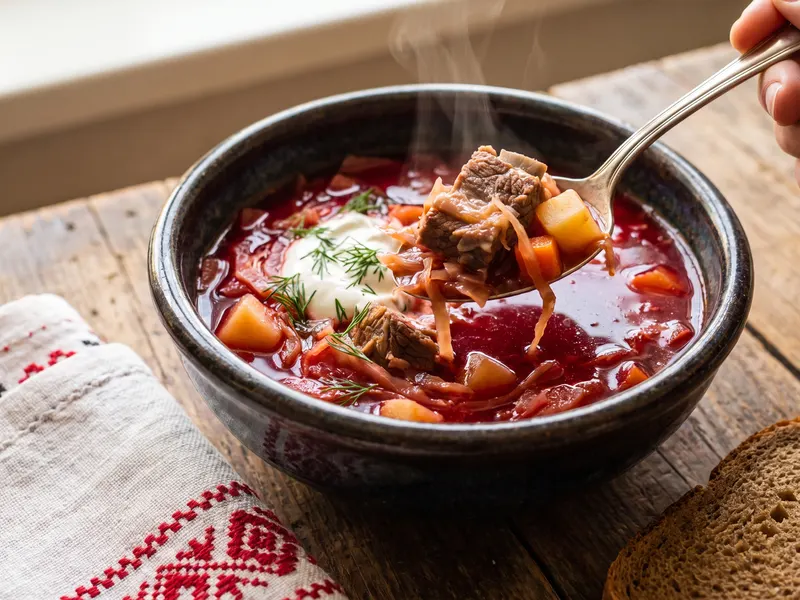
Borscht
Borscht is a traditional Ukrainian soup made from beets, cabbage, potatoes, carrots and meat. Its deep red color and rich taste make it popular not only in Ukraine, but also in many other countries.
Key Ingredients
What you'll need
Ingredients
- 500 gSee recipes with beef on the bone
beef on the bone (for broth)
i - 2.5 liters
- 1-2 medium
- 3-4 mediumSee recipes with potatoes
potatoes
i - 1 largeSee recipes with carrot
carrot
i - 1 large
- 200 gSee recipes with white cabbage
white cabbage
i - 2-3 clovesSee recipes with garlic
garlic
i - 2 tbspSee recipes with tomato paste
tomato paste
i - 1 tbspSee recipes with vinegar
vinegar (or a pinch of citric acid)
i - 1 tspSee recipes with sugar
sugar (optional)
i - for fryingSee recipes with vegetable oil
vegetable oil
i - to tasteSee recipes with salt and pepper
salt and pepper
i
How to make it
Instructions
- 1
Wash the meat, pour cold water over it and bring to a boil. Remove the foam, reduce the heat, add a bay leaf and a few black peppercorns, and cook on low heat for 1.5-2 hours. Remove the meat, separate from bones and cut into small pieces. Strain the broth.

- 2
Cut the beet into slices and fry in a pan with vegetable oil, vinegar and a little broth. Stew under a lid on low heat until soft. Cut carrots and onions into small cubes and fry in vegetable oil until golden. Cut potatoes into cubes and cabbage into thin strips.
- 3
Add potatoes to the boiling broth and cook for 10 minutes.
- 4
Add fried carrots and onions, stewed beets, cabbage and tomato paste. Cook for 10-15 minutes until the vegetables are ready.
- 5
5 minutes before the end, add salt, pepper, sugar (optional), finely chopped garlic and bay leaf. Let the borscht stand under a lid for about 10 minutes before serving.

Frequently Asked Questions
Why did my borscht turn brown instead of red?
Beets lose their colour when cooked too long or without acid. Add a splash of vinegar or lemon juice to the beets while braising them, and add them to the pot only at the very end — 7–12 minutes before serving. Roasting the beets in foil beforehand also helps lock in that deep ruby colour.
Can I make vegetarian borscht?
Yes — replace the beef broth with a rich mushroom broth (dried porcini work best) or a vegetable broth with a piece of smoked paprika for depth. Skip the meat entirely or add a handful of white beans for protein. The rest of the recipe stays the same.
What to serve with borscht?
The classic pairing is a dollop of sour cream, garlic pampushky (Ukrainian garlic buns), and a slice of dark rye bread. Cured lard (salo) on bread is the traditional Ukrainian accompaniment. Fresh dill on top is not optional — it's part of the flavour.
Can I freeze borscht?
Yes, borscht freezes very well for up to 3 months. Freeze it without the sour cream — add that fresh when reheating. Thaw overnight in the fridge and reheat gently on the stove. The flavour actually deepens after freezing.
My borscht tastes flat — how do I fix it?
Borscht needs a careful balance of sweet, sour, and salt. Add a teaspoon of sugar if it tastes too sharp, a splash of vinegar or a squeeze of lemon if it tastes dull. Taste at the very end and adjust. Also make sure the broth was cooked long enough — a thin broth is the most common reason borscht lacks depth.


Join the conversation
Comments
Loading comments…