
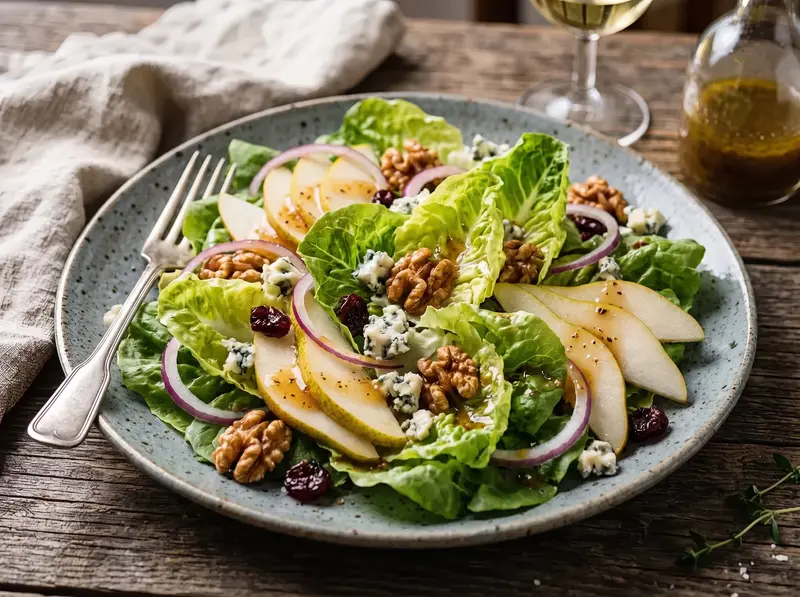
Roquefort-Salat
Roquefort-Salat ist ein französischer Salat rund um Roquefort, den kräftigen Blauschimmelkäse aus Schafsmilch, der in den Kalksteinhöhlen von Roquefort-sur-Soulzon reift, hier kombiniert mit süßer Birne und gerösteten Walnüssen. Gemischte Blattsalate tragen dünne rote Zwiebelringe, Birnenscheiben, getrocknete Kirschen oder Cranberrys und zerbröckelten Roquefort, alles mit einem Honig-Senf-Dressing angemacht, das den kräftigen Käse mit den süßeren Zutaten verbindet. Das Zusammenspiel zwischen dem höhlengereiften Käse und den knackigen Nüssen macht jeden Bissen markant und einprägsam.
Zutaten
- 1 KopfBlattsalat
- 1/2 TasseWalnüsse, leicht geröstet
- 1 rote Zwiebel, in dünne Ringe
- 1 reife Birne, entkernt und dünn geschnitten
- 1/2 Tassegetrocknete Kirschen oder Cranberrys
- 100 gRoquefort-Käse, in kleine Stücke
- 2 ELRotweinessig
- 1 TLDijon-Senf
- 1 TLHonig
- 4 ELOlivenöl
- nach GeschmackSalz und Pfeffer
1 Tasse = 240 ml
Zubereitung
- Lösen Sie die Blätter des Salatkopfes ab, waschen Sie sie gründlich in kaltem Wasser und lassen Sie sie abtropfen.
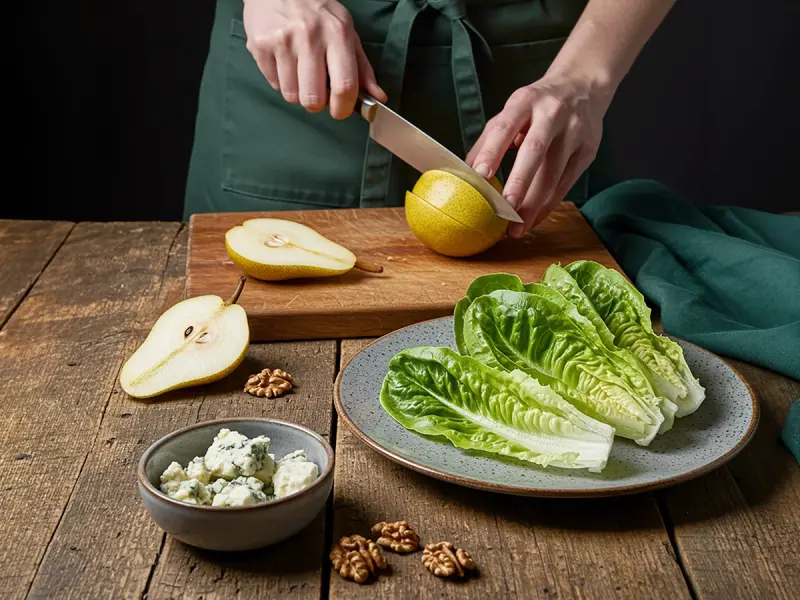
- Schneiden Sie die rote Zwiebel in dünne Halbringe. Entkernen Sie die Birne und schneiden Sie sie dünn. Rösten Sie die Walnüsse ohne Fett in einer Pfanne goldbraun an. Schneiden oder zerbröseln Sie den Roquefort-Käse.
- Verteilen Sie die Salatblätter auf einer großen Platte oder auf einzelne Teller.
- Streuen Sie rote Zwiebelringe, Birnenscheiben, Walnüsse, getrocknete Kirschen oder Cranberrys und Roquefort-Käse darüber.
- Verquirlen Sie in einer kleinen Schüssel den Dijon-Senf, den Honig, den Rotweinessig, Salz und Pfeffer. Rühren Sie das Olivenöl nach und nach ein, bis das Dressing glatt und leicht angedickt ist. Gießen Sie es über den Salat, heben Sie alles vorsichtig unter und servieren Sie ihn sofort.
Fragen
Jeder gute Blauschimmelkäse funktioniert, aber der Charakter des Salats ändert sich je nach Wahl. Gorgonzola Dolce ist die mildeste und cremigste Option, gut für alle, die Roquefort zu intensiv finden, während Gorgonzola Piccante und englischer Stilton näher an seiner Intensität liegen, wobei Stilton einen nussigen Abgang mitbringt. Dänischer Blauschimmel ist weiter verbreitet und günstiger, mit scharf-salzigem Geschmack; ein milder blau geäderter Brie funktioniert ebenfalls, wenn Sie nur einen Hauch Blauschimmel statt eines deutlichen Schlags wollen. Für die größte Ähnlichkeit mit dem typisch würzigen Geschmack von Roquefort aus Schafsmilch suchen Sie nach französischem Bleu d'Auvergne oder Bleu des Causses.
Schneiden Sie die Zwiebel in dünne Ringe und weichen Sie sie 10 Minuten in kaltem Wasser ein, dann abgießen — das zieht die schwefligen Verbindungen heraus, die für die Schärfe verantwortlich sind, ohne Farbe oder Geschmack zu verlieren. Für ein gründlicheres Mildern weichen Sie die Ringe stattdessen 15-20 Minuten in kaltem Wasser mit einem Esslöffel Weißwein- oder Apfelessig ein. Alternativ legen Sie sie 30 Minuten in Rotweinessig mit einer Prise Zucker und Salz schnell ein — daraus wird ein süß-scharfes Würzmittel, das den Roquefort ergänzt statt mit ihm zu konkurrieren.
Rohe Walnüsse schmecken flach und leicht bitter und haben eine weiche, fast papierartige Textur; das Rösten aktiviert ihre Öle, vertieft den Nussgeschmack und bringt die Knusprigkeit, die mit dem cremigen Käse und der weichen Birne kontrastiert. Verteilen Sie sie in einer Schicht in einer trockenen Pfanne bei mittlerer Hitze und rühren Sie 4-6 Minuten häufig um, bis sie duften und sich leicht verdunkeln — sie verbrennen schnell, besonders an den Rändern — oder rösten Sie sie im Ofen bei 170°C für 8-10 Minuten. Lassen Sie sie vollständig abkühlen, bevor Sie sie hinzufügen, denn warme Nüsse lassen die Blätter welken und geben Öl ins Dressing ab; luftdicht aufbewahrt halten sie sich etwa eine Woche.
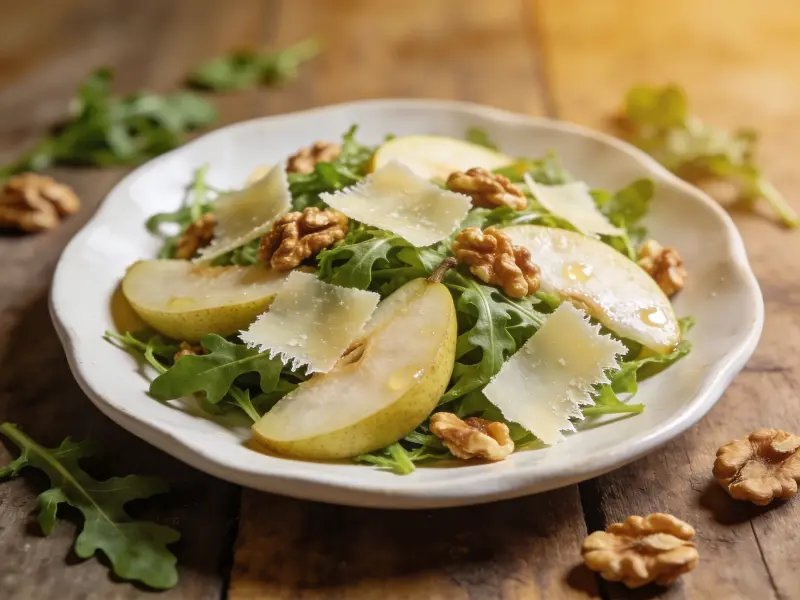
Getrocknete Cranberries sind der nächste Ersatz, mit einem fast identischen süß-sauren Geschmack und derselben zähen Textur, und oft leichter erhältlich. Getrocknete Heidelbeeren oder getrocknete Granatapfelkerne funktionieren genauso, oder für etwas Frisches geben frische Granatapfelkerne einen saftigen Farb- und Säureschub, und halbierte rote Trauben bringen natürliche Süße ohne die zähe Textur. Wenn frische Feigen Saison haben, passen ein paar Scheiben wunderbar zu Birne und Roquefort — eine weitere Version dieser Kombination finden Sie in unserem Rucola-Birnen-Walnuss-Salat.
Wickeln Sie ihn locker in Wachspapier oder Käsepapier statt in Frischhaltefolie, die Feuchtigkeit einschließt und die Oberfläche schmierig macht, und legen Sie ihn dann in einen locker geschlossenen Behälter oder einen Zip-Beutel mit etwas Luft. Lagern Sie ihn im Gemüsefach, dem wärmsten Teil des Kühlschranks, denn Roquefort hält sich am besten bei 8-12°C, und meiden Sie die Rückwand, wo er teilweise anfrieren kann. Gut eingewickelt hält sich ein angeschnittenes Stück 3-4 Wochen; sieht die Oberfläche trocken aus, einfach abschaben. Nehmen Sie den Käse etwa 30 Minuten vor dem Servieren aus dem Kühlschrank, denn Kälte dämpft seinen Geschmack.
Bewerten
Rezepte per E-Mail
Ein Brief pro Woche: ein Rezept nach Ihrem Geschmack und alles Neue auf der Seite. Abmelden mit einem Klick.
Als Geschenk: Sergeis Kochbuch (E-Book).
Mit der Anmeldung akzeptieren Sie die Datenschutzerklärung.
Verraten Sie uns, was Sie gern kochen (30 Sekunden) →Weiter stöbern
Weitere Gerichte aus dem Archiv — ausgewählt nach Überschneidung mit dem, was du gerade kochst.

An der Diskussion teilnehmen
Kommentare (1)
The knife work is what makes this rockfor salad special. Every piece of lettuce cut to the same size means every forkful is balanced. It's the kind of detail you taste but can't quite identify.