

Sauerkraut-Schtchi
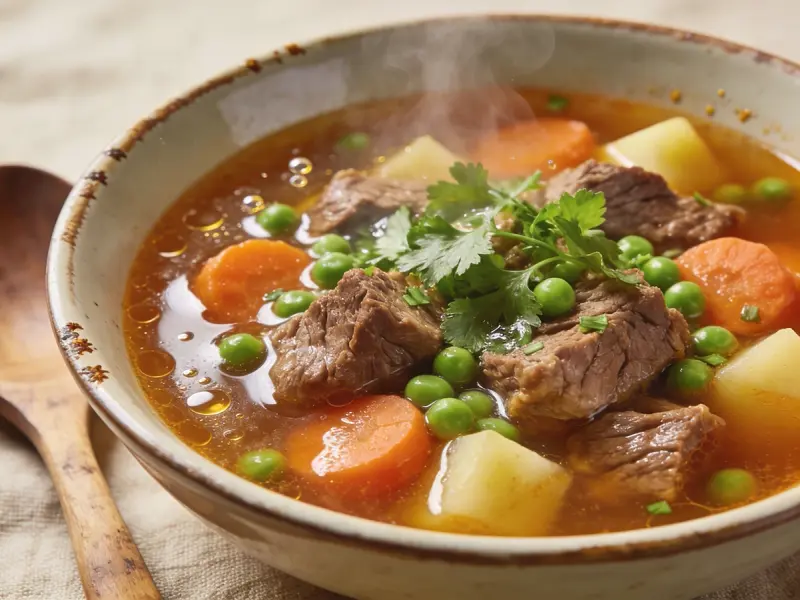
Die Seele der russischen Küche — eine kräftige, dunkle Suppe aus geschmortem Sauerkraut und Rindfleisch am Knochen, stundenlang langsam gegart. Wird am nächsten Tag noch besser und ist die einzige Suppe, die durch Einfrieren gewinnt.
Zutaten
- 1 kgRindfleisch am Knochen
- 600-700 gSauerkraut
- 4-5 StückKartoffeln
- 1 Stückgroße Karotte
- 1 Stückgroße Zwiebel
- 2 ELTomatenmark
- 3-4 ZehenKnoblauch
- 3 ELPflanzenöl
- 2 StückLorbeerblätter
- 5-7 Stückschwarze Pfefferkörner
- Salz nach Geschmack
- frischer Dill und Petersilie
- saure Sahne
Zubereitung
- Fleisch mit kaltem Wasser bedecken, aufkochen, abschäumen und auf Minimum reduzieren. Pfeffer hinzufügen und zugedeckt 2-2.5 Stunden kochen.
- Falls Sauerkraut zu sauer ist, leicht abspülen. In Öl 5-7 Minuten dünsten, Tomatenmark und Brühe hinzufügen. Bei niedriger Hitze 1-1.5 Stunden schmoren.
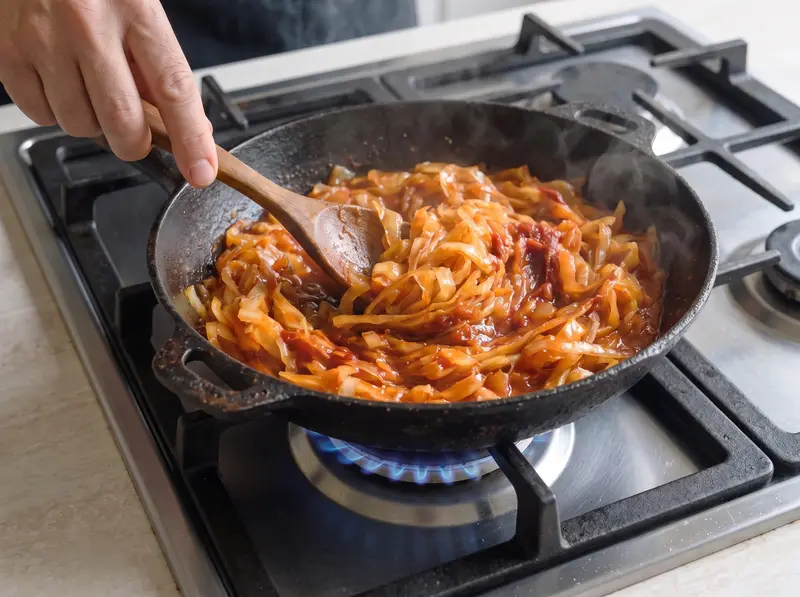
- Zwiebel fein hacken, Karotte raspeln. Zwiebel dünsten, Karotte hinzufügen und weitere 5-7 Minuten kochen.
- Brühe abseihen. Kartoffeln hinzufügen, 10 Minuten kochen. Sauerkraut und Gemüse dazugeben. Fleisch vom Knochen lösen und zurück in die Suppe geben. Lorbeerblätter hineingeben und weitere 10-15 Minuten kochen.
- Abschmecken. Bei Bedarf etwas Sauerkrautsaft hinzufügen. Vom Herd nehmen, Lorbeerblätter herausnehmen, Knoblauch und Kräuter einrühren, zudecken. Mindestens 1 Stunde ruhen lassen — am besten über Nacht im Kühlschrank.
- Mit saurer Sahne und frischen Kräutern servieren.
Fragen
Sauerkraut verleiht der Suppe eine charakteristische Säure und Tiefe, die mit frischem Kohl unmöglich zu erreichen ist. Die Milchsäure macht es auch nahrhafter. Das Sutuochnye-Shchi — über Nacht gereift — wird immer mit Sauerkraut zubereitet.
Wenn das Sauerkraut sehr sauer ist, spüle es kurz unter kaltem Wasser ab. Eine Prise Zucker oder mehr Möhren hilft ebenfalls, die Säure auszubalancieren. Nicht zu gründlich spülen — ein Teil dieser Säure ist wesentlich für den Geschmack.
Es ist Shchi, das am Vortag gekocht und über Nacht geruht hat — traditionell in einem abkühlenden Ofen. Das Kollagen aus dem Fleisch wird zu Gelee, das Sauerkraut gibt sein volles Aroma ab. Am nächsten Tag aufgewärmt ist es ein Gericht für sich.
Ja — mageres Shchi (postnye) ist ein Klassiker des orthodoxen Fastens. Ersetze Fleisch durch getrocknete oder frische Steinpilze und Pflanzenöl. Pilzbrühe mit Sauerkraut ergibt einen reichen Geschmack ganz ohne Fleisch.
Die häufigsten Ursachen sind zu wenig Sauerkraut oder eine schwache Brühe. Verwende Knochenbrühe, kein Wasser. Das Sauerkraut vorher separat mit Zwiebeln und Möhren schmoren entfaltet das Aroma. Und nicht hetzen: gutes Shchi braucht mindestens 1,5 Stunden.
Bewerten
Rezepte per E-Mail
Ein Brief pro Woche: ein Rezept nach Ihrem Geschmack und alles Neue auf der Seite. Abmelden mit einem Klick.
Als Geschenk: Sergeis Kochbuch (E-Book).
Mit der Anmeldung akzeptieren Sie die Datenschutzerklärung.
Verraten Sie uns, was Sie gern kochen (30 Sekunden) →Weiter stöbern
Weitere Gerichte aus dem Archiv — ausgewählt nach Überschneidung mit dem, was du gerade kochst.


An der Diskussion teilnehmen
Kommentare (1)
Season this sauerkraut shchi in stages, not all at once. I add salt three times: when the beef on the bone goes in, halfway through cooking, and a final adjustment right before serving. Each addition builds on the last.