
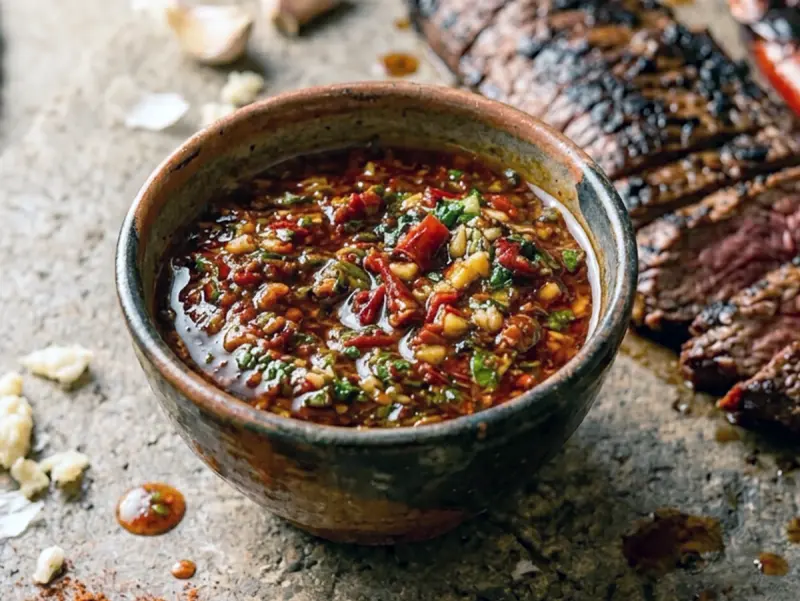
Chimichurri Rojo (chimichurri rouge argentin)
Le chimichurri rojo est la version rouge du chimichurri argentin, la sauce crue de persil, d'ail, d'origan, de vinaigre de vin et d'huile qui accompagne la viande grillée. Le rouge vient du pimentón dulce (paprika doux) et de l'ají molido, le piment séché concassé du placard argentin ; certains cuisiniers y ajoutent aussi du poivron rouge haché (morrón), et cette recette prend cette voie, en noircissant d'abord le poivron sur la flamme. Tout se hache au couteau, se mélange au vinaigre, puis se couvre d'huile. Comptez environ 30 minutes de travail ; le poivron sue 10 minutes sous une assiette pendant que vous hachez le reste, et la sauce terminée demande 30 minutes de repos sur le plan de travail avant d'avoir le bon goût. Elle donne environ 350 ml ; une portion représente environ 3 cuillères à soupe.
Ingrédients
- 1 poivron rouge grillé
- 30 gpersil plat frais
- 4 gousses d'ail
- 0.5 petit oignon
- 2 c. à cafépaprika doux
- 1 c. à caféorigan séché
- 0.5 c. à caféají molido ou piment rouge en flocons
- 3 c. à soupevinaigre de vin rouge
- 1 c. à soupejus de citron
- 100 mlhuile d'olive vierge extra
- 0.5 c. à cafésel
Préparation
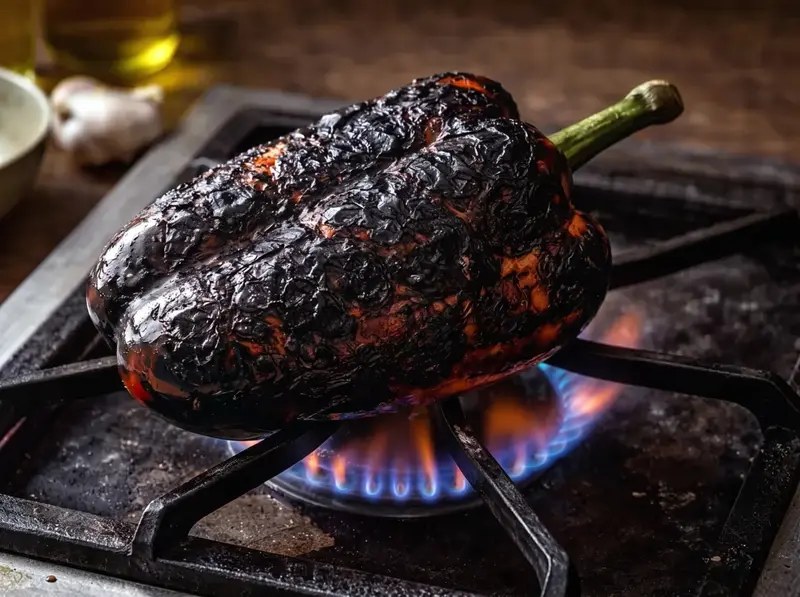
- Noircissez le poivron. Si vous partez d'un poivron rouge cru, posez-le entier directement sur un brûleur à gaz à feu vif, ou sous le gril du four au maximum, et tournez-le à la pince toutes les deux minutes pendant 10 à 12 minutes, jusqu'à ce que la peau soit noire et cloquée sur toutes les faces. Mettez-le dans un bol, couvrez d'une assiette et laissez 10 minutes : la vapeur décolle la peau. Retirez la peau brûlée avec les doigts ou le dos d'un couteau, sous un filet d'eau froide là où elle résiste ; ôtez le pédoncule et les pépins. Un poivron grillé en bocal s'utilise tel quel : égouttez-le et épongez-le avec du papier absorbant.
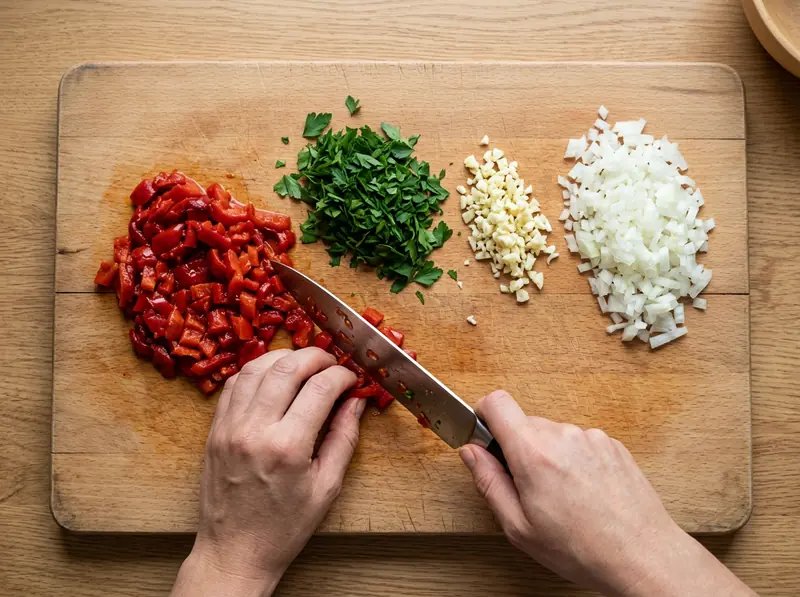
- Hachez au couteau. Coupez le poivron pelé en petits dés d'environ 3 mm. Hachez finement les feuilles de persil avec leurs tiges fines, hachez l'ail et coupez l'oignon aussi petit que possible. Les recettes argentines hachent le chimichurri au couteau, et les morceaux restent ainsi bien distincts. Si vous prenez un robot, mettez-y tout sauf les liquides et donnez 5 à 8 impulsions courtes ; arrêtez tant que l'on distingue encore le poivron du persil, car quelques secondes de plus et c'est une pâte.
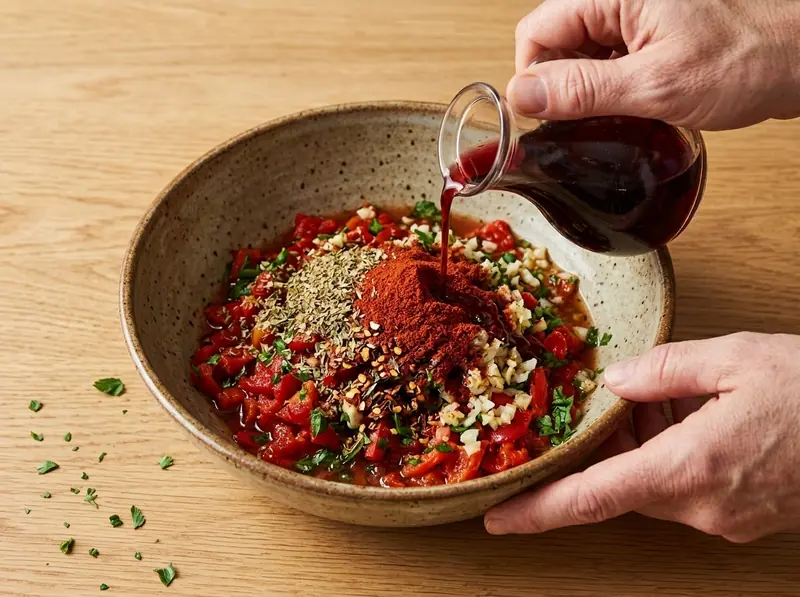
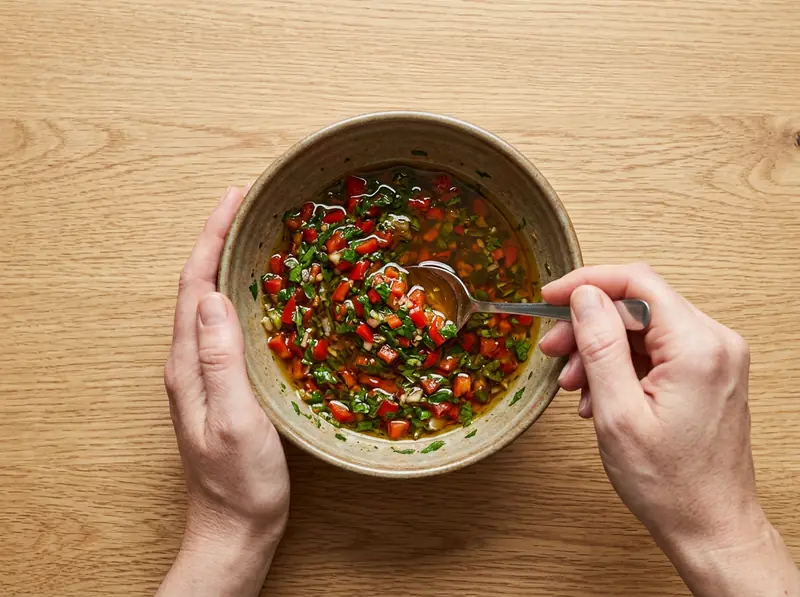
- Assaisonnez et ajoutez le vinaigre. Versez le hachis dans un bol, ajoutez le paprika doux, l'origan, l'ají molido et le sel. Versez le vinaigre et le jus de citron et remuez jusqu'à ce que le paprika soit dissous et le liquide rouge brique. Laissez 5 minutes, le temps que l'origan séché et le piment s'imbibent d'acide et s'attendrissent avant que l'huile ne les enrobe.
- Ajoutez l'huile. Versez l'huile d'olive et mélangez. La sauce n'émulsionne pas et n'a pas à le faire : l'huile flotte au-dessus du vinaigre et on la remélange à la cuillère à chaque service. Goûtez sur un morceau de pain et corrigez d'une pincée de sel ou d'une cuillère à café de vinaigre si elle paraît plate.
- Laissez reposer avant de servir. Couvrez et laissez à température ambiante au moins 30 minutes. Juste après le mélange, l'ail cru est dur et le vinaigre reste à part ; une demi-heure plus tard, les deux sont passés dans l'huile et la sauce a un seul goût. Si vous la préparez plus longtemps à l'avance, gardez-la au réfrigérateur et sortez-la 20 minutes avant de manger, car l'huile d'olive se trouble et épaissit au froid. Remuez et servez.
Questions
Le chimichurri vert, c'est du persil, de l'ail, de l'origan, du vinaigre et de l'huile : vif et herbacé. Le chimichurri rojo garde cette base et y ajoute du paprika doux, de l'ají molido et, dans certaines versions, du poivron rouge ; il est donc plus doux, plus épais et rouge brique. Dans cette recette, le poivron est d'abord noirci, ce qui apporte un peu de fumé. Le vert tranche le gras d'un morceau comme l'entrecôte ; le rouge va bien avec une viande plus maigre, du chorizo et des légumes grillés. Rien n'empêche de poser les deux sur la table.
Gardez-le au réfrigérateur dans un bocal en verre fermé et consommez-le dans les 4 jours. Il contient de l'ail cru et du poivron frais sous huile : ce n'est pas une conserve, et il ne doit pas rester à température ambiante plus que les deux heures d'un repas. Le goût est à son meilleur du premier au troisième jour ; ensuite le persil fonce et l'ail s'éteint. Pour le garder plus de 4 jours, congelez-le dans un bac à glaçons, mettez les cubes dans un sac et utilisez-les dans les 3 mois. Décongelé, il est un peu plus liquide mais reste bon en marinade.
Oui, et il est meilleur au couteau. Coupez le poivron grillé et l'oignon en petits dés, hachez finement le persil et l'ail, puis incorporez le paprika, l'origan, l'ají molido, le vinaigre et l'huile. Chaque morceau reste distinct et l'huile reste rouge et limpide. Le mixeur réduit le persil et le poivron en pâte, et la sauce se trouble et perd sa texture. Si vous prenez quand même un robot, 5 à 8 impulsions courtes sont la limite.
Le choripán vient en premier : un chorizo grillé dans un petit pain fendu, avec une cuillerée de chimichurri. La sauce sert aussi de marinade pour des hauts de cuisse de poulet ou un poisson à chair ferme, 30 minutes au réfrigérateur avant le gril ; mettez d'abord de côté une portion pour la table, car une sauce qui a touché de la viande crue ne se sert pas. Versez-en sur des aubergines, des courgettes ou des patates douces grillées, ou sur une tranche de provoleta à la sortie de la poêle. Deux cuillerées mélangées à des pommes de terre bouillies encore tièdes donnent une salade rapide.
Tel quel, il est doux : le paprika doux donne la couleur et la douceur, et la demi-cuillère à café d'ají molido apporte une chaleur de fond. Pour plus de piquant, mettez une cuillère à café entière d'ají molido, ou remplacez une demi-cuillère à café de paprika doux par du paprika fort. Pour aucun piquant, supprimez l'ají ; la sauce reste rouge grâce au paprika et au poivron. Montez par petites touches et goûtez après les 30 minutes de repos, car le piment gagne en force en s'hydratant.
Continuez à parcourir
D’autres plats des archives — choisis pour leur proximité avec ce que vous êtes en train de cuisiner.
Des recettes par e-mail
Une lettre par semaine : une recette choisie selon vos goûts et les nouveautés du site. Vous pouvez la désactiver en un clic.
En cadeau : le livre de recettes de Sergei (e-book).
En cliquant sur le bouton, vous acceptez la politique de confidentialité.
Dites-nous ce que vous aimez cuisiner (30 secondes) →
Rejoignez la discussion
Commentaires
Aucun commentaire pour l'instant — soyez le premier !