
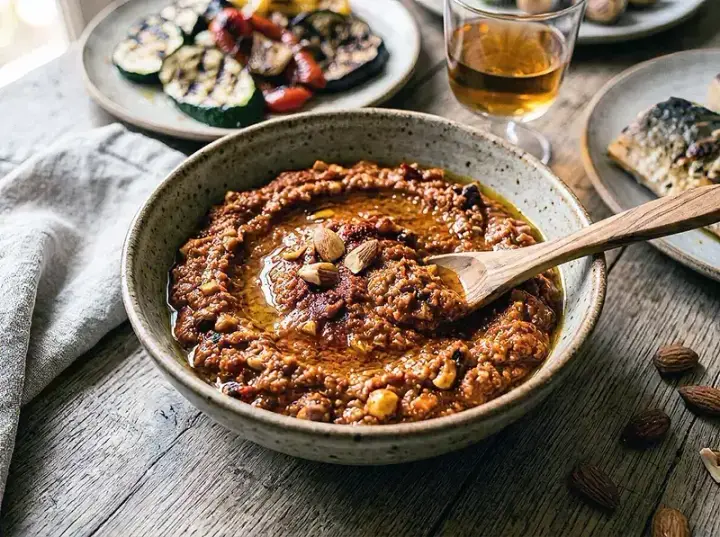
Romesco Sauce
A thick, brick-red Catalan sauce of roasted red peppers, toasted almonds, garlic, tomato, stale bread, and sherry vinegar, pounded together into a rustic paste with smoked paprika and good olive oil. Romesco is one of those sauces that makes everything it touches better — grilled vegetables, fish, roasted chicken, even a fried egg. It originates from the fishermen of Tarragona who needed a bold sauce for their catch, and it has not changed much since.
Ingredients
- 2 largeroasted red peppers
- 60 gblanched almonds
- 3 clovesgarlic
- 1 mediumripe tomato
- 1 slicestale white bread
- 1 tbspsherry vinegar
- 1 tspsmoked paprika
- 60 mlextra virgin olive oil
- to tastesalt
Method
- Toast the almonds in a dry skillet over medium heat, shaking the pan frequently, until they are golden and fragrant — about 4–5 minutes. Watch them carefully; they go from golden to burned in seconds. Set aside.
- In the same skillet, add a teaspoon of olive oil and fry the bread slice on both sides until golden and crisp, about 2 minutes. Remove. Add the whole garlic cloves (unpeeled) and the tomato (halved) to the skillet, cut side down. Cook until the garlic softens and the tomato chars slightly, about 4–5 minutes. Peel the garlic when cool enough to handle.
- Combine the roasted peppers, toasted almonds, fried bread (torn into pieces), garlic, tomato (skin removed), smoked paprika, sherry vinegar, and salt in a food processor or mortar.
- Pulse or pound until you have a thick, rough paste — not a smooth purée. Traditional romesco has visible texture from the almonds and bread. With the motor running (or while pounding), drizzle in the olive oil gradually until the sauce comes together. It should be thick enough to hold its shape on a spoon.
- Taste and adjust: it might need more vinegar for sharpness, more salt, or a pinch of cayenne for heat. Transfer to a jar. Romesco keeps refrigerated for up to a week and actually improves after a day as the flavors meld.
FAQ
Ñora (nyora) peppers are small, round, dried Catalan peppers with a sweet, mildly smoky flavor and almost no heat. They are the traditional base of romesco and give it a deeper, more complex taste than regular roasted red peppers. If you can find them, soak two ñoras in hot water for 30 minutes, then scrape out the soft inner flesh and discard the tough skin and seeds. If you can't find them — and most people outside Spain can't — roasted red peppers (jarred or fresh-roasted) with a teaspoon of smoked paprika produce a very close result.
Romesco is one of the most versatile sauces in Mediterranean cooking. Classic pairings: grilled calçots (Catalan spring onions), any grilled or roasted fish, roasted chicken thighs, grilled lamb chops, and charred broccoli or cauliflower. Less obvious but excellent: spread on toast and topped with a fried egg, tossed with warm pasta as a sauce, spooned over a baked potato, or used as a sandwich spread instead of mayo. It also makes a fantastic dip for crudités and breadsticks.
Yes. Hazelnuts are the most traditional substitute — many Catalan versions actually use hazelnuts instead of or alongside almonds. Toast them the same way. Pine nuts also work and give a slightly more buttery, delicate flavor. Walnuts are less traditional but fine in a pinch. For a completely nut-free version, use 2 tablespoons of sunflower seeds, toasted — the texture is slightly different but the sauce is still good. The bread provides most of the body, so the sauce works even without any nuts.
Three likely causes: too much liquid from the roasted peppers (drain them very thoroughly if using jarred, or pat dry with paper towels if using fresh-roasted), not enough bread (it's the main thickener — use at least 30g, well toasted), or too much olive oil added too fast (drizzle it slowly so the sauce emulsifies properly). To fix a thin romesco, pulse in more toasted bread or a handful of extra toasted almonds until it reaches the right thickness.
Romesco keeps in a sealed jar in the refrigerator for 7–10 days. Pour a thin layer of olive oil on top before sealing — it creates a barrier that keeps the sauce fresh longer. It freezes well for up to 3 months in an airtight container. Thaw overnight in the refrigerator. The texture may separate slightly after freezing; just stir well and add a small drizzle of olive oil to bring it back together. The flavor actually improves after a day or two in the fridge.
Rate this
Recipes by email
One letter a week: a recipe picked for your taste, plus whatever is new on the site. Unsubscribe in one click.
Welcome gift: Sergei's cookbook (e-book).
By subscribing you agree to the privacy policy.
Tell us what you like to cook (30 seconds) →Keep browsing
More dishes from the Spanish archive — picked by overlap with what you're cooking now.

Join the conversation
Comments (1)
The consistency of this romesco sauce is the difference between good and great. Too thick and it doesn't spread; too thin and it slides off. I add the liquid a tablespoon at a time until it coats the back of a spoon.