
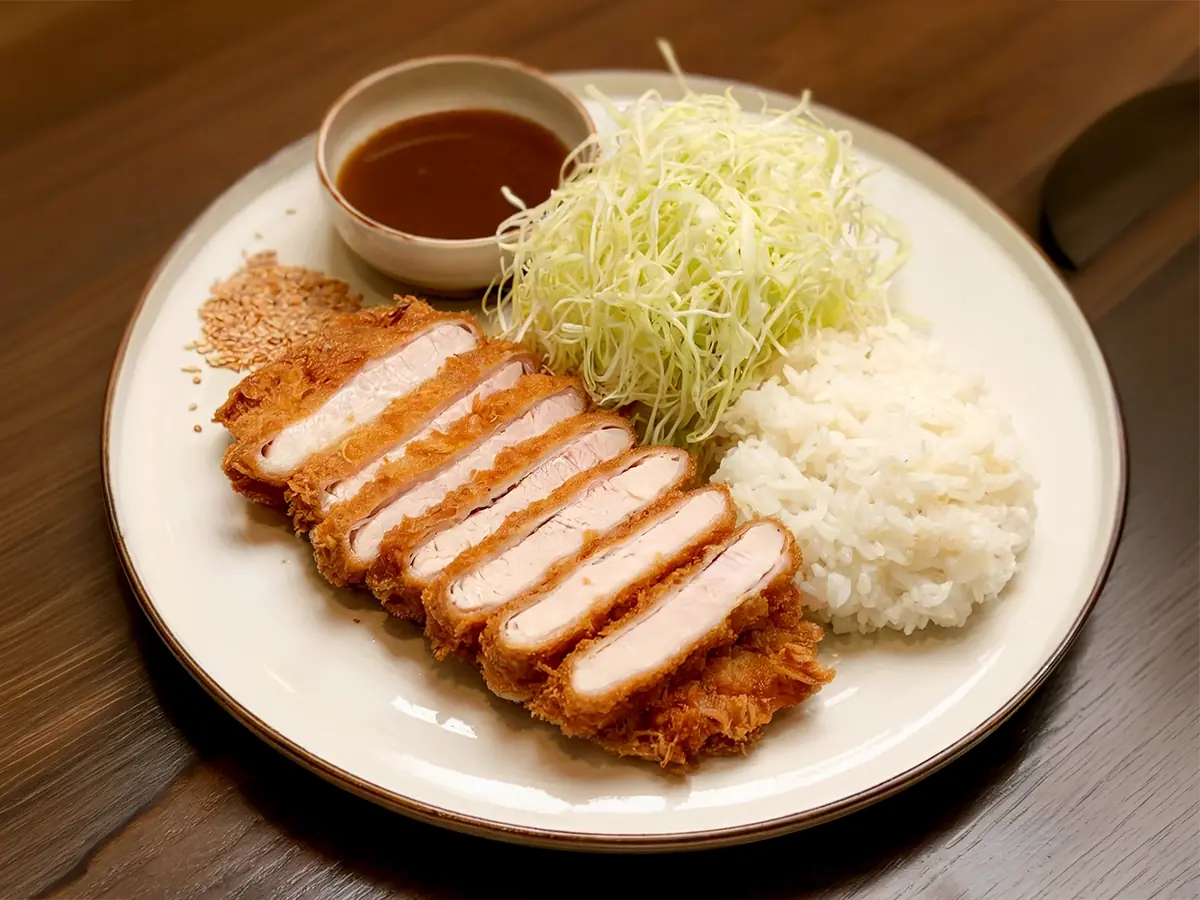
Tonkatsu
Le tonkatsu est un plat japonais très populaire — une côte de porc panée et frite. Un parfait exemple de l'adaptation des techniques culinaires occidentales à la cuisine japonaise.
Ingrédients
- 4 pièceslonge de porc désossée, d'environ 2 cm d'épaisseur
- 1/2 tassefarine
- 2 œufs légèrement battus
- 2 tasseschapelure panko
- pour la friturehuile végétale
- 1/2 tasseketchup
- 2 c. à soupesauce Worcestershire
- 2 c. à soupesauce soja
- 1 c. à soupesucre
- 1 c. à cafémoutarde
- selon le goûtsel et poivre noir
1 tasse = 240 ml
Préparation
- Aplatissez légèrement le porc pour obtenir une épaisseur régulière. Assaisonnez les deux faces de sel et de poivre.
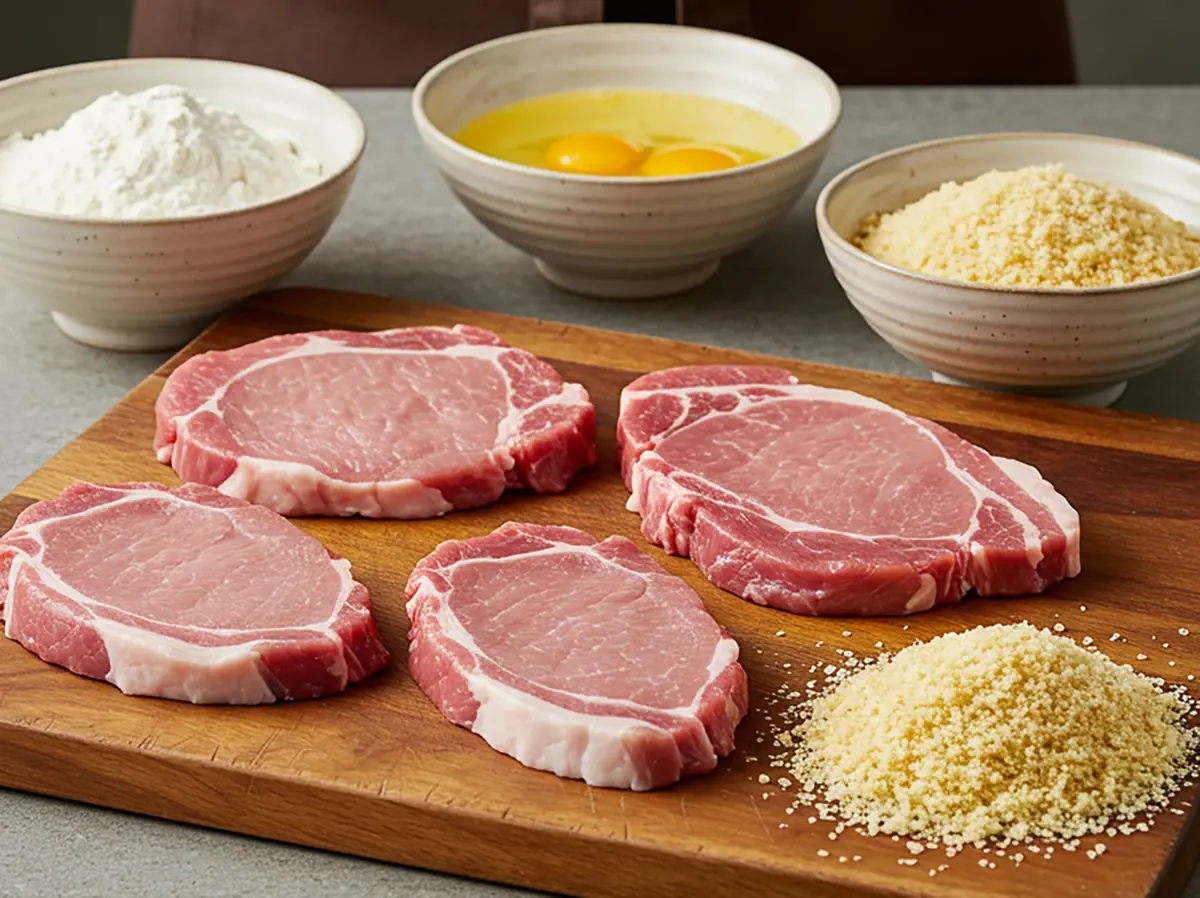
- Préparez trois assiettes creuses contenant respectivement la farine, les œufs battus et la chapelure panko. Passez chaque morceau de porc d'abord dans la farine, puis dans l'œuf et enfin dans la chapelure en appuyant bien pour la faire adhérer.
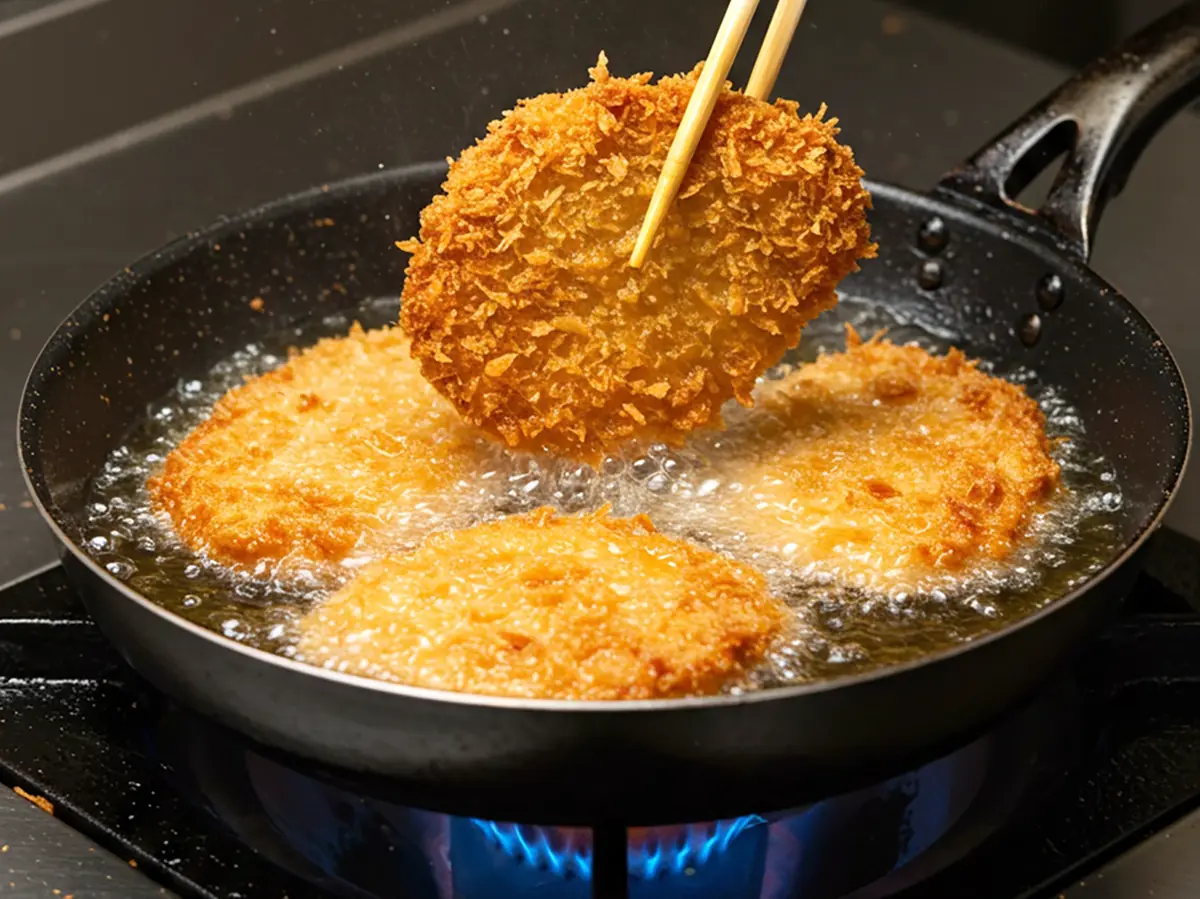
- Faites chauffer l'huile dans une poêle profonde ou une friteuse à 170 °C. Faites frire le porc 3 à 4 minutes de chaque côté jusqu'à obtenir une belle couleur dorée. Déposez sur du papier absorbant pour éliminer l'excédent d'huile.
- Pour la sauce : mélangez le ketchup, la sauce Worcestershire, la sauce soja, le sucre et la moutarde dans une petite casserole et faites chauffer à feu moyen en remuant constamment jusqu'à ce que la sauce épaississe, environ 5 minutes.
- Découpez le tonkatsu en tranches et servez accompagné de la sauce, de chou émincé et de riz.
Questions
Une panure qui tombe est presque toujours un problème d'humidité. Essuyez bien le porc avec du papier absorbant avant de paner — toute humidité de surface transforme la couche de farine en barrière de vapeur qui fait sauter la croûte pendant la friture. Respectez strictement la séquence en trois étapes : farine (couche fine, secouer l'excès), œuf battu, puis panko. Pressez fermement le panko avec les mains pour qu'il adhère. Laissez la côtelette panée reposer sur une grille pendant 5–10 minutes avant de la frire — cela permet à la panure de s'hydrater et de se coller. Faites frire à une température stable de 170–175°C ; si l'huile est trop froide la croûte absorbe le gras et glisse, si elle est trop chaude l'extérieur cuit avant que l'œuf ne coagule.
Les deux morceaux fonctionnent mais donnent des résultats différents. La longe de porc (rosu) est le choix traditionnel — elle a un chapeau de gras sur un bord qui garde la côtelette moelleuse et ajoute de la saveur. Le filet de porc (hire) est plus maigre et naturellement plus tendre, préféré par ceux qui veulent moins de gras. Pour la longe, incisez le chapeau de gras tous les 2 cm pour éviter que la côtelette ne se recroqueville dans la poêle. Aplatir légèrement (une ou deux fois avec le côté lisse du maillet, pas à plat) aide à attendrir la longe et crée une épaisseur uniforme pour une cuisson homogène, mais le filet ne doit pas être aplati du tout — il est déjà délicat.
Faites frire le tonkatsu à 170–175°C (340–347°F). À cette température une côtelette de 1,5 cm d'épaisseur prend environ 4–5 minutes au total, en la retournant une fois à mi-cuisson. Pour tester l'huile sans thermomètre, jetez quelques miettes de panko — elles doivent couler brièvement, puis remonter et grésiller régulièrement. Si elles grésillent immédiatement au contact (trop chaud) ou coulent simplement sans remonter (trop froid), ajustez. La côtelette est prête quand la croûte est d'un beau brun doré foncé et que la température interne atteint 63°C (145°F). Vérification rapide : appuyez légèrement sur le centre — il doit être ferme et élastique. Laissez reposer sur une grille 2–3 minutes avant de couper pour que les jus se redistribuent.
La sauce tonkatsu (aussi appelée 'sauce Worcester' au Japon) est épaisse, sombre, sucrée-salée et légèrement acidulée — plus proche d'une sauce HP fruitée ou d'un doux mélange ketchup-Worcestershire que d'une sauce soja légère. La version commerciale (Bull-Dog est la marque la plus connue) contient de la purée de légumes et de fruits (tomates, pruneaux, pommes) et est épicée avec des clous de girofle et du piment de la Jamaïque. Une version maison rapide : mélangez 3 cuillères à soupe de ketchup, 2 cuillères à soupe de sauce Worcestershire, 1 cuillère à soupe de sauce soja, 1 cuillère à café de sucre et une pincée de gingembre. Remuez bien et goûtez — ajustez avec plus de Worcestershire pour l'acidité ou plus de ketchup pour la douceur. Se conserve au réfrigérateur 2 semaines.
Oui, le tonkatsu au four est une alternative plus légère qui fonctionne, bien que la croûte soit légèrement moins croustillante que frite. Pour se rapprocher au maximum de l'original : badigeonnez la côtelette panée d'une fine couche uniforme d'huile ou vaporisez généreusement avec un spray de cuisson, puis faites cuire sur une grille posée au-dessus d'une plaque à 200°C (400°F) pendant 18–22 minutes, en la retournant une fois à mi-cuisson. La grille permet à l'air chaud de circuler sous la côtelette, rendant le dessous croustillant aussi. Pour plus de croquant, faites griller le panko dans une poêle sèche 2–3 minutes jusqu'à ce qu'il soit légèrement doré avant de paner — le panko pré-grillé dore mieux au four que le panko cru.
Notez
Des recettes par e-mail
Une lettre par semaine : une recette choisie selon vos goûts et les nouveautés du site. Vous pouvez la désactiver en un clic.
En cadeau : le livre de recettes de Sergei (e-book).
En cliquant sur le bouton, vous acceptez la politique de confidentialité.
Dites-nous ce que vous aimez cuisiner (30 secondes) →Continuez à parcourir
D’autres plats des archives — choisis pour leur proximité avec ce que vous êtes en train de cuisiner.
Rejoignez la discussion
Commentaires (1)
The pan needs to be properly hot before the boneless pork loin goes in for tonkatsu. A lukewarm pan steams instead of sears. Wait until you see the faintest wisp of smoke — that's your signal.