

Blini con Caviale
I blini con caviale sono un classico antipasto russo. Sottili crêpe preparate con una pastella a base di latte, acqua, uova, farina, zucchero e burro.
Ingredienti
- 1 tazzalatte
- 1 tazzaacqua
- 2 uova
- 1 tazzafarina
- 1 cucchiaiozucchero
- 1 pizzicosale
- 2 cucchiaiburro fuso (1 cucchiaio nella pastella, 1 per spennellare)
- 100 gcaviale rosso o nero
- q.b.olio di semi, per ungere la padella
- per servirepanna acida
1 tazza = 240 ml
Preparazione
- In una ciotola capiente, sbattete le uova con lo zucchero e il sale. Aggiungete metà del latte, quindi setacciate tutta la farina. Mescolate fino a ottenere un composto denso e liscio, senza grumi.
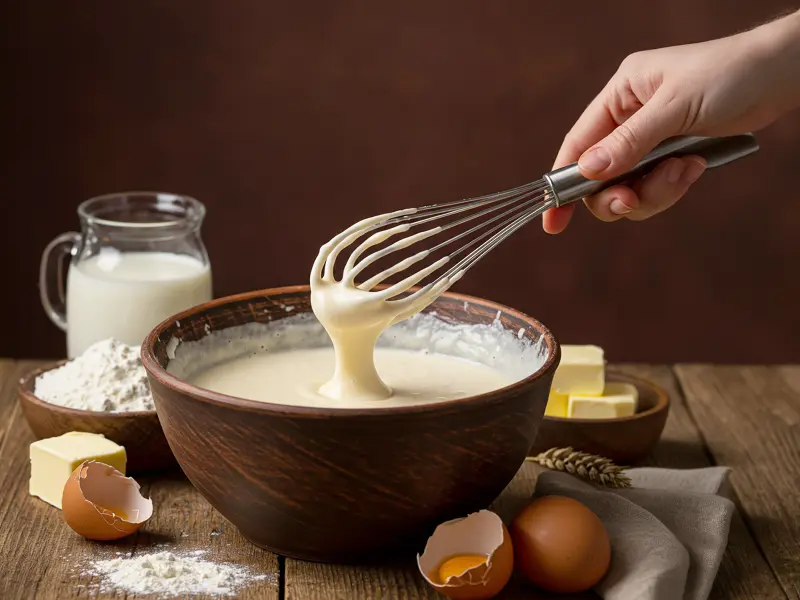
- Senza smettere di mescolare, versate l'acqua bollente a filo sottile fino a ottenere una pastella liscia e omogenea.
- Incorporate il latte restante e 1 cucchiaio di burro fuso. Lasciate riposare la pastella per 15-20 minuti.
- Scaldate una padella leggermente unta a fuoco medio. Versate un mestolo di pastella e fate ruotare la padella per formare una crêpe sottile. Cuocete per circa 1 minuto per lato, fino a doratura.

- Impilate i blini su un piatto, spennellando ciascuno con un velo del cucchiaio di burro fuso rimasto. Serviteli caldi, guarniti con caviale rosso e un cucchiaio di panna acida.
Domande
È fisica, non folclore. La padella si scalda in modo disomogeneo: il centro è più caldo dei bordi, l'olio è distribuito irregolarmente. La prima crepe condisce e livella la padella. Dopo di essa la temperatura si stabilizza. La buona crepe inizia dalla seconda.
Tre ragioni: poche uova nell'impasto (legano la struttura), la padella non è abbastanza calda, e si è girata troppo presto. Una crepe è pronta quando i bordi si staccano da soli e la superficie smette di brillare. Far scorrere la spatola sotto il bordo, non al centro, e girare in un movimento rapido. Aggiungere 1–2 cucchiai d'acqua bollente all'impasto dà una crepe più elastica.
Il caviale rosso (salmone) è salato, sodo, leggermente amaro. Il nero (storione) è più grasso, cremoso, con finale di nocciola. Storicamente il nero era più economico, poi lo storione divenne raro. Il rosso si serve con i blini — il suo colore vivace e la salinità moderata si abbinano perfettamente all'impasto burroso e alla panna acida.
Un buon sostituto è il salmone affumicato o la trota tagliati sottilmente. O il tobiko (uova di pesce volante) — dà la stessa texture di uova che scoppiano. Una crema di pesce affumicato con formaggio cremoso funziona benissimo a buffet. L'essenziale è un blini sottile caldo e buon burro.
Impilare i blini con un sottile strato di burro tra l'uno e l'altro — evita che si attacchino e li mantiene caldi più a lungo. Servire piegati in quarti, aggiungere il caviale sopra all'ultimo momento perché le uova non affondino nell'impasto. Mettere una ciotolina di panna acida o burro fuso a lato.
Vota
Ricette via email
Una lettera a settimana: una ricetta scelta per i tuoi gusti e le novità del sito. Puoi disattivarla con un clic.
In regalo: il libro di ricette di Sergei (e-book).
Premendo il pulsante accetti l’informativa sulla privacy.
Dicci cosa ti piace cucinare (30 secondi) →Continua a sfogliare
Altri piatti dall’archivio — scelti per sovrapposizione con quello che stai cucinando ora.

Partecipa alla discussione
Commenti (1)
These Russian bliny need to be paper-thin — if you can read through them, you are on the right track. The trick is a very hot pan with minimal oil, and pouring just enough batter to barely coat the surface. The caviar deserves a delicate vehicle, not a thick pancake.