
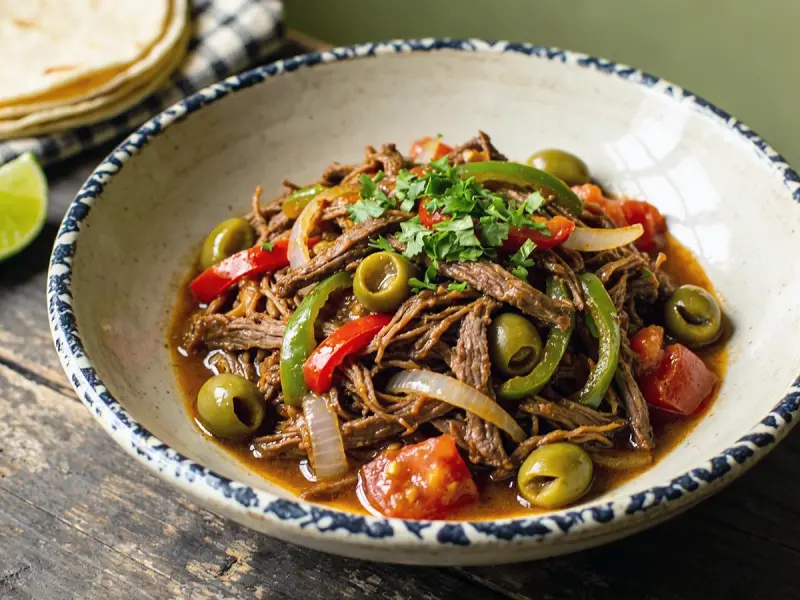
Ropa Vieja (Manzo Sfilacciato Cubano)
Fianco di manzo brasato fino a sfaldarsi in lunghi filamenti fibrosi, poi cotto nel sofrito di peperoni, cipolla, pomodori e olive verdi. Il piatto nazionale di Cuba — il nome significa 'vecchi abiti'.
Ingredienti
- 700 gfianco di manzo
- 400 gpomodori pelati in scatola
- 1 peperone rosso
- 1 peperone verde
- 1 cipolla
- 5 aglio
- 80 golive verdi
- 400 mlbrodo di manzo
- 1 cucchiainocumino
- 1 cucchiainopaprika affumicata
- 0.5 cucchiainoorigano secco
- 2 foglie di alloro
- 1 cucchiainosale
- 0.5 cucchiainopepe nero
- 3 cucchiaiolio d'oliva o di semi (2 cucchiai per rosolare la carne, 1 per le verdure)
- 1 lime, a spicchi, per servire
Preparazione
- Asciuga il manzo e condisci abbondantemente. In una casseruola a fuoco vivo, rosola 3–4 minuti per lato fino a doratura profonda.
- Aggiungi il brodo fino a ⅔ della carne. Aggiungi alloro, metà cumino e paprika. Porta a fremito leggero, copri e cuoci al minimo 1,5–2 ore finché si sfalda con la forchetta.
- Togli la carne, conserva 200 ml del liquido di cottura. Con due forchette, sfilaccia il manzo lungo le fibre in strisce lunghe.
- Nella stessa casseruola, soffriggi cipolla e peperoni 10 minuti fino a doratura. Aggiungi aglio, spezie restanti e origano. Cuoci 2 minuti.
- Aggiungi pomodori e liquido riservato. Cuoci scoperto 10 minuti. Aggiungi la carne sfilacciata e le olive. Cuoci insieme 20–25 minuti fino ad assorbimento.
- Rimuovi l'alloro. Aggiusta di sale. Servi su riso bianco con fagioli neri e spicchi di lime.
Domande
Il flank steak non si sfilaccia finché il collagene non si è completamente disfatto, il che richiede 1,5–2 ore a calore minimo. Con bollore vivace le fibre si contraggono e la carne diventa dura. La temperatura giusta: pochissime bolle ogni pochi secondi. A 90 minuti premi con un dito — deve rompersi senza resistenza. Se no, altri 30 minuti.
Il fianco (flank steak) è la scelta tradizionale per le sue fibre lunghe e parallele: sfilacciate lungo la direzione producono i caratteristici lunghi fili che danno il nome al piatto. Non tagliarlo prima della brasatura. Il petto funziona ma dà fibre più corte. La spalla produce pezzi più irregolari.
In casseruola pesante: rosola la carne, aggiungi brodo fino a ⅔, porta a fremito e cuoci coperto al minimo per 1,5–2 ore. Togli, sfilaccia, fai il sofrito nella stessa casseruola, rimetti la carne per 20–25 minuti. Totale: 2–2,5 ore. In pentola a pressione: 45–50 minuti. In slow cooker: 7–8 h su LOW o 4 h su HIGH.
Le olive verdi sono un ingrediente centrale della ropa vieja cubana autentica, non decorazione. La loro salinità e lieve amarezza bilanciano la dolcezza dei peperoni e l'acidità dei pomodori. Senza di loro il piatto risulta piatto. Se non piacciono, sostituisci con 1–2 cucchiai di capperi. Aggiungile negli ultimi 15–20 minuti.
Il piatto cubano classico: riso bianco, fagioli neri e platano fritto — maduros dolci o tostones croccanti. Il riso come base, la ropa vieja sopra con abbondante salsa. I fagioli in una ciotola a parte. Tradizionalmente si mangia tutto insieme. Gli spicchi di lime sono indispensabili: una spruzzata sulla carne alleggerisce tutta la salsa.
Vota
Ricette via email
Una lettera a settimana: una ricetta scelta per i tuoi gusti e le novità del sito. Puoi disattivarla con un clic.
In regalo: il libro di ricette di Sergei (e-book).
Premendo il pulsante accetti l’informativa sulla privacy.
Dicci cosa ti piace cucinare (30 secondi) →Continua a sfogliare
Altri piatti dall’archivio — scelti per sovrapposizione con quello che stai cucinando ora.


Partecipa alla discussione
Commenti (1)
The pan needs to be properly hot before the flank steak goes in for ropa vieja. A lukewarm pan steams instead of sears. Wait until you see the faintest wisp of smoke — that's your signal.