
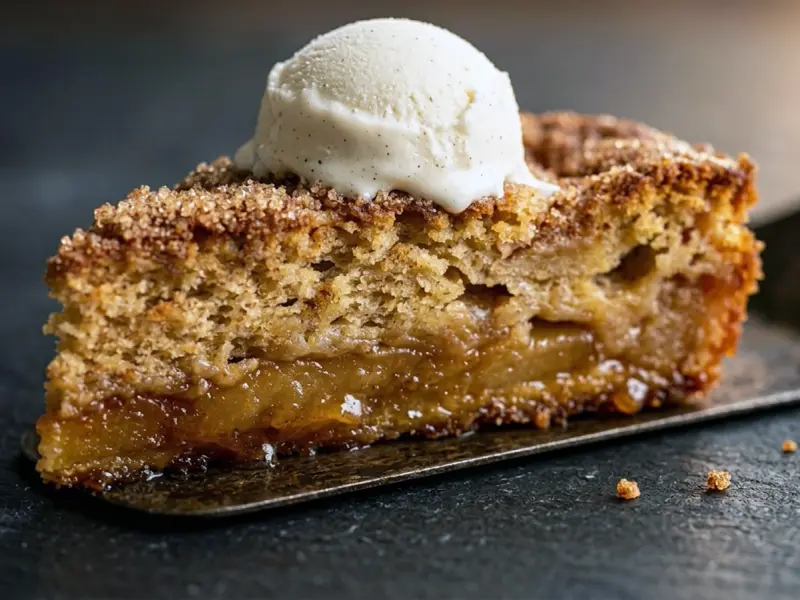
Apple Kugel (Jewish Baked Apple Casserole)
Kugel is a Jewish baked casserole that sits somewhere between a cake and a pudding. This sweet apple version is built on a poured batter — oil, eggs, flour — that goes over layered apple slices and bakes until the bottom caramelises and the top turns golden. Denser than a charlotte, more forgiving than a tart. Traditional on Shabbat and holiday tables, pareve, and genuinely better the next day.
Ingredients
- 5 firm tart apples
- 130 gall-purpose flour
- 150 gwhite sugar
- 3 eggs
- 120 mlvegetable oil
- 1 tspvanilla extract
- 0.5 tspbaking powder
- 1 pinchsalt
- 1 tspground cinnamon
- 2 tbspwhite sugar for topping
Method
- Preheat and prepare. Heat the oven to 180 C. Grease a 23 x 33 cm baking dish or equivalent with vegetable oil. Peel and core the apples and slice into 1 cm wedges. Arrange them tightly in an even layer on the bottom of the dish. The apples compact during baking, so pack them in generously.
- Make the batter. In a bowl whisk together the flour, sugar, eggs, oil, vanilla extract, baking powder, and salt until smooth. The batter will be quite liquid, similar to a thin crepe batter. This is correct — it soaks down between the apple slices as it bakes.
- Pour and top. Pour the batter evenly over the apples. Mix the ground cinnamon and 2 tablespoons of sugar in a small bowl and sprinkle over the surface. The cinnamon-sugar forms a crackling, slightly caramelised crust in the oven.
- Bake. Place in the preheated oven and bake for 45 to 55 minutes. The kugel is done when the top is deep golden-brown and a toothpick inserted into the centre comes out with moist crumbs but not liquid batter. Do not overbake: the centre should remain slightly moist.
- Rest and serve. Remove from the oven and leave to rest for 10 minutes before cutting. This allows the structure to set and makes clean slices easier. Serve warm or at room temperature with a scoop of vanilla ice cream.
FAQ
Kugel is a Jewish baked casserole that produces a denser, more substantial result than a charlotte. Charlotte relies on whipped egg whites for its airy structure; kugel is made with oil and whole eggs, giving a moist, compact crumb that holds its shape without the lift. In kugel, the apples are layered on the bottom and the batter is poured over them, so the fruit caramelises on the underside. In a charlotte, batter and apple are usually mixed together. Kugel is also traditionally made with oil rather than butter, which makes it pareve and suitable for meat meals under kosher dietary laws.
Use firm, tart varieties: Granny Smith, Cortland, Braeburn, or Antonovka. They hold their shape through 45 to 55 minutes of baking and do not turn to mush. Sweet, soft varieties such as Golden Delicious or Fuji break down and release too much liquid, which makes the batter watery and prevents it from setting properly. If you want more sweetness, add a tablespoon of sugar to the apple slices before layering rather than switching to a softer variety.
Yes. Replace 3 eggs with 3 tablespoons of ground flaxseed mixed with 9 tablespoons of water, left for 10 minutes until it thickens into a gel. Alternatively, use three quarters of a cup of unsweetened apple sauce, which fits naturally into the apple flavour of the dish. The oil in the recipe is already plant-based. The texture of the vegan version will be slightly less cohesive but it holds together well enough to slice.
At room temperature, covered, for up to 2 days. In the refrigerator for up to 5 days. For freezing, slice into individual portions, wrap in cling film, and freeze for up to 3 months. Reheat in the oven at 160 C for 15 to 20 minutes covered with foil to keep the crust from hardening further. The microwave works but softens the crust. Kugel is often better on the second day: the apples release their juice into the batter overnight and the texture becomes more unified and moist.
This apple kugel is pareve, meaning it contains neither meat nor dairy, provided you use vegetable oil rather than butter. Pareve dishes can be served at both meat and dairy meals under kosher dietary law, which is precisely why sweet kugels made with oil are traditional on Shabbat tables alongside roast chicken or brisket. If you substitute butter, the kugel becomes dairy and cannot be served with meat under kosher rules.
Rate this
Recipes by email
One letter a week: a recipe picked for your taste, plus whatever is new on the site. Unsubscribe in one click.
Welcome gift: Sergei's cookbook (e-book).
By subscribing you agree to the privacy policy.
Tell us what you like to cook (30 seconds) →Keep browsing
More dishes from the Israeli archive — picked by overlap with what you're cooking now.

Join the conversation
Comments
No comments yet — be the first!