


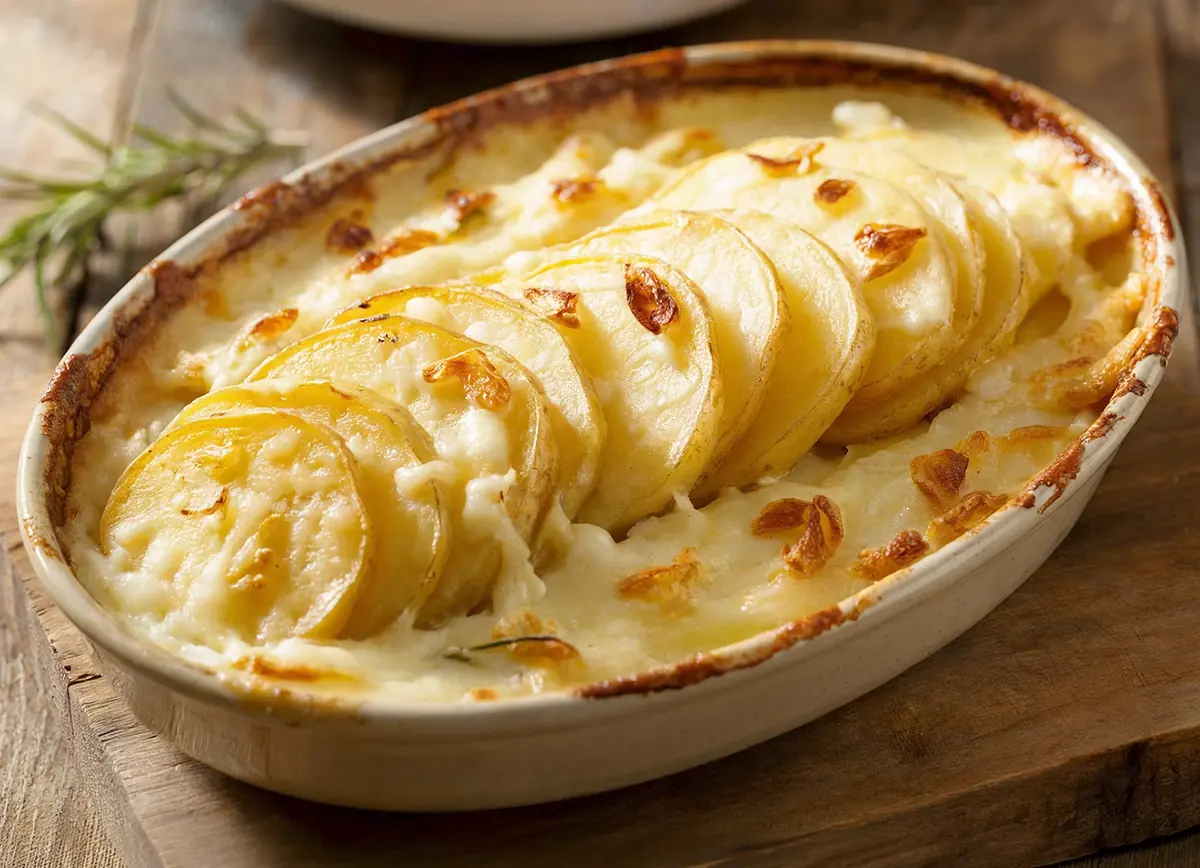
Baked Potatoes with Cheese
A French potato gratin in the style of gratin dauphinois: thin slices of raw potato baked in cream with garlic and butter, with grated hard cheese (gruyère or emmental) between the layers and on top, until tender inside and golden on top. The Dauphiné original is made without cheese; with cheese, as here, it is closer to a gratin savoyard. After about an hour in the oven, the gratin rests for 10 minutes to set.
Ingredients
- 1 clovegarlic
- 30 gvegetable oil
- 1 kgpotatoes
- 400 mlcream
- 180 ghard cheese
- 90 gbutter
- to tastesalt and pepper
Method
- Peel the garlic clove and cut it in half. Peel the potatoes and slice them 2–3 mm thick; don't rinse the slices. Cut the butter into very small cubes.
- Preheat the oven to 200°C. Rub the garlic clove on the bottom and walls of the baking dish. Coat the walls and bottom liberally with vegetable or olive oil.
- Spread half of the potato slices on the bottom of the dish. Sprinkle with salt, pepper, cheese and pieces of butter. Layer the remaining potatoes and sprinkle with the remaining cheese, butter, salt and pepper.
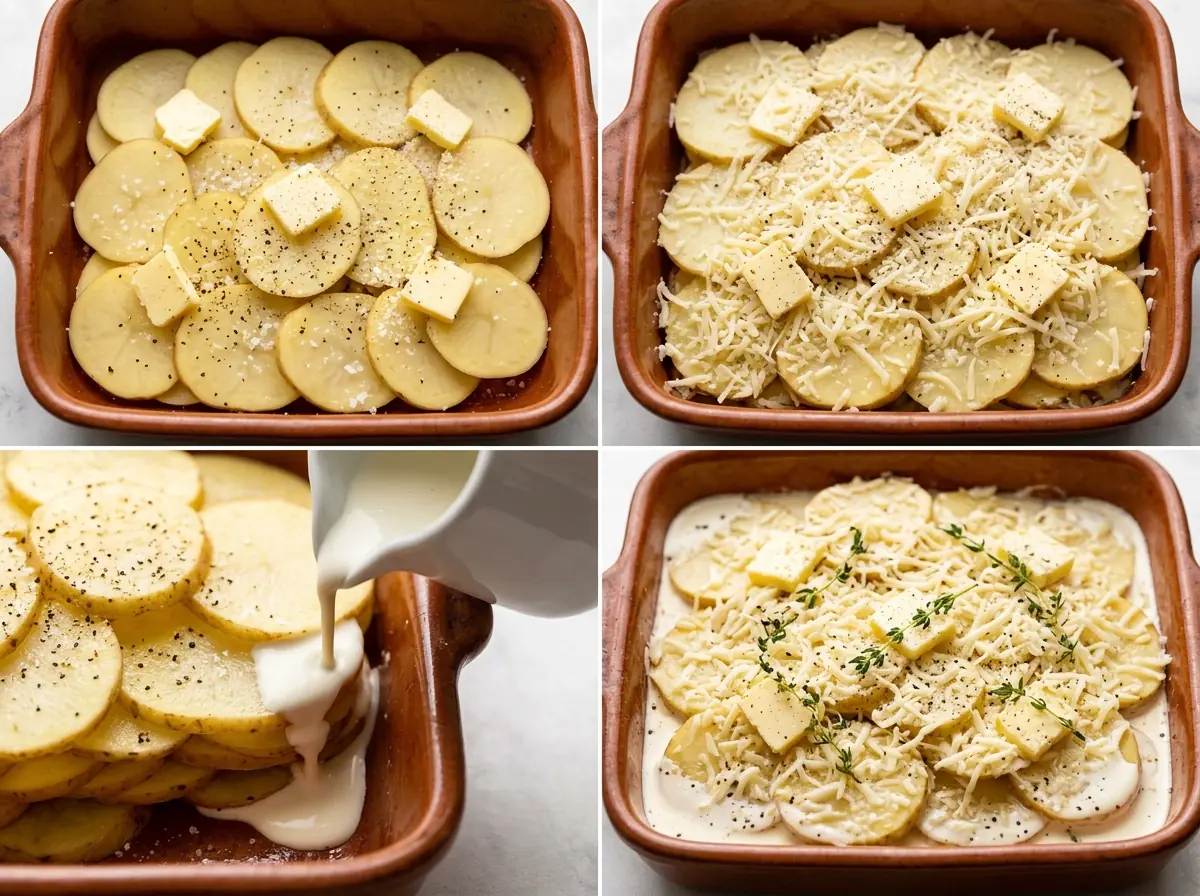
- Carefully pour the cream evenly over the potatoes until it almost covers the top layer.
- Bake for 60–75 minutes, until a knife slides through the potatoes with no resistance and the cheese crust is golden brown; if the top colours too fast, cover it loosely with foil. Let it rest for 10 minutes before serving so it sets. Garnish with fresh herbs.
Cooked it? Rate the recipe
FAQ
No — that's the key difference between gratin and other potato bakes. Raw potato slices are arranged in the dish and covered with cream: they cook through in the oven, absorbing the creamy sauce. Pre-boiling makes them fall apart and lose their structure.
Three reasons: the cream isn't rich enough (use at least 20–30% fat), the potato slices are too thick, or it didn't bake long enough. A gratin needs 60–75 minutes in the oven: during this time the starch from the potatoes thickens the cream to a smooth, creamy consistency.
Yes. Emmental is the closest substitute. Gouda or cheddar also give a good crust. The key is a hard cheese that melts well and forms a golden-brown top. Soft cheeses (brie, camembert) don't work — they release too much fat.
The ideal thickness is 2–3 mm, no more. Use a mandoline or a sharp knife. Consistent thickness matters: thin slices cook evenly. Thick slices stay raw in the center while the edges are already overcooked. Even slicing matters just as much for pommes Anna.
Milk works but the gratin will be less rich. A 50/50 mix of milk and sour cream is a good compromise. Stock gives a very light version without the creamy flavor. The classic uses full-fat cream — that's what creates the signature velvety texture.
Keep browsing
More dishes from the French archive — picked by overlap with what you're cooking now.



Recipes by email
One letter a week: a recipe picked for your taste, plus whatever is new on the site. You can stop the letters in one click.
Welcome gift: Sergei's cookbook (e-book).
By signing up for the newsletter you agree to the privacy policy.
Tell us what you like to cook (30 seconds) →
Join the conversation
Comments
No comments yet — be the first!